Export Control
EAR Export Classification: Not subject to the EAR per 15 C.F.R. Chapter 1, Part 734.3(b)(3), except for the following Service Bulletins which are currently published as EAR Export Classification 9E991: SBE70-0992, SBE72-0483, SBE72-0580, SBE72-0588, SBE72-0640, SBE73-0209, SBE80-0024 and SBE80-0025.Copyright
© IAE International Aero Engines AG (2001, 2014 - 2021) The information contained in this document is the property of © IAE International Aero Engines AG and may not be copied or used for any purpose other than that for which it is supplied without the express written authority of © IAE International Aero Engines AG. (This does not preclude use by engine and aircraft operators for normal instructional, maintenance or overhaul purposes.).Applicability
All
Common Information
TASK 71-52-45-700-303 Exhaust Gas Temperature (EGT) Wiring Harness - Test, Testing-002 (Pre SBE 77-0015)
General
Fig/item numbers in parentheses in the procedure agree with those used in the IPC.
Preliminary Requirements
Pre-Conditions
NONESupport Equipment
| Name | Manufacturer | Part Number / Identification | Quantity | Remark |
|---|---|---|---|---|
| Megohmmeter - model 1620-C | LOCAL | Megohmmeter - model 1620-C | ||
| Multimeter keithley model 177 | LOCAL | Multimeter keithley model 177 |
Consumables, Materials and Expendables
NONESpares
NONESafety Requirements
NONEProcedure
Remove the two alumel (larger) nuts and washers and the two chromel (smaller) nuts and washers which attach the harness lugs to the thermocouple terminals.
Remove the harness lugs from the thermocouple terminals.
Install the washers and nuts back on the thermocouple terminals.
Do these steps at the four thermocouple locations.
Cut and discard the lockwire and remove the screws which secure the junction box cover. Remove the cover.
Remove the nuts which secure the lugs of the harness to the junction box terminals. Remove the harness lugs from the junction box terminals.
Cuts and discard the lockwire and remove the screws which secure the harness clamps. Remove the clamps.

WARNING
USE PROTECTIVE GOGGLES AND GLOVES WHEN YOU REMOVE OR INSTALL LOCKWIRE. EACH TIME YOU CUT LOCKWIRE, REMOVE AND DISCARD IT IMMEDIATELY. LOOSE LOCKWIRE CAN CUT YOU OR MAKE YOU BLIND, AND/OR CAN CAUSE DAMAGE.Disconnect harness from the junction box terminals.
SUBTASK 71-52-45-750-061 Disconnect the EGT Harness
NOTE
The Multimeter keithley model 177 (or equivalent) and the test leads must be in good condition. The dry cells must be in a condition to give full scale movement for all the positions of the range switch. Make sure that the pin jacks are tight.NOTE
Small movements of the harness during the test must not cause the needle to change. This can be a sign of broken wires.ACTION
RESULT
1. Set the Multimeter keithley model 177 or equivalent to the range that has a center scale value of approximately 10 ohms.
2. Do the continuity test of the EGT harness from each thermocouple to the junction box. If you bend the wire, the resistance value changes, reject the harness.
The resistance value must be between 0 ohms and 10 ohms.
NOTE
There are four thermocouple locations with four leads at each location, which means that sixteen measurements are necessary.3. If the meter shows a high resistance value, reject the harness.
Resistance value above 10 ohms.
SUBTASK 71-52-45-750-062 Continuity Test of EGT Wiring Harness
Refer to Figure.
NOTE
Small movements of the harness during the tests must not cause the meter to move to below one megohm. This can be a sign of a defect and you must reject the harness.ACTION
RESULT
1. Set the Megohmmeter - model 1620-C or equivalent to the 100 volts DC scale.
2. Put one lead of the meter in contact with the chromel harness lug by the A circuit. Put the second lead in contact with the alumel harness lug of the A circuit.
A resistance value of more than one megohm must show.
3. Put the second lead in contact with the chromel harness lug of the B circuit.
A resistance value of more than one megohm must show.
4. Put the second lead in contact with the alumel harness lug of the B circuit.
A resistance value of more than one megohm must show.
5. Put one lead of the meter in contact with the alumel harness lug of the A circuit. Put the second lead in contact with the chromel harness lug of the B circuit.
A resistance value of more than one megohm must show.
6. Put the second lead of the meter in contact with the alumel harness lug for the B circuit.
A resistance value of more than one megohm must show.
7. Put one lead of the meter in contact with the chromel harness lug of the B circuit. Put the second lead in contact with the alumel harness lug of the B circuit.
A resistance value of more than one megohm must show.
8. If the resistance value shown is less than one megohm or 0 ohm in one of these tests, reject the harness.
SUBTASK 71-52-45-750-063 Test of the EGT Harness for Short Circuits
Action
RESULT
1. Set the Megohmmeter - model 1620-C or equivalent to the 100 VDC scale.
2. Put one lead of the meter in contact with the external steel braid of the each harness lead. Put the other lead in contact with each of the output lugs of the junction box end of the harness.
A resistance value of more than one megohm must show.
3. If the resistance value shown is less than one megohm, correct or repair the harness.
NOTE
The harness and junction box can absorb or trap moisture after water wash or an overnight in wet/humid conditions. High humidity can cause insulation resistance to read low. If insulation resistance reads low, you can apply hot air or nitrogen to correct this condition or the harness can be restored by the bake procedure in the vendor CMM.4. Do the test of the resistance between each junction box terminal stud and the junction box base.
NOTE
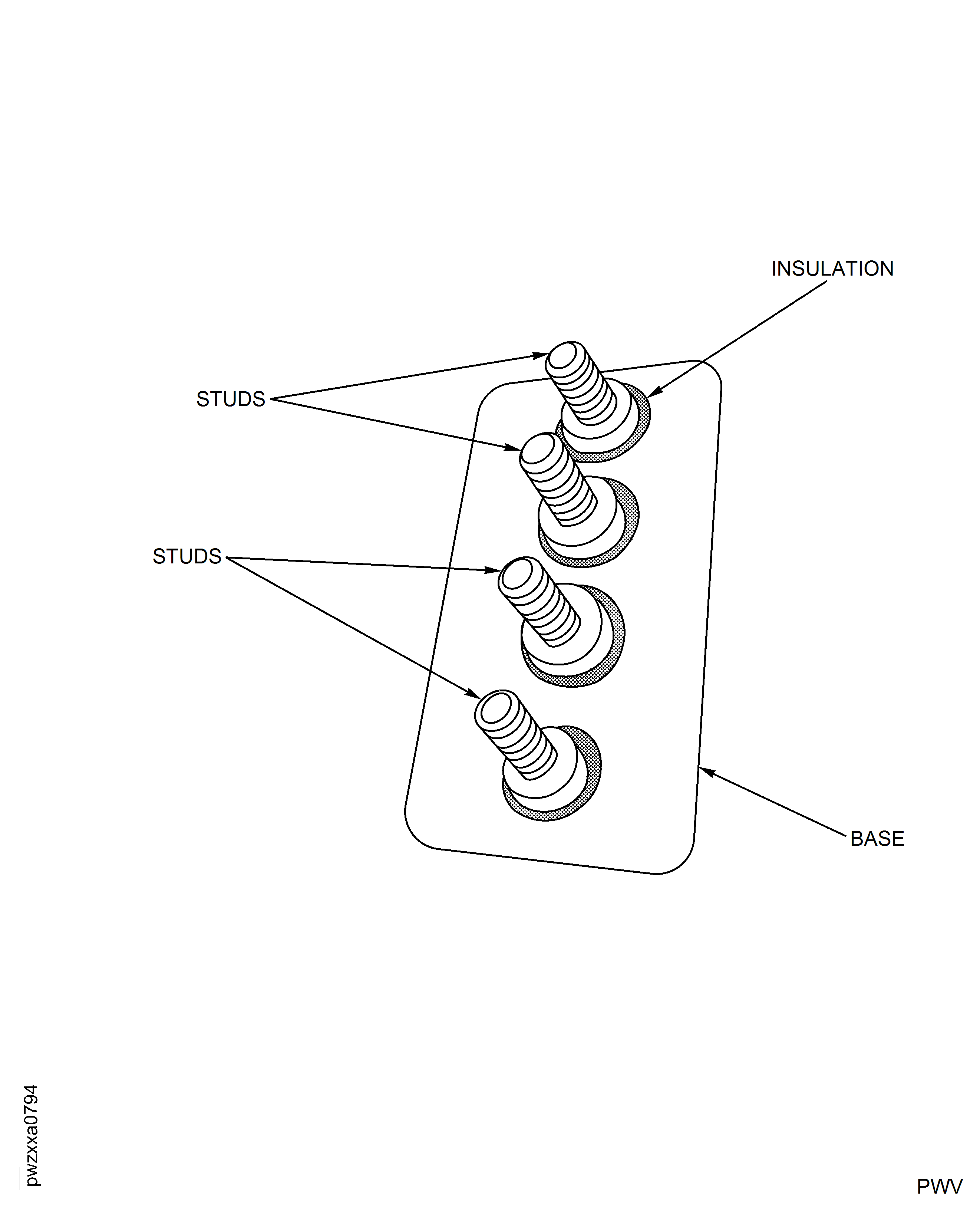
Do not touch the insulation with the instrument probe.A resistance value of more than one megohm must show.
5. If the resistance value is less than one megohm, reject the harness.
NOTE
The harness and junction box can absorb or trap moisture after water wash or an overnight in wet/humid conditions. High humidity can cause insulation resistance to read low. If insulation resistance reads low, you can apply hot air or nitrogen to correct this condition or the harness can be restored by the bake procedure in the vendor CMM.6. Do the test of the resistance between each separator band and the external steel braid of each circuit.
A resistance value of more than one megohm must show.
7. If the resistance value shown is less than one megohm, correct or repair the harness.
NOTE
The harness and junction box can absorb or trap moisture after water wash or an overnight in wet/humid conditions cause insulation resistance to read low. If insulation resistance reads low, you can apply hot air or nitrogen to correct this condition or the High humidity harness can be restored by the bake procedure in the vendor CMM.8. Do the test of the resistance between the lug and the band separator of each circuit.
A resistance value of more than one megohm must show.
9. If the resistance value shown is less than one megohm, correct or repair the harness.
NOTE
The harness and junction box can absorb or trap moisture after water wash or an overnight in wet/humid conditions. High humidity can cause insulation resistance to read low. If insulation resistance reads low, you can apply HOT AIR SOURCE or NITROGEN COMPRESSED SOURCE - GROUND to correct this condition, or the harness can be restored by the bake procedure in the vendor CMM.
SUBTASK 71-52-45-750-064 Insulation Resistance Test for EGT Wiring Harness and Junction Box
Figure: Thermocouple Locations
Thermocouple Locations
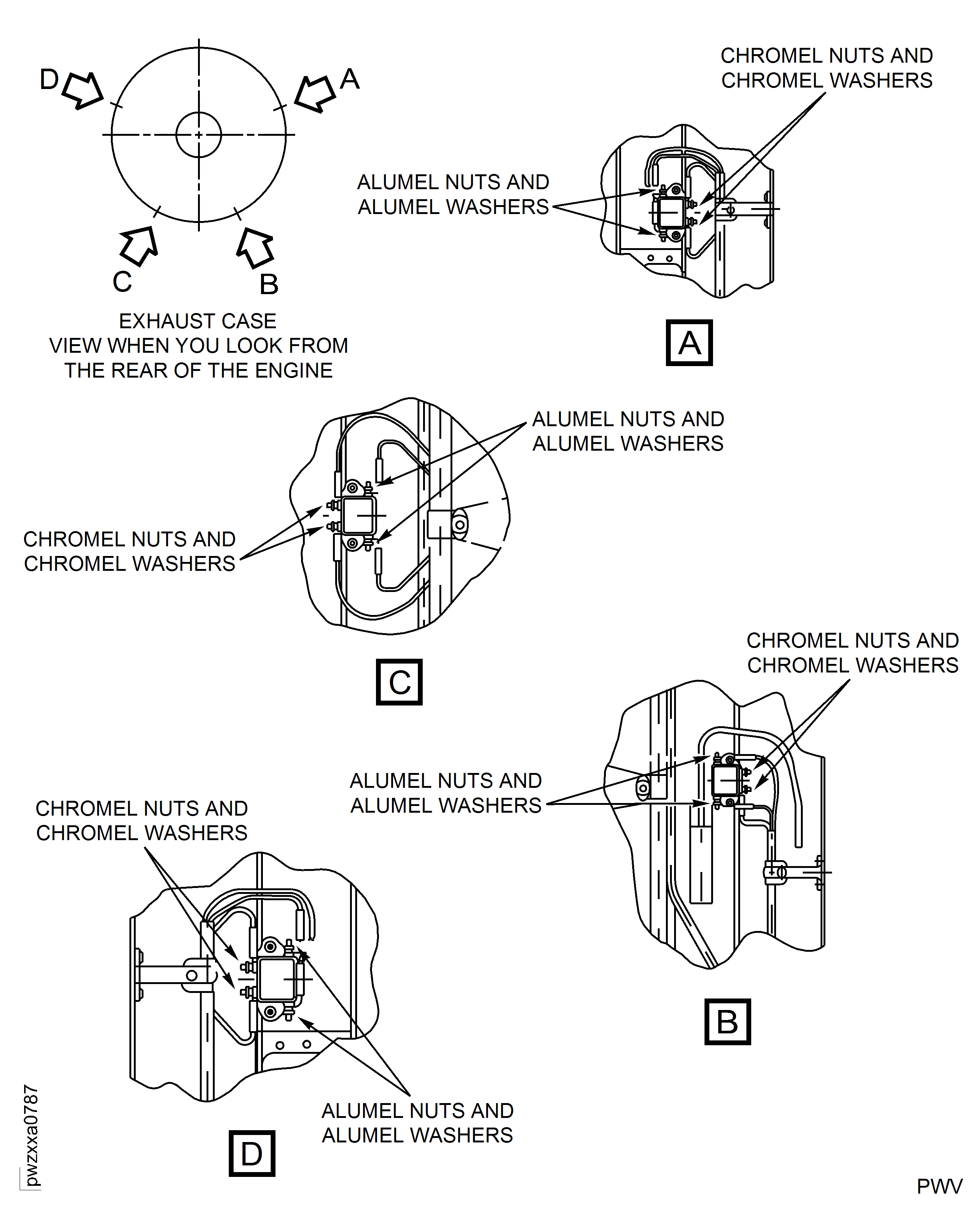
Figure: EGT Harness And Junction Box
EGT Harness And Junction Box
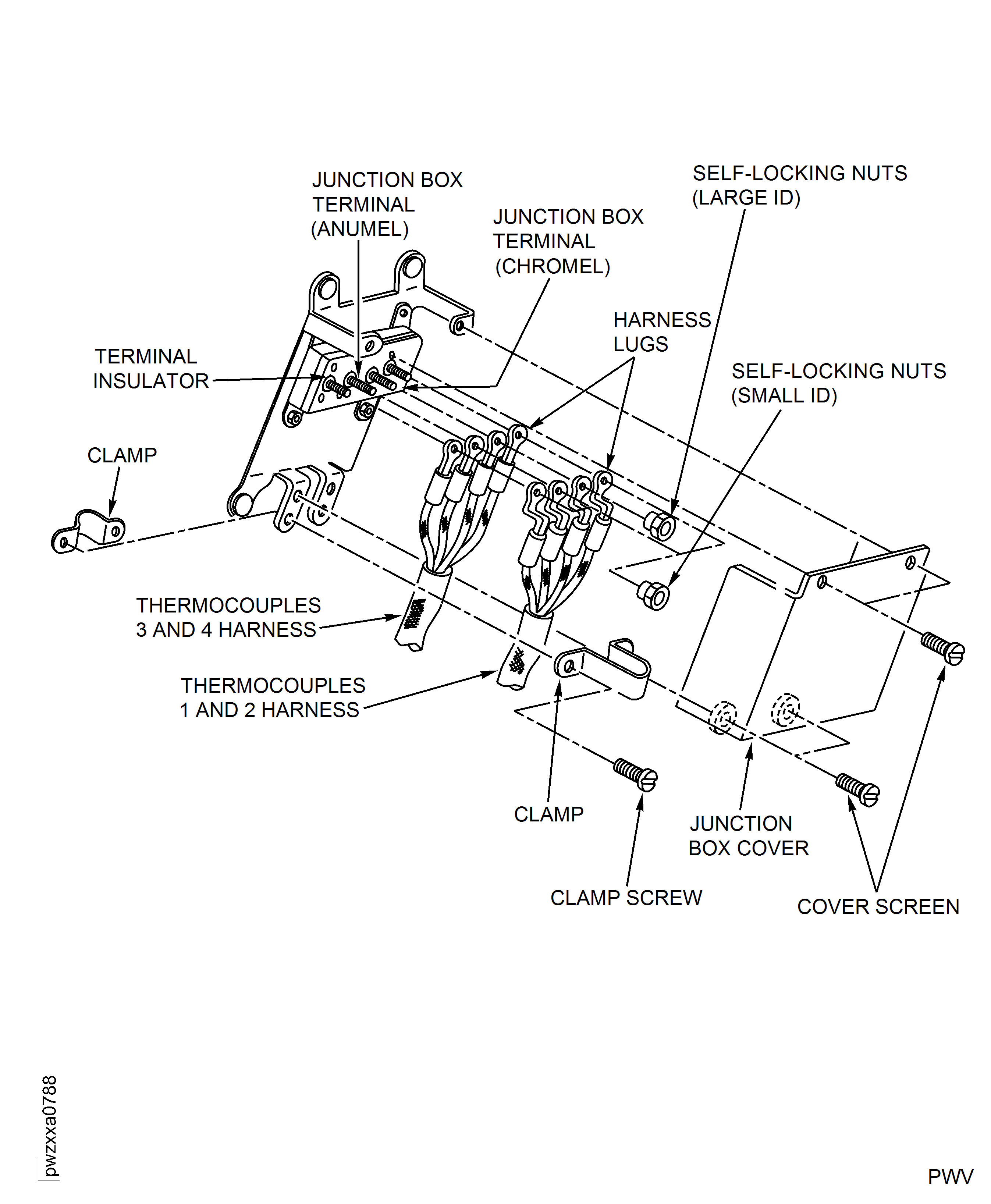
Figure: EGT Harness And Junction Box Continuity Test
EGT Harness And Junction Box Continuity Test
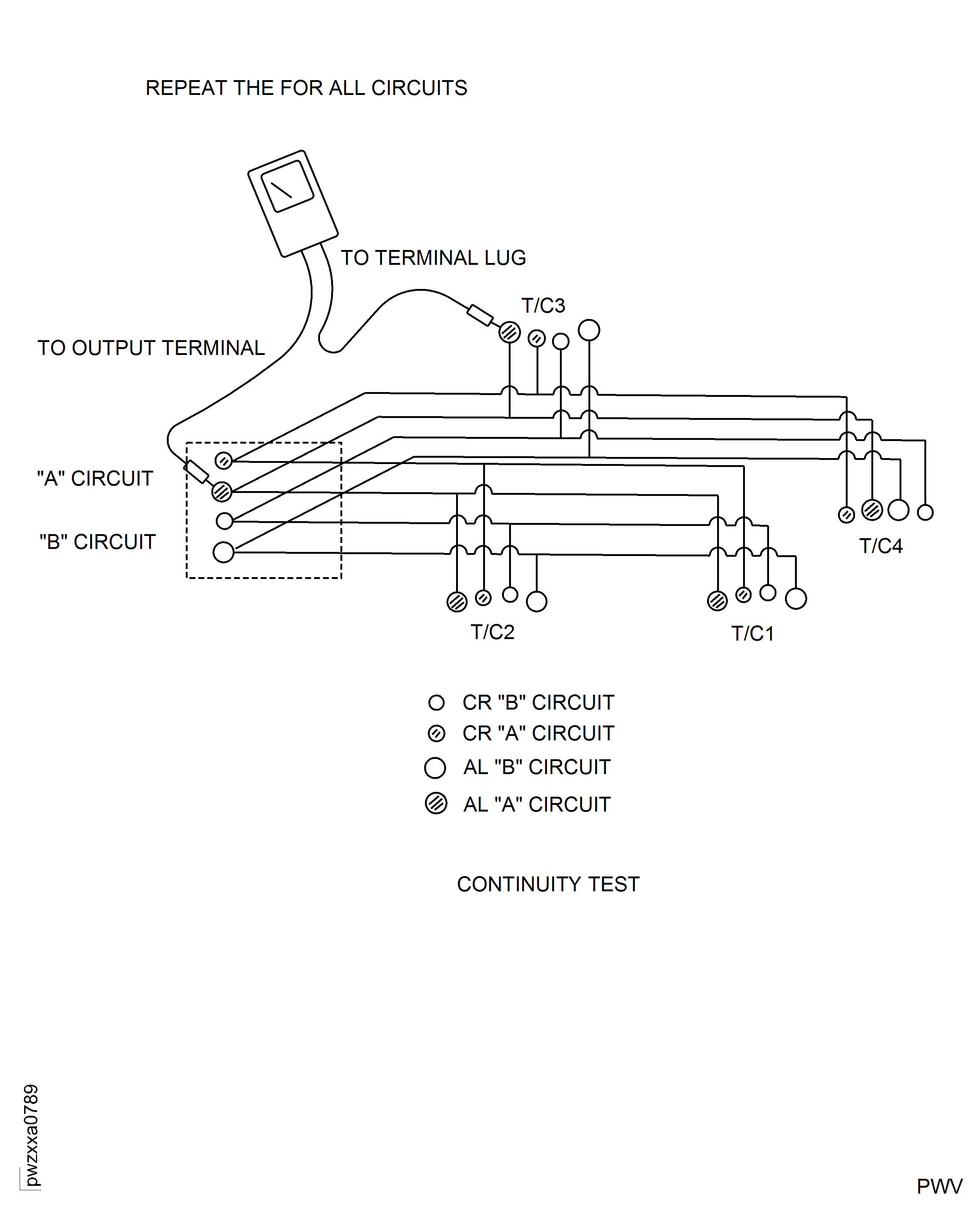
Figure: EGT Harness And Junction Box - Drip Loop Connection To The Junction Box
EGT Harness And Junction Box - Drip Loop Connection To The Junction Box
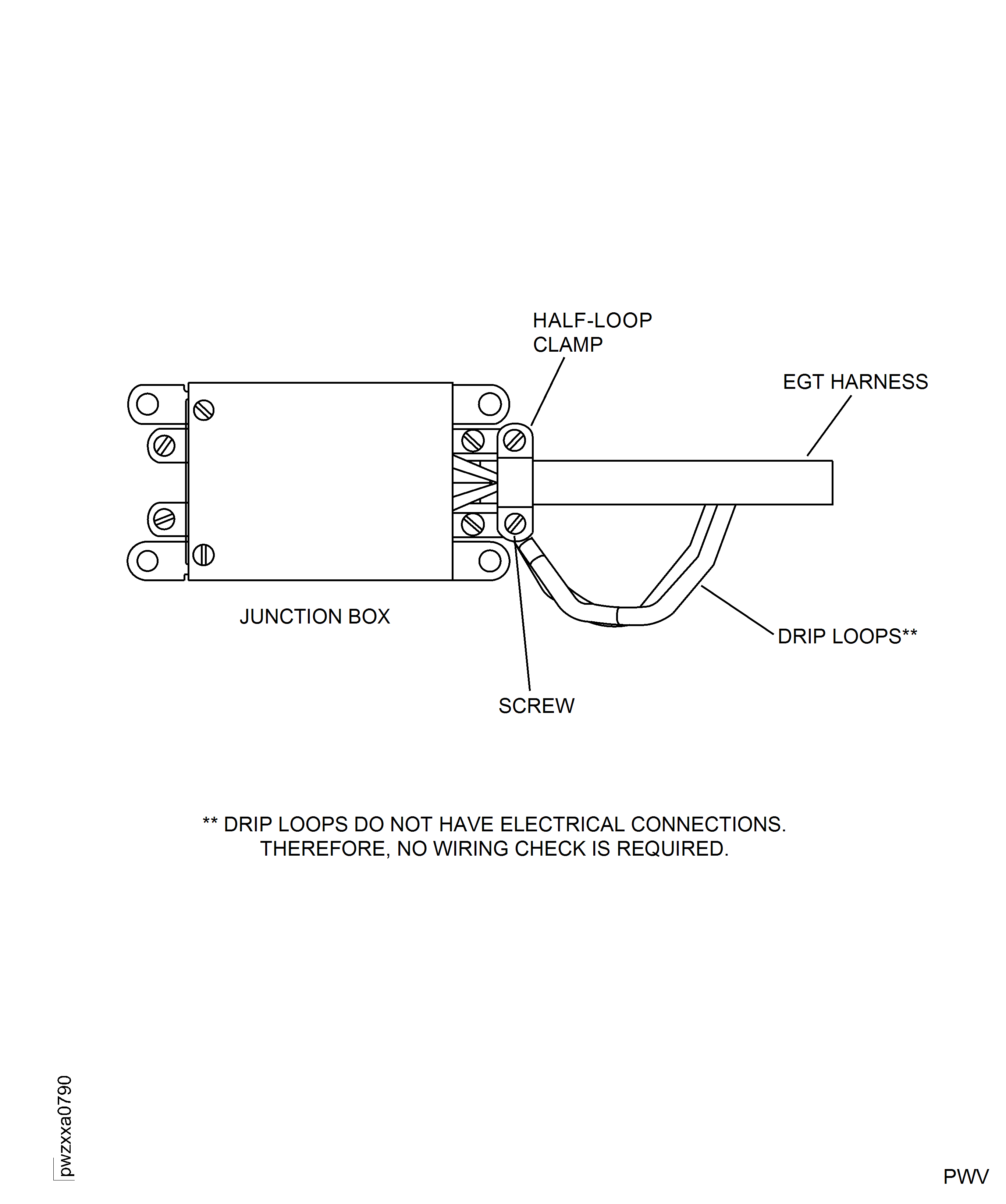
Figure: EGT Harness And Junction Box - Short Circuit Test
EGT Harness And Junction Box - Short Circuit Test
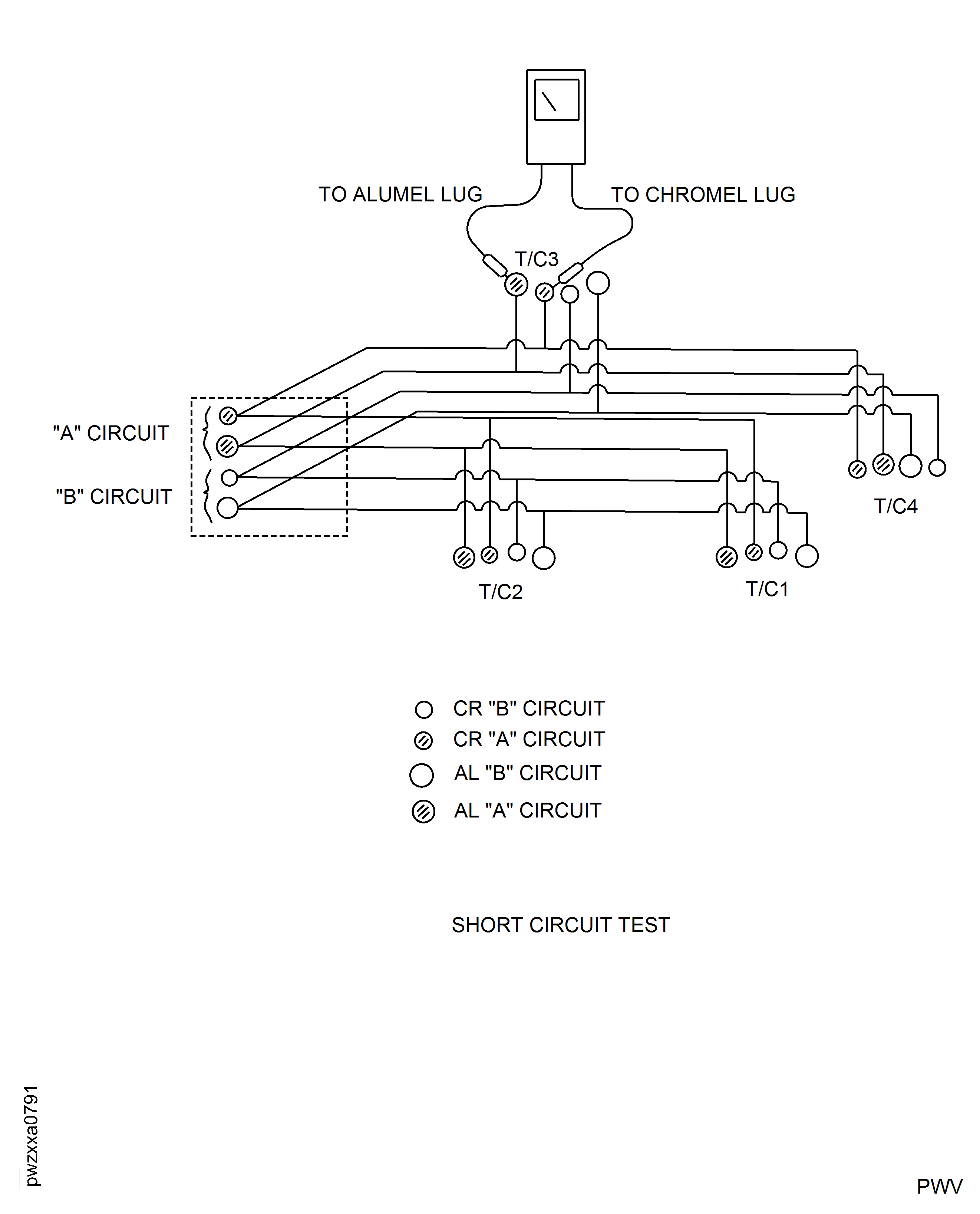
Figure: EGT Harness And Junction Box - Insulation Resistance Test
EGT Harness And Junction Box - Insulation Resistance Test
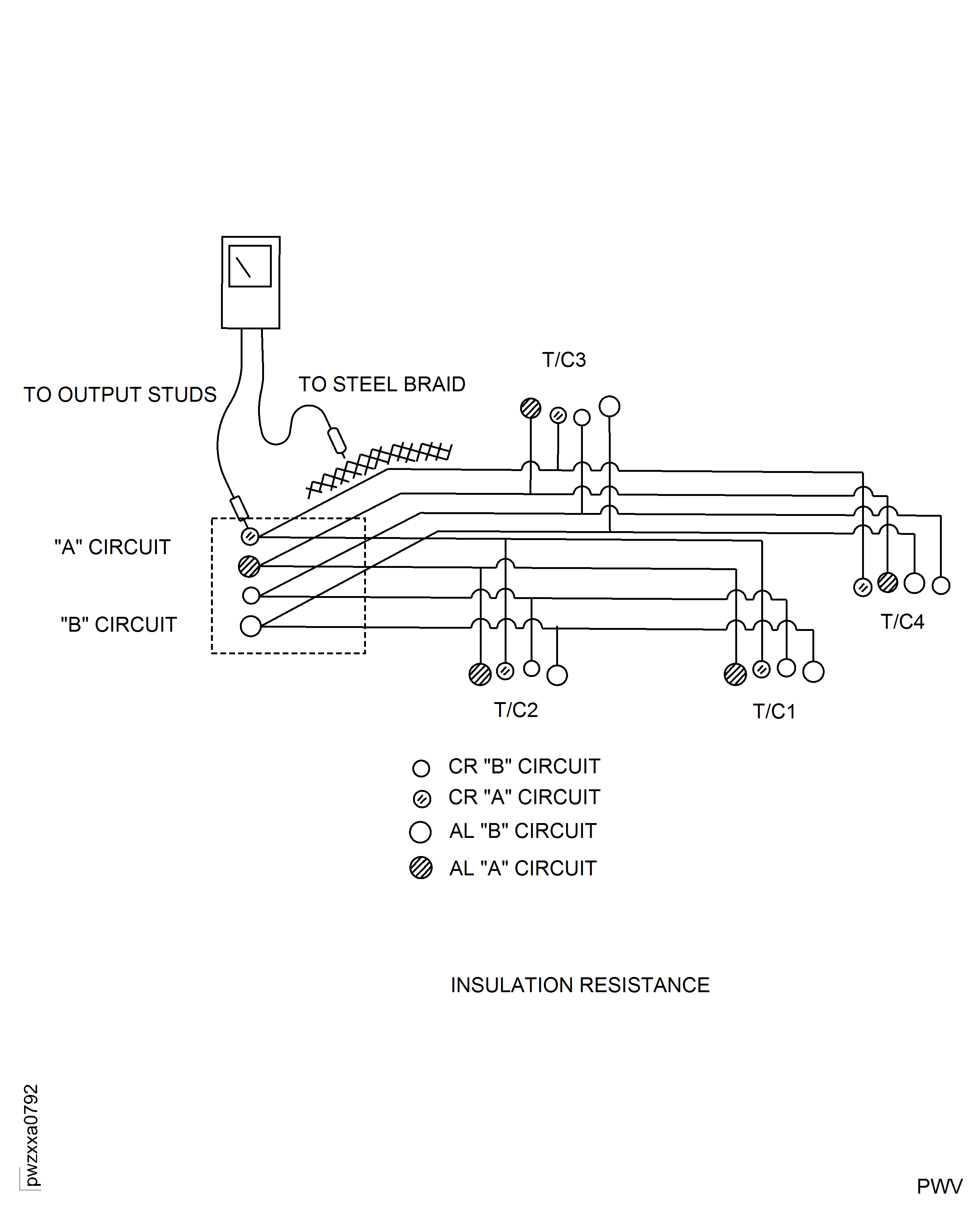
Figure: EGT Harness
EGT Harness
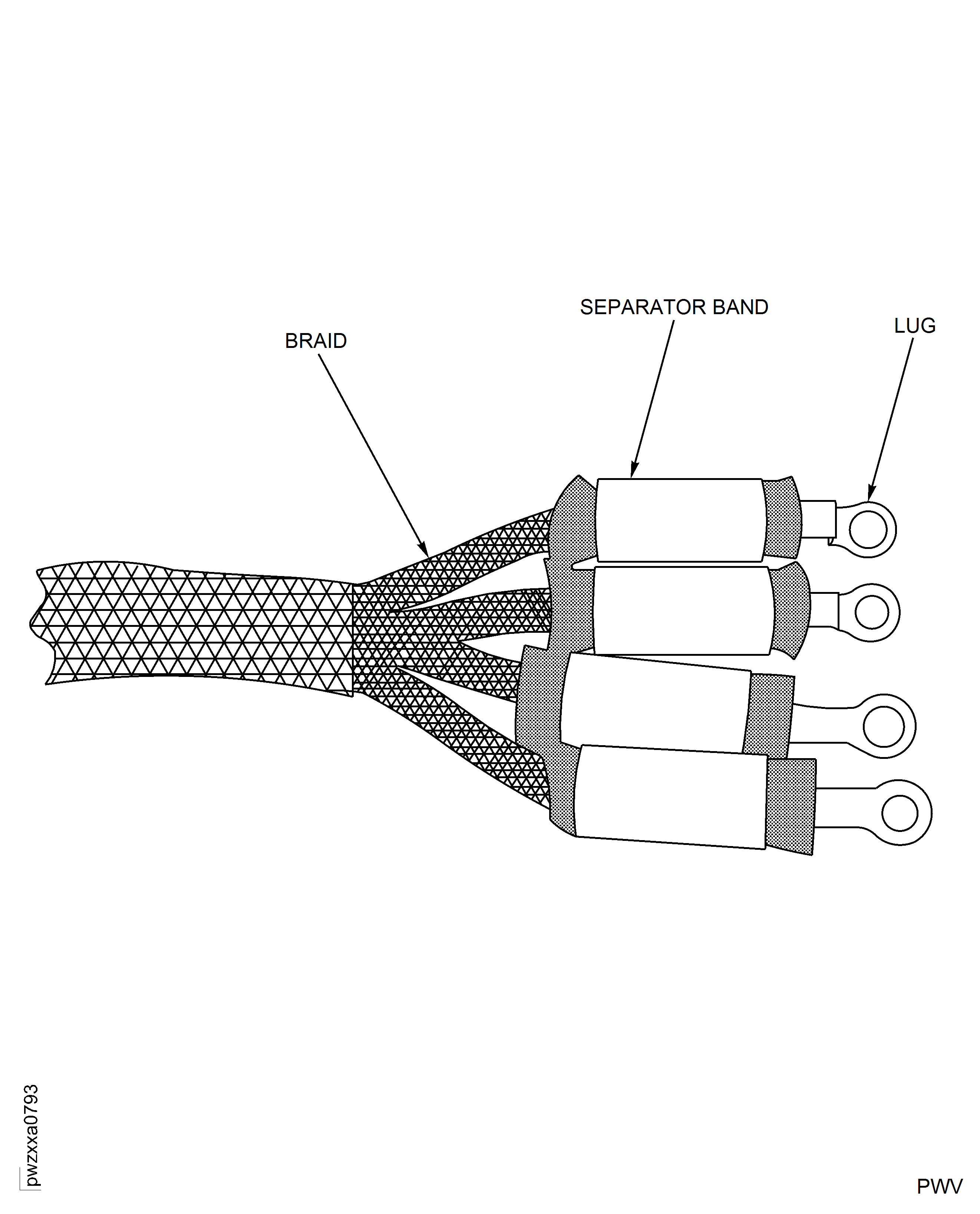
Figure: EGT Junction Box
EGT Junction Box