
TASK 72-45-20-200-001-C00 HPT Case And Vane Assembly - Examine, Inspection-001 - SBE 72-0522

DMC:V2500-A0-72-45-2000-00A-310A-C|Issue No:001.00|Issue Date:2013-11-01

Export Control

EAR Export Classification: Not subject to the EAR per 15 C.F.R. Chapter 1, Part 734.3(b)(3), except for the following Service Bulletins which are currently published as EAR Export Classification 9E991: SBE70-0992, SBE72-0483, SBE72-0580, SBE72-0588, SBE72-0640, SBE73-0209, SBE80-0024 and SBE80-0025.

Copyright

© IAE International Aero Engines AG (2001, 2014 - 2021) The information contained in this document is the property of © IAE International Aero Engines AG and may not be copied or used for any purpose other than that for which it is supplied without the express written authority of © IAE International Aero Engines AG. (This does not preclude use by engine and aircraft operators for normal instructional, maintenance or overhaul purposes.).

Applicability

All

Common Information

TASK 72-45-20-200-001-C00 HPT Case And Vane Assembly - Examine, Inspection-001 - SBE 72-0522

General

The word "reject" is used after an interface inspection statement to show that a higher level inspection and possible repair to the damaged part is necessary.

Do the higher level inspection procedure as found in the applicable Chapter/Section/Subject of this manual on the damaged part(s). It is not necessary to do the higher level inspection on parts that are serviceable to the interface inspection standard.

All parts must be visually examined for damage, corrosion and wear. All defects (distress, missing hardware etc.) that are not identified in the procedure must be documented and referred to IAE Technical Services.

Preliminary Requirements

Pre-Conditions

NONE

Support Equipment

NONE

Consumables, Materials and Expendables

NONE

Spares

NONE

Safety Requirements

NONE

Procedure

    1. SUBTASK 72-45-20-220-109 Visually Examine the Outer Flange at Location 1

    2. Refer to Figure.

      1. Surface damage, dents, scratches, burrs and round-bottom nicks not more than 0.010 in. (0.25 mm) in depth with no sharp edges

      2. Accept

      1. Sharp-bottom nicks

      2. Reject

      1. Cracks

      2. Reject

    1. SUBTASK 72-45-20-220-110 Visually Examine the Support Assembly Outer Flange Bolt Holes at Location 2

    2. Refer to Figure.

      1. Surface damage, dents, scratches, burrs and round-bottom nicks not more than 0.010 in. (0.25 mm) in depth with no sharp edges

      2. Accept

      1. Sharp-bottom nicks

      2. Reject

      1. Cracks

      2. Reject

    1. SUBTASK 72-45-20-220-111 Visually Examine the Support Assembly Outer Flange at Location 3

    2. Refer to Figure.

      1. Round-bottom dents not more than 0.250 in. (6.35 mm) in diameter and not more than 0.010 in. (0.25 mm) in depth

      2. Accept

      1. Wear not more than 25 percent of the contact surface

      2. Reject

      1. Other than B or C

      2. Reject

    1. SUBTASK 72-45-20-220-112 Visually Examine the Rear Turbine Seal of the Stage 2 Turbine Nozzle Assembly at Location 4

    2. Refer to Figure.

      1. Distortion

      2. Reject

      1. Cracks

      2. Reject

      1. Missing hardface on more than 10 percent of the contact surface

      2. Reject

    1. SUBTASK 72-45-20-220-113 Visually Examine the Stage 2 Ceramic Outer Airseals at Location 5

    2. Refer to Figure.

      1. There is metal from the blades on the airseals

      2. Accept

        1. Any segment that has spalling or chipping down to the metal layer (dark color layer) for not more than:

          1. 50 percent of the ceramic

          2. Accept

      1. There are cracks in the ceramic (white) layer of the coating

      2. Accept

    1. SUBTASK 72-45-20-220-114 Measure the Diameter of the Stage 2 Ceramic Outer Airseals at Location 5

    2. Refer to Figure.

      1. Measure the diameter at the center of each airseal (19 places).

        1. If the average diameter is less than 26.492 in. (672.90 mm)

        2. Accept

        1. More than (1)

        2. Reject

    1. SUBTASK 72-45-20-220-115 Visually Examine the Stage 2 Turbine Vane at Locations 6 and 10

    2. Refer to Figure.

      NOTE

      Location 10 includes the ID and OD platforms.
      1. One or more cracks not more than 0.500 in. (12.7 mm) in length on the airfoil and platforms. Cracks not more than 0.750 in. (19.05 mm) in length are permitted on vanes that are not adjacent. Cracks on the airfoil must be less than 0.050 in. (1.27 mm) wide. Platform cracks must be tight with no burning. The cracks do not make a closed loop and do not look like they will make a closed loop.

      2. Accept

      1. Corrosion or burning on the convex and concave sides of the airfoil and the ID and OD platform surfaces.

        1. Not more than 1.0 sqin (645.16 sqmm) on each vane

        2. Accept

        1. Other than (1)

        2. Reject

      1. Chipped, eroded or spalled ceramic coating

      2. Accept

      1. Round-bottom dents not more than 0.010 in. (0.25 mm) in depth

      2. Accept

      1. Dirt buildup, discoloration or metal particles

      2. Accept

    1. SUBTASK 72-45-20-220-116 Visually Examine the Honeycomb Seal Land at Location 7

    2. Refer to Figure.

      1. Knife-edge rub of less than 0.030 in. (0.76 mm)

      2. Accept

      1. Not more than 19 vane clusters can have one-half cell-wide rub or honeycomb that is gone on the rear edge of the segments. Not more than 10 vane clusters can have one cell-wide rub or honeycomb that is gone on the rear edge of the segments.

      2. Accept

        NOTE

        Remove loose or unwanted material from inside the cells.
    1. SUBTASK 72-45-20-220-117 Visually Examine the Honeycomb Seal Lands at Location 9

    2. Refer to Figure.

      1. Knife-edge rub of less than 0.030 in. (0.76 mm)

      2. Accept

      1. Not more than six deformed or damaged cells on each vane

      2. Accept

        NOTE

        Remove loose or unwanted material from inside the cells.
    1. SUBTASK 72-45-20-220-118 Visually Examine the Honeycomb Seal Lands at Location 8

    2. Refer to Figure.

      1. Knife-edge rub of less than 0.030 in. (0.76 mm)

      2. Accept

      1. Not more than 30 deformed or damaged cells on each ring segment

      2. Accept

        NOTE

        Remove loose or unwanted material from inside the cells.
    1. SUBTASK 72-45-20-220-119 Visually Examine the Stage 1 Ceramic Outer Airseals at Location 11

    2. Refer to Figure.

      1. There is metal from the blades on the airseals

      2. Clean

      1. Any segment that has spalling or chipping down to the metal layer (dark color layer) for not more than:

        1. 50 per cent of the ceramic

        2. Accept

      1. There are cracks in the ceramic (white) layer of the coating

      2. Accept

      1. Other than B, C or D

      2. Reject

    1. SUBTASK 72-45-20-220-120 Measure the Diameter of the Stage 1 Ceramic Outer Airseals at Location 11

    2. Refer to Figure.

      1. Measure the diameter at the center of each airseal (38 places).

        1. If the average diameter is less than 25.676 in. (652.17 mm)

        2. Accept

        1. More than (1)

        2. Reject

    1. SUBTASK 72-45-20-220-121 Visually Examine the Hardface on the Outer Airseal Supports at Location 12

    2. Refer to Figure.

      1. Chipped or spalled on more than 10 percent of the hardface area

      2. Reject

    1. SUBTASK 72-45-20-220-122 Visually Examine the Surface of the Case at Location 13

    2. Refer to Figure.

      1. Surface damage, dents, scratches, burrs and round-bottom nicks not more than 0.010 in. (0.25 mm) in depth with no sharp edges

      2. Accept

      1. Sharp-bottom nicks

      2. Reject

      1. Cracks

      2. Reject

    1. SUBTASK 72-45-20-220-123 Visually Examine the Case Outer Flange and the Flange Bolt Holes at Location 14

    2. Refer to Figure.

      1. Surface damage, dents, scratches, burrs and round-bottom nicks not more than 0.010 in. (0.25 mm) in depth with no sharp edges

      2. Accept

      1. Sharp-bottom nicks

      2. Reject

      1. Cracks

      2. Reject

    1. SUBTASK 72-45-20-220-124 Measure the Diameter of the Orifice Plates in the Turbine Cooling Air Bosses at Location 15

    2. Refer to Figure.

      1. The diameter is between 0.955 and 0.965 in. (24.26 and 24.51 mm)

      2. Accept

      1. Other than B.

      2. Contact your IAE representative

  1. Figure: HP Turbine Case and Vane Assembly Inspection Locations

    Sheet 1
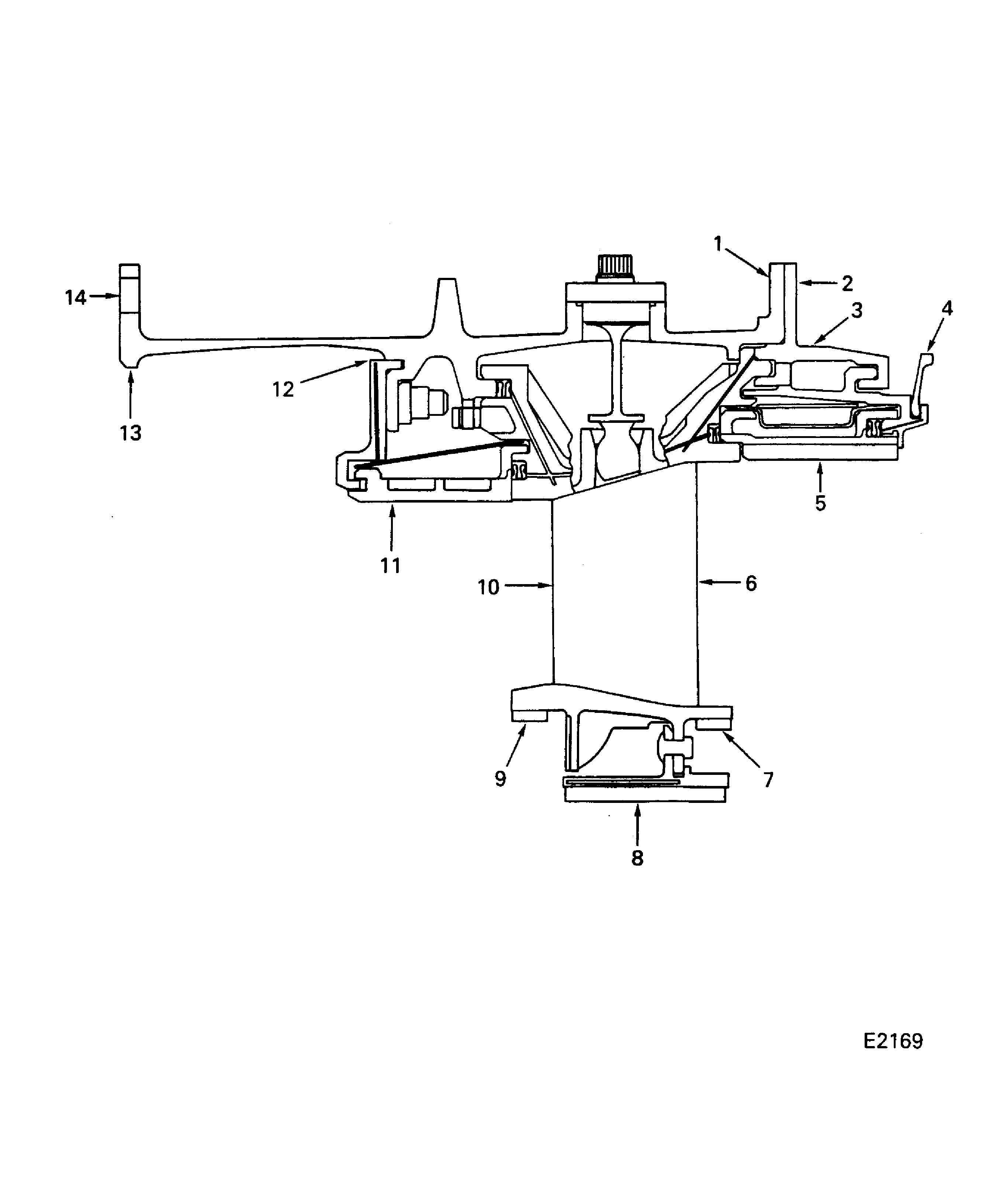
    Legend
    HP Turbine Case and Vane Assembly Inspection Locations

    Sheet 1

    Close

    Figure: HP Turbine Case and Vane Assembly Inspection Locations

    Sheet 2
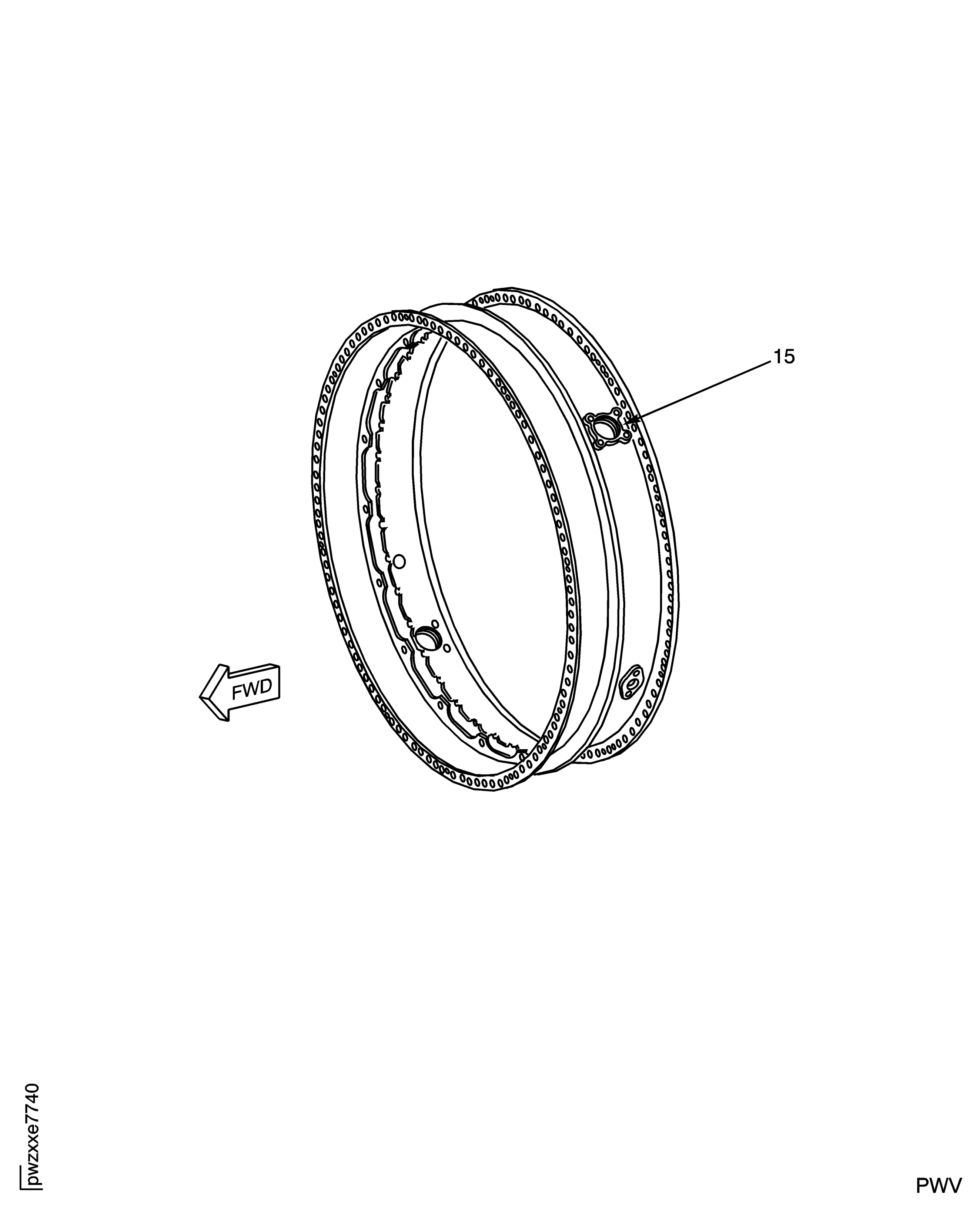
    Legend
    HP Turbine Case and Vane Assembly Inspection Locations

    Sheet 2

    Close

Requirements After Job Completion

Follow-On Conditions

NONE