Export Control
EAR Export Classification: Not subject to the EAR per 15 C.F.R. Chapter 1, Part 734.3(b)(3), except for the following Service Bulletins which are currently published as EAR Export Classification 9E991: SBE70-0992, SBE72-0483, SBE72-0580, SBE72-0588, SBE72-0640, SBE73-0209, SBE80-0024 and SBE80-0025.Copyright
© IAE International Aero Engines AG (2001, 2014 - 2021) The information contained in this document is the property of © IAE International Aero Engines AG and may not be copied or used for any purpose other than that for which it is supplied without the express written authority of © IAE International Aero Engines AG. (This does not preclude use by engine and aircraft operators for normal instructional, maintenance or overhaul purposes.).Applicability
All
Common Information
TASK 70-34-15-340-501 Flame Spray Coating
General
Abradable coating PWA 74 which is applied to airseal surfaces includes a plasma-sprayed undercoat of (nickel-aluminum composite. The topcoat consists of flame-sprayed nickel-coated graphite in the proportion of 75 percent nickel to 25 percent graphite as PWA 74-1 or in the proportion of 85 percent nickel to 15 percent graphite as PWA 74-2 (Refer to Step).
NOTE
Preliminary Requirements
Pre-Conditions
NONESupport Equipment
| Name | Manufacturer | Part Number / Identification | Quantity | Remark |
|---|---|---|---|---|
| Powder flame spray gun | LOCAL | Powder flame spray gun | special 0.046 in. (1.168 mm) diameter nozzle | |
| Gas control unit | LOCAL | Gas control unit | To supply oxygen gas, hydrogen gas, acetylene gas, and argon gas with appropriate regulators and flowmeters | |
| Powder feeder | LOCAL | Powder feeder | Additional feeder to supply flame torch. | |
| Plasma spray equipment | Local | Plasma spray equipment | Refer to TASK 70-34-03-340-501. |
Consumables, Materials and Expendables
| Name | Manufacturer | Part Number / Identification | Quantity | Remark |
|---|---|---|---|---|
| CoMat 03-010 ARGON GAS | 0B434 | CoMat 03-010 | ||
| CoMat 03-089 METAL SPRAYING POWDER Ni/Al (95/5) | 33870 | CoMat 03-089 | ||
| CoMat 03-090 METAL SPRAYING POWDER Ni/Al (95/5) | X111X | CoMat 03-090 | ||
| CoMat 03-097 FLAME SPRAY POWDER | IAE15 | CoMat 03-097 | ||
| CoMat 03-098 FLAME SPRAY POWDER | IE252 | CoMat 03-098 | ||
| DELETED | LOCAL | DELETED | (Deleted CoMat 03-117 and CoMat 03-118) | |
| CoMat 03-138 HYDROGEN GAS (PROTECTIVE ATMOSPHERE) | 0B434 | CoMat 03-138 | ||
| CoMat 03-289 OXYGEN GAS | LOCAL | CoMat 03-289 | ||
| CoMat 03-347 ACETYLENE GAS | X222X | CoMat 03-347 | ||
| CoMat 05-019 WATERPROOF SILICON CARBIDE | 1E1X8 | CoMat 05-019 | ||
| CoMat 05-020 WATERPROOF SILICON CARBIDE | LOCAL | CoMat 05-020 | ||
| CoMat 05-021 WATERPROOF SILICON CARBIDE | 44197 | CoMat 05-021 | ||
| CoMat 05-064 WATERPROOF SILICON CARBIDE | 1E1X8 | CoMat 05-064 | ||
| CoMat 05-076 WATERPROOF SILICON CARBIDE | 1E1X8 | CoMat 05-076 | ||
| CoMat 05-077 WATERPROOF SILICON CARBIDE | 1E1X8 | CoMat 05-077 | ||
| CoMat 05-078 WATERPROOF SILICON CARBIDE | 1E1X8 | CoMat 05-078 | ||
| CoMat 05-079 WATERPROOF SILICON CARBIDE | 1E1X8 | CoMat 05-079 | ||
| CoMat 05-080 WATERPROOF SILICON CARBIDE | 1E1X8 | CoMat 05-080 | ||
| CoMat 05-081 WATERPROOF SILICON CARBIDE | 1E1X8 | CoMat 05-081 | ||
| CoMat 05-082 WATERPROOF SILICON CARBIDE | 1E1X8 | CoMat 05-082 | ||
| CoMat 05-090 DIAMOND PASTE | 09410 | CoMat 05-090 |
Spares
NONESafety Requirements

WARNING
Procedure
Apply plasma spray undercoat of CoMat 03-089 METAL SPRAYING POWDER Ni/Al (95/5) or CoMat 03-090 METAL SPRAYING POWDER Ni/Al (95/5) to a thickness of 0.002 to 0.007in. (0.051 to 0.178 mm).
For PWA 74-1 coating, use CoMat 03-097 FLAME SPRAY POWDER.
For PWA 74-2 coating, use CoMat 03-098 FLAME SPRAY POWDER .
Apply flame spray of the applicable nickel-graphite powder to an additional thickness of 0.040in. (1.016 mm), unless otherwise specified.
NOTE
For sequence of repair operations, masking and surface preparation, refer to SPM TASK 70-34-03-340-501.Application.
SUBTASK 70-34-15-340-001 Apply the Plasma Coating
Pre-grind and polish mount using CoMat 05-082 WATERPROOF SILICON CARBIDE, CoMat 05-081 WATERPROOF SILICON CARBIDE, CoMat 05-080 WATERPROOF SILICON CARBIDE, CoMat 05-079 WATERPROOF SILICON CARBIDE, CoMat 05-021 WATERPROOF SILICON CARBIDE, CoMat 05-078 WATERPROOF SILICON CARBIDE, CoMat 05-020 WATERPROOF SILICON CARBIDE, CoMat 05-077 WATERPROOF SILICON CARBIDE, CoMat 05-019 WATERPROOF SILICON CARBIDE, CoMat 05-076 WATERPROOF SILICON CARBIDE, CoMat 05-064 WATERPROOF SILICON CARBIDE or equivalent. Grind cross section directionally from coating into base metal.
Final polish with CoMat 05-090 DIAMOND PASTE on cellulose cotton cloth or equivalent.
Metallurgical mounting procedure.
Conditions shown in Figure up through 15 percent of total micro distance are satisfactory.
Conditions shown in Figure over 15 percent through 25 percent of total micro distance must be re-evaluated.
Conditions shown in Figure more than 25 percent of total micro distance must be rejected.
Bond at coating interface at 500x magnification.
NOTE
Specimens must be given a metallographic polish before the inspection that follows.PWA 74-1 metallographic examination limits.
Up through 25 percent of field of view showing contamination almost the same as shown in Figure are satisfactory conditions.
Up through five widely scattered fields of view almost the same as shown in Figure are satisfactory conditions.
More than 25 percent of field of view showing contamination almost the same as shown in Figure must be re-evaluated.
More than five widely scattered fields of view almost the same as shown in Figure must be re-evaluated.
All fields of view showing contamination worse than that of Figure must be re-evaluated.
Condition of interface.
One or two fields of view almost the same as shown in Figure are satisfactory.
More than two fields of view almost the same as shown in Figure must be re-evaluated.
All fields of view worse than that of Figure must be re-evaluated.
NOTE
Conditions as described are understood to be predominant conditions.Oxides and porosity.
NOTE
Specimens must be given a metallographic polish prior to the following inspection.Metallographic examination limits, PWA 53-37 as undercoat for PWA 74 only.
SUBTASK 70-34-15-220-001 Quality Control and Acceptance Standards
Cut specimen approximately 0.75 to 1.00 in. (19.050 to 25.40 mm) long and full width using a band saw with HSS 10-14 teeth/inch blade at approximately 30 SFPM, feeding by hand, refer to Figure.
Speciment preparation.
SUBTASK 70-34-15-280-001 Thermal Shock Test for Adhesion (PWA 74-1 and PWA 74-2 Coatings)
This tester has a traverse table with stops to hold the test block during the test. The traverse table must have a motor drive that can move the table in the traverse direction at approximately 1 foot/minute (0.3 m/minute), and the range of travel must be more than 0.75 in. (19 mm).
This tester also has a weight holder that applies a total load (the weight of the weight holder plus the weight of the added weight(s)) of 8.5 lbs (3.9 kg) to the cutter. The cutter is a nominal 120 degrees edge angle, 0.215 in. (5.46 mm) outer diameter, tungsten carbide wheel with an inner diameter of 0.090 in. - 0.095 in. (2.29 mm - 2.41 mm) in a wheel insert with a tungsten carbide axle, or a nominal 120 degrees edge angle, 0.215 in. (5.46 mm) outer diameter, quick change tungsten carbide wheel unit. The scratch hardness tester keeps the rolling axis of the tungsten carbide cutter wheel parallel to the plane of the traverse table, and perpendicular to the traverse direction of the traverse table.
The tungsten carbide cutter wheels, axles, wheel inserts, and quick change tungsten carbide wheel units are available from:
The Fletcher - Terry Company, LLC
65 SPRING LANE
FARMINGTON CT 06032
UNITED STATES OF AMERICA
Scratch hardness tester may be fabricated locally to the design shown in Figure.
Scratch hardness tester.
Calibrate the scratch hardness tester as in subparagraph B. above before testing, refer to Figure.
Traverse the specimen to make a scratch approximately 0.75 in. (19.05 mm) long in circumferential direction, refer to Figure.
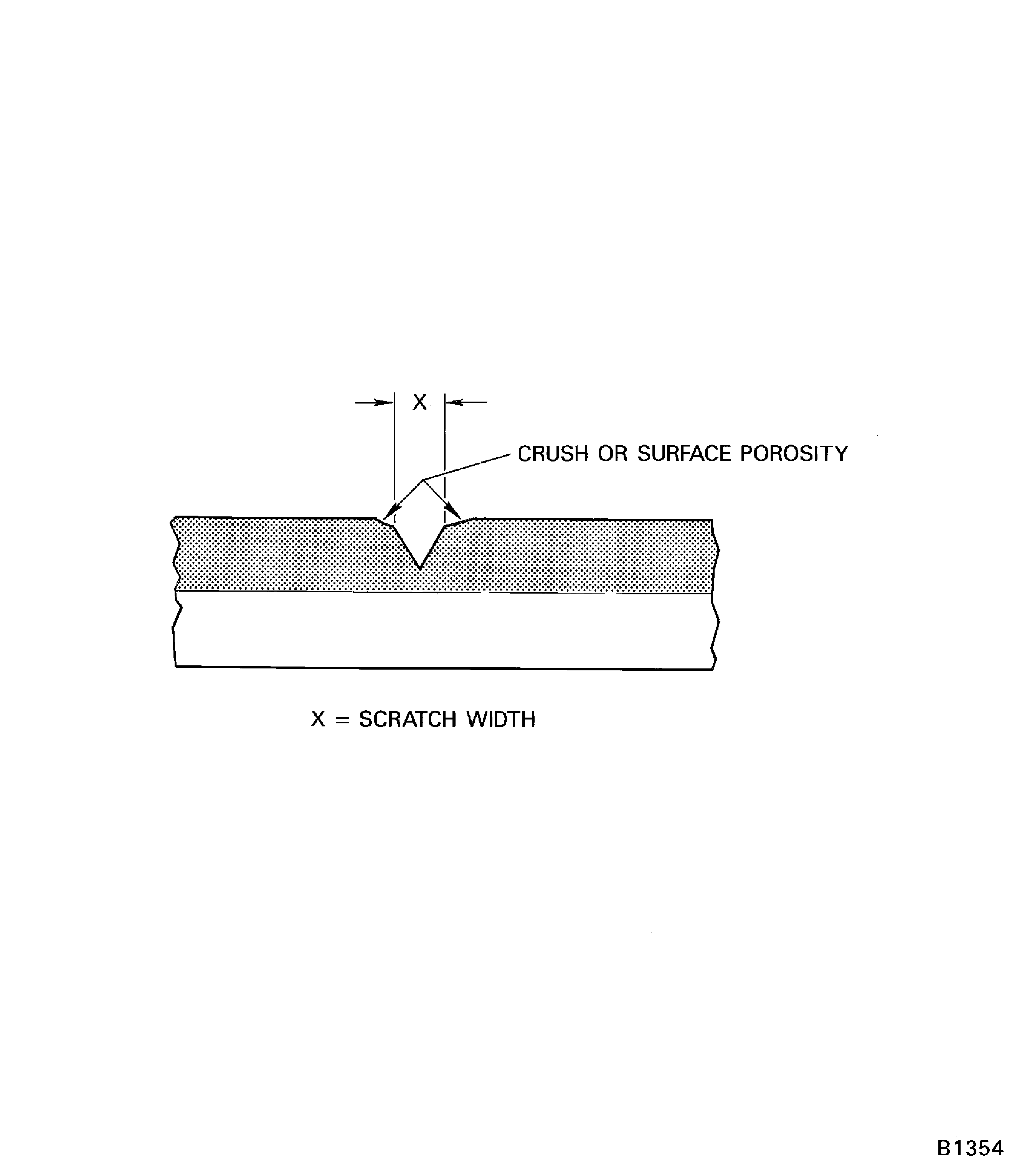
Measure width (x) of scratch to nearest 0.002 in. (0.051 mm) in several places with Brinell microscope, refer to Figure. Do not include area of crush, surface porosity, or area within 2.5 scratch widths of any specimen containing vertical supports.
Hardness testing procedure.
SUBTASK 70-34-15-280-002 Scratch Hardness Test
Figure: Satisfactory porosity in PWA 74-1 coating (100x)
Satisfactory porosity in PWA 74-1 coating (100x)
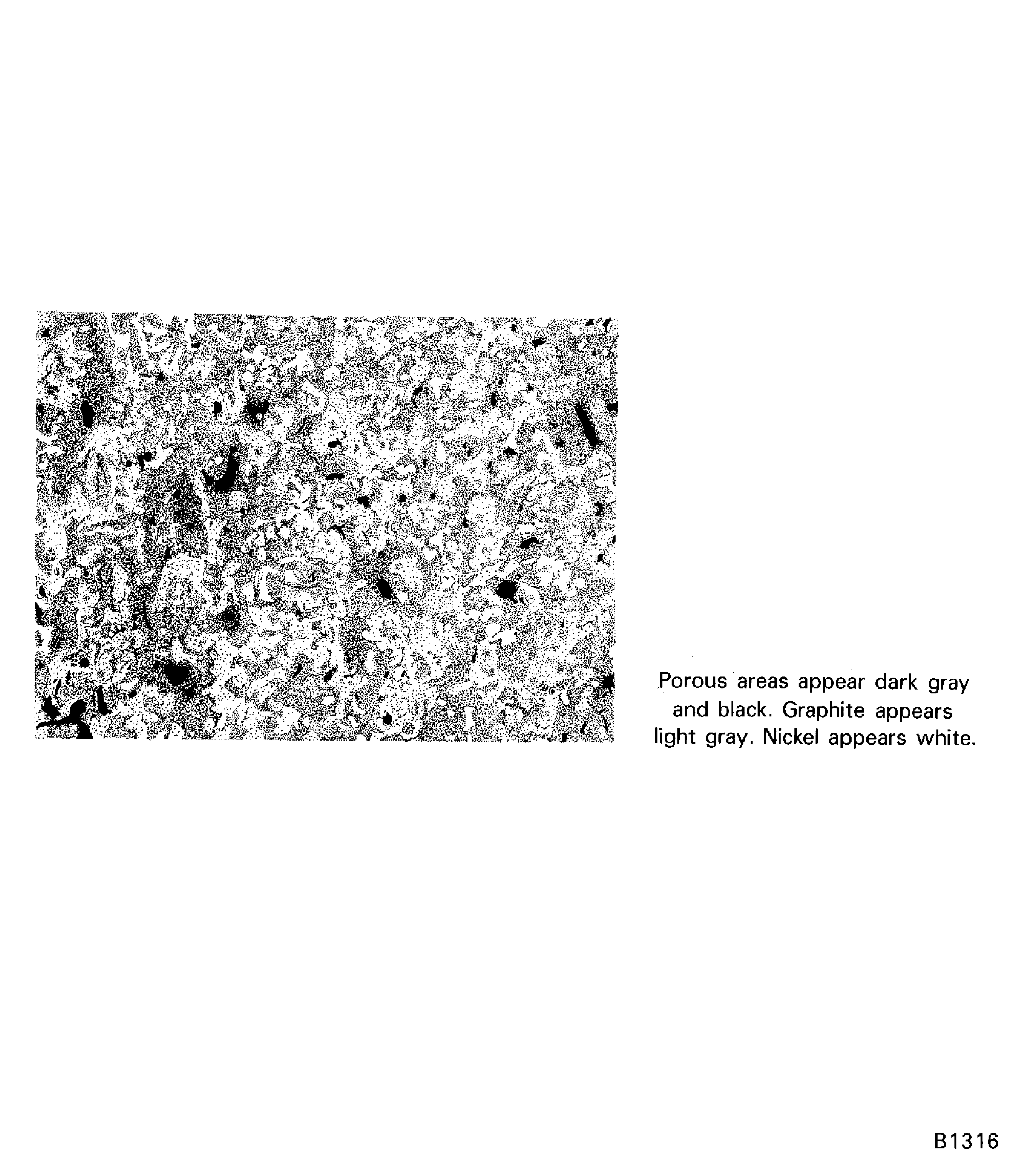
Figure: Satisfactory porosity in PWA 74-1 coating (100X)
Satisfactory porosity in PWA 74-1 coating (100X)
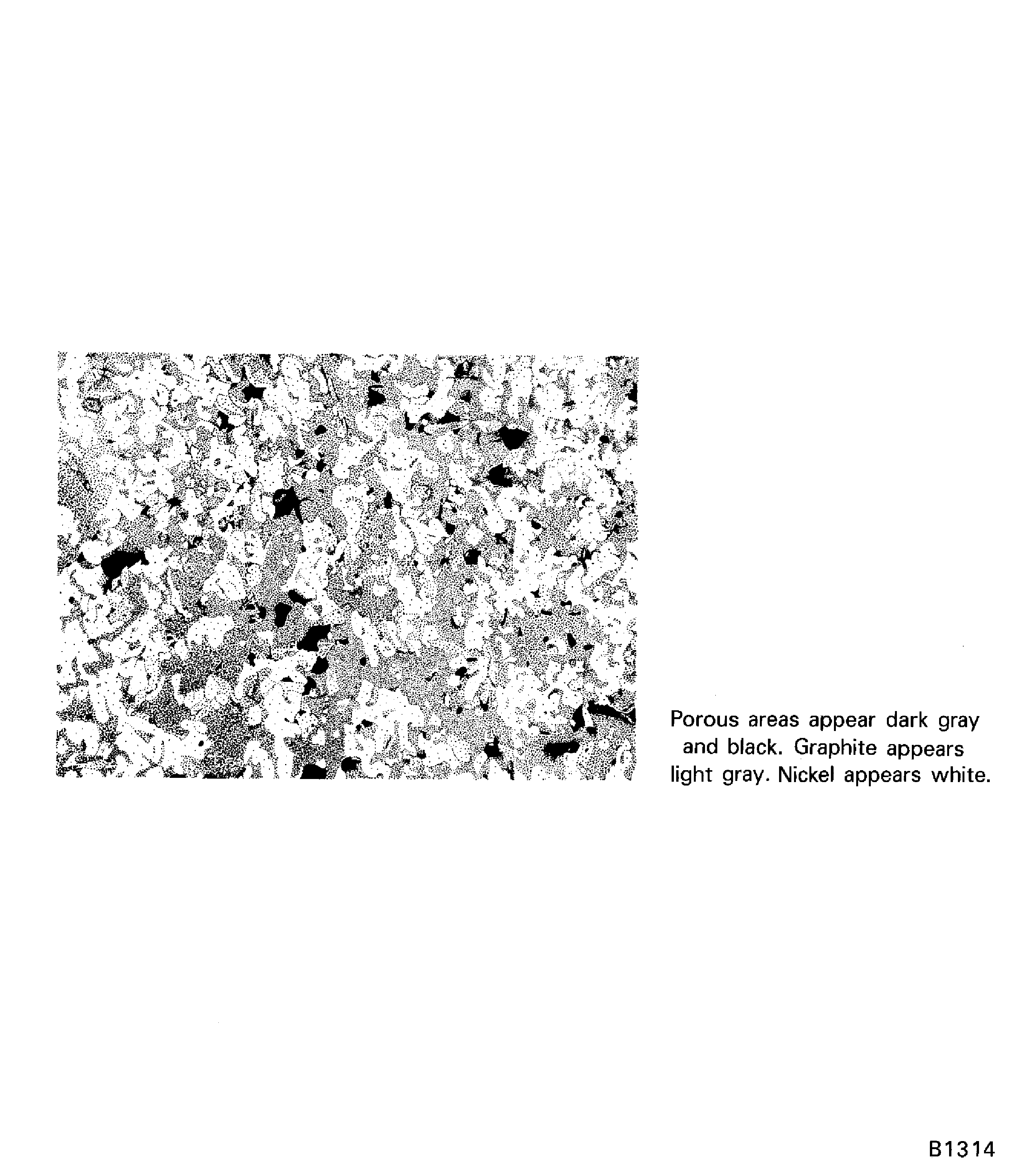
Figure: Excessive porosity in PWA 74-1 coating (100x)
Excessive porosity in PWA 74-1 coating (100x)
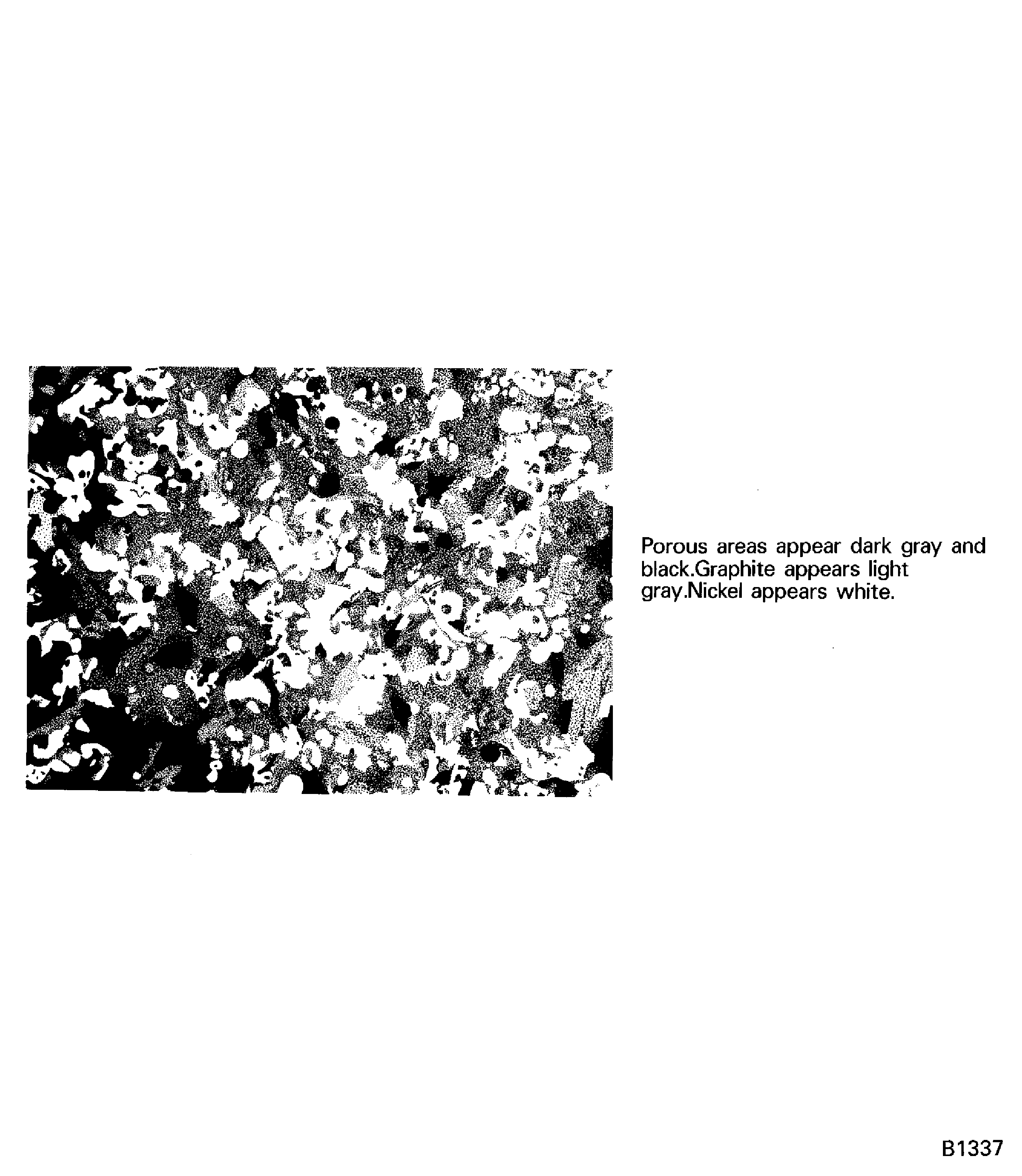
Figure: Diagram showing porosity criteria for PWA 74-1 and PWA 74-2 coating adjacent to chamfers
Diagram showing porosity criteria for PWA 74-1 and PWA 74-2 coating adjacent to chamfers
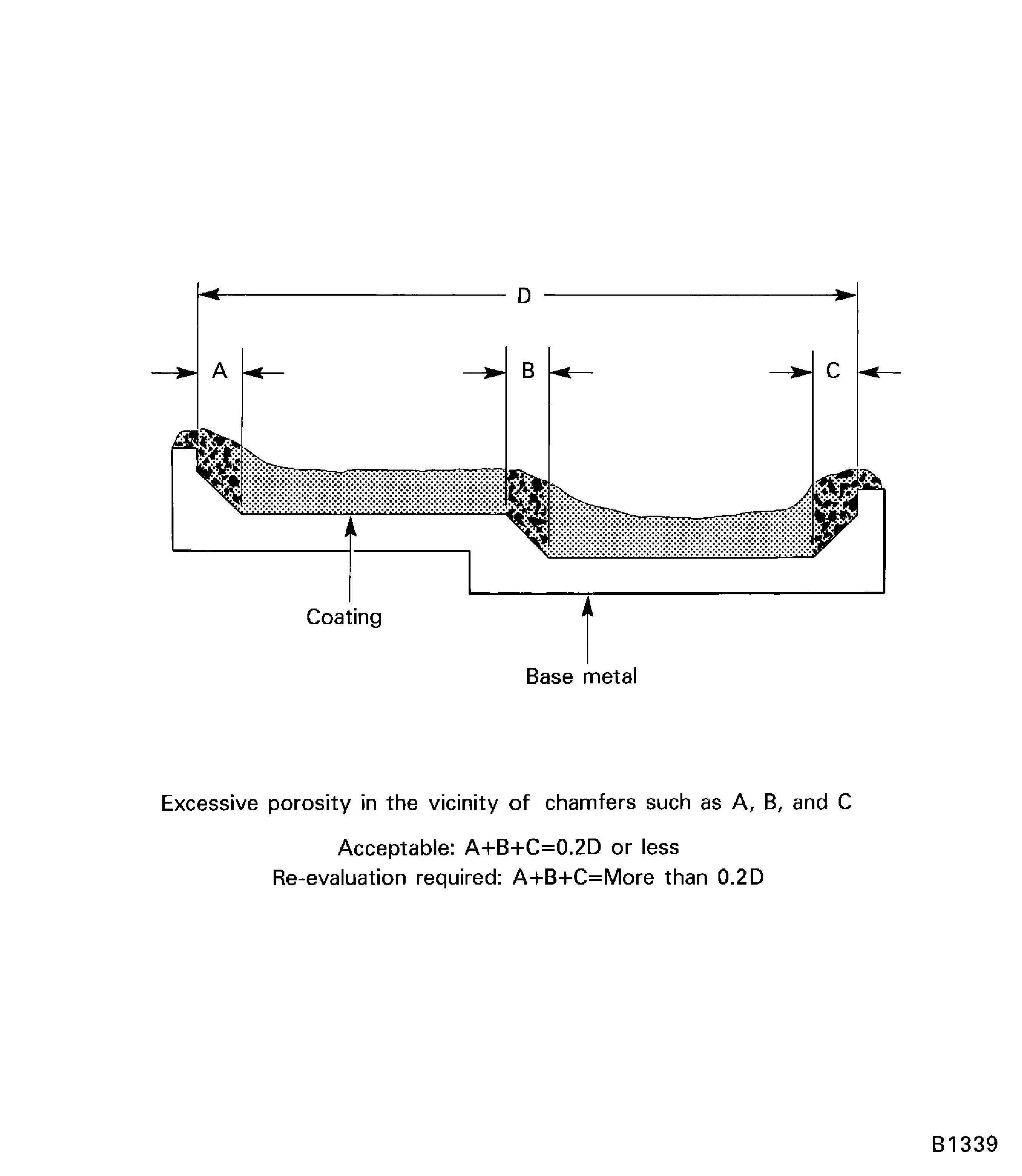
Figure: Inadequate porosity in PWA 74-1 coating (100X)
Inadequate porosity in PWA 74-1 coating (100X)
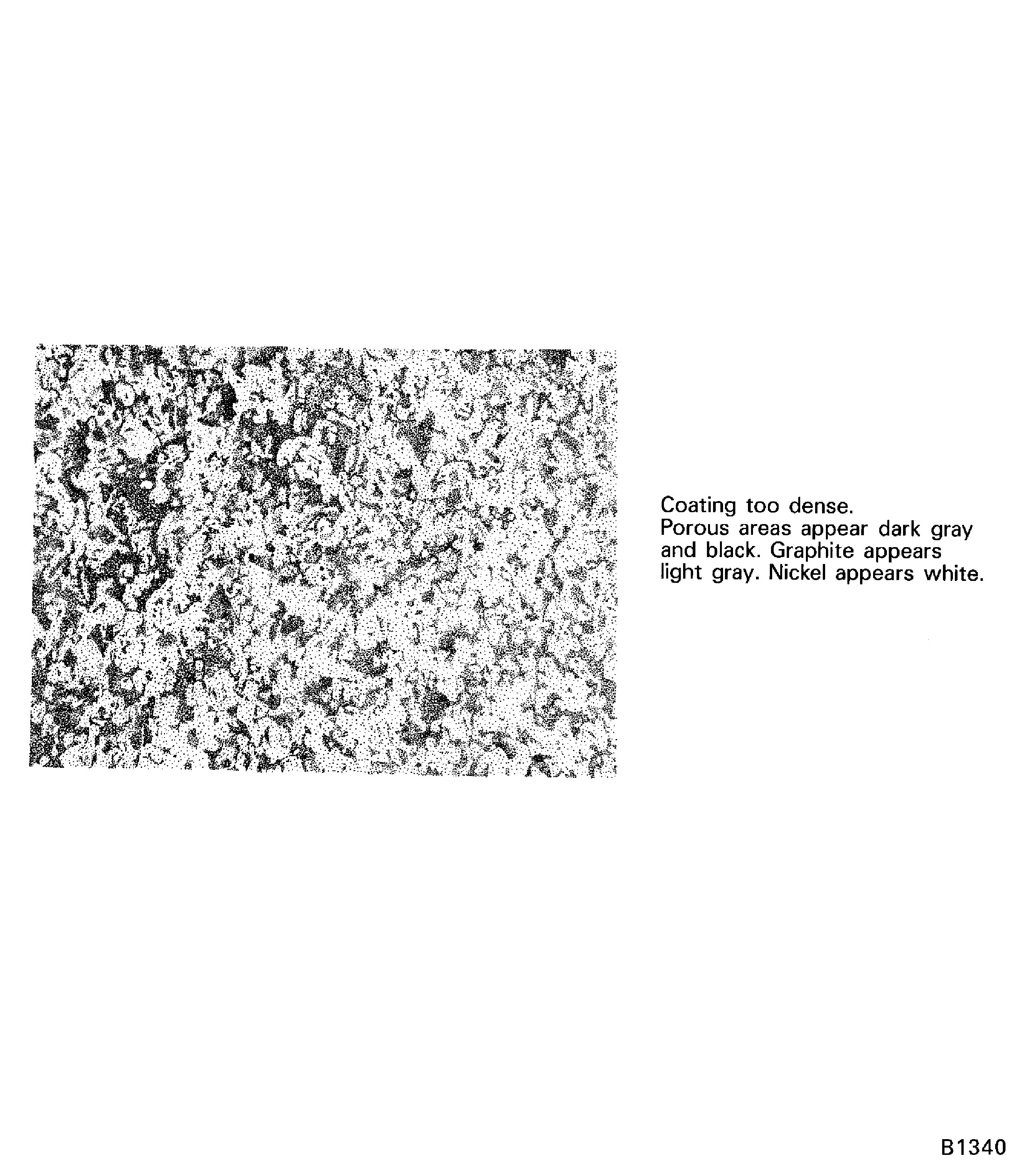
Figure: Satisfactory dispersal of nickel/graphite constituents in PWA 74-1 coating (100x)
Satisfactory dispersal of nickel/graphite constituents in PWA 74-1 coating (100x)
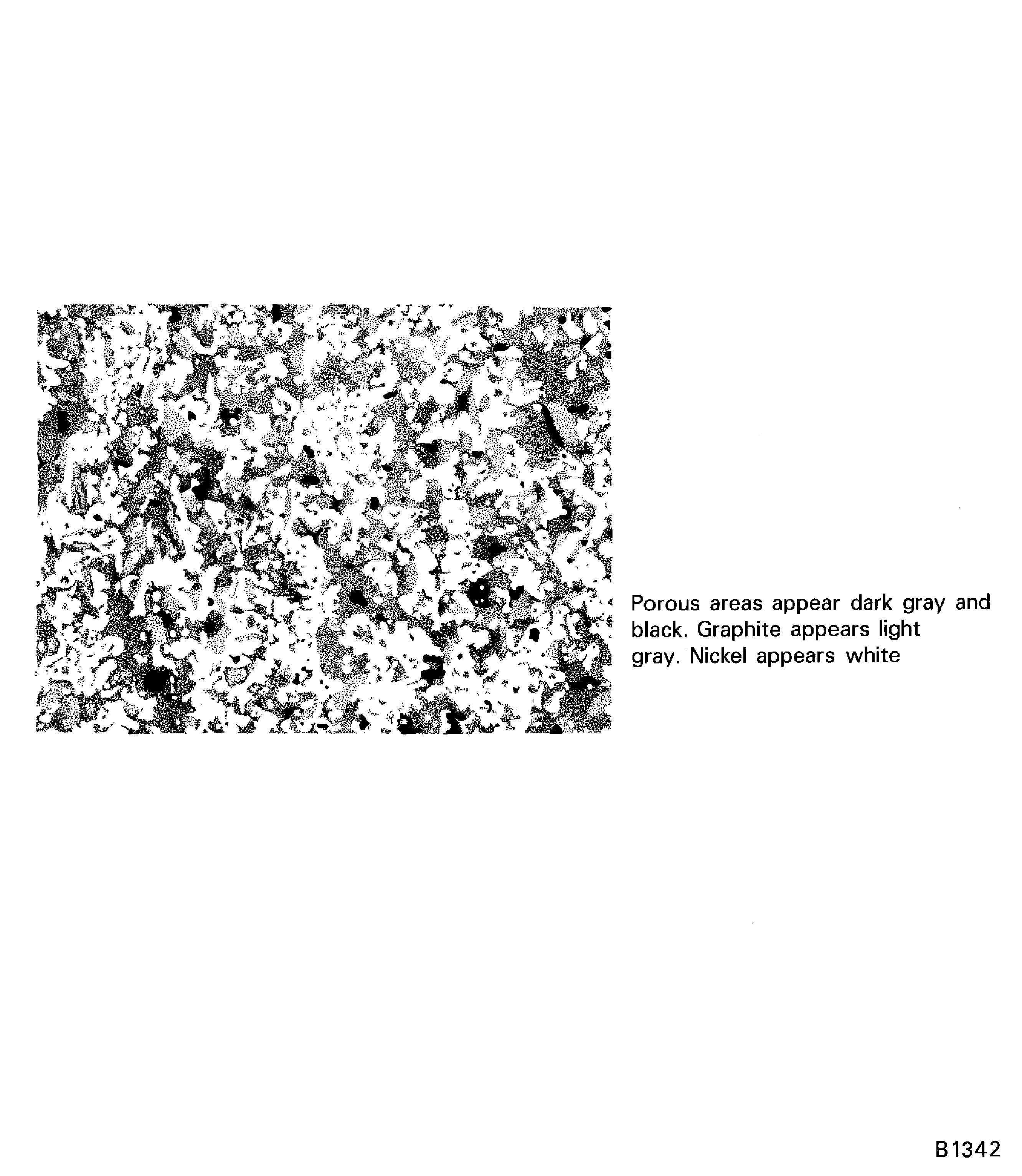
Figure: Satisfactory dispersal of nickel/graphite constituents in PWA 74-1 coating (100x)
Satisfactory dispersal of nickel/graphite constituents in PWA 74-1 coating (100x)
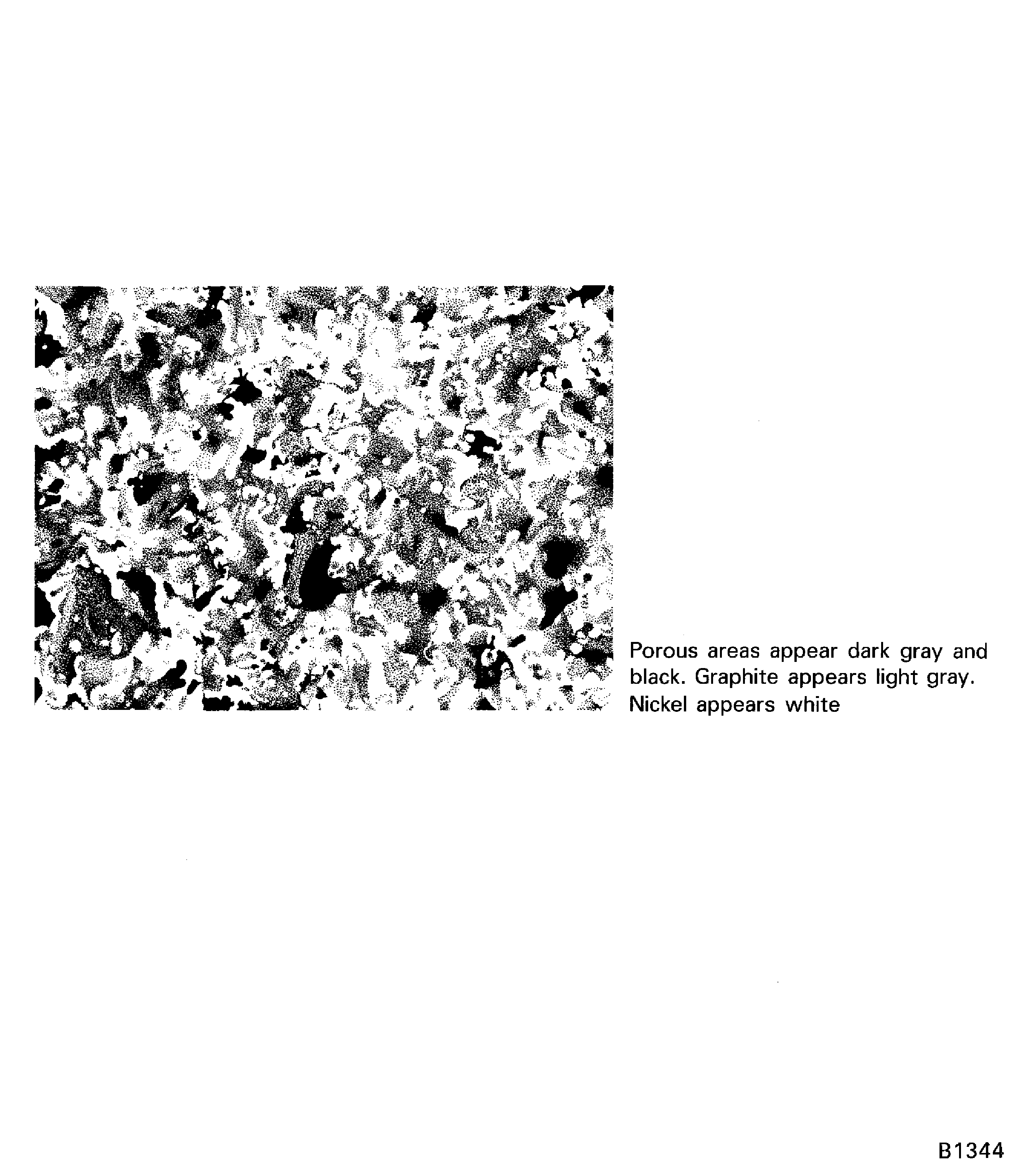
Figure: Unsatisfactory dispersal of nickel/graphite constituents in PWA 74-1 coating (100x) (Graphite not sufficient)
Unsatisfactory dispersal of nickel/graphite constituents in PWA 74-1 coating (100x) (Graphite not sufficient)
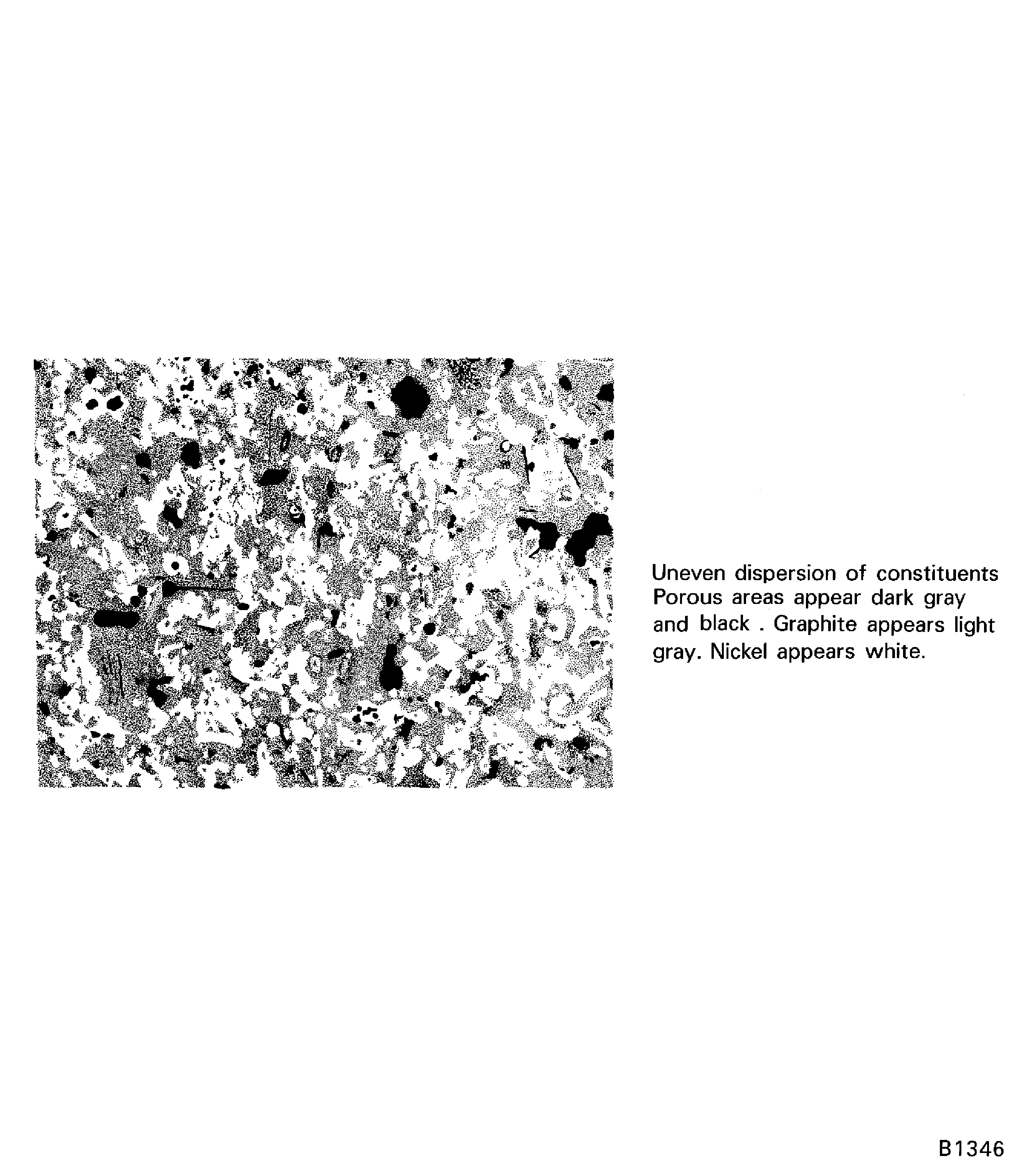
Figure: Unsatisfactory bond at coating interface in PWA 74-1 coatings (500x)
Unsatisfactory bond at coating interface in PWA 74-1 coatings (500x)
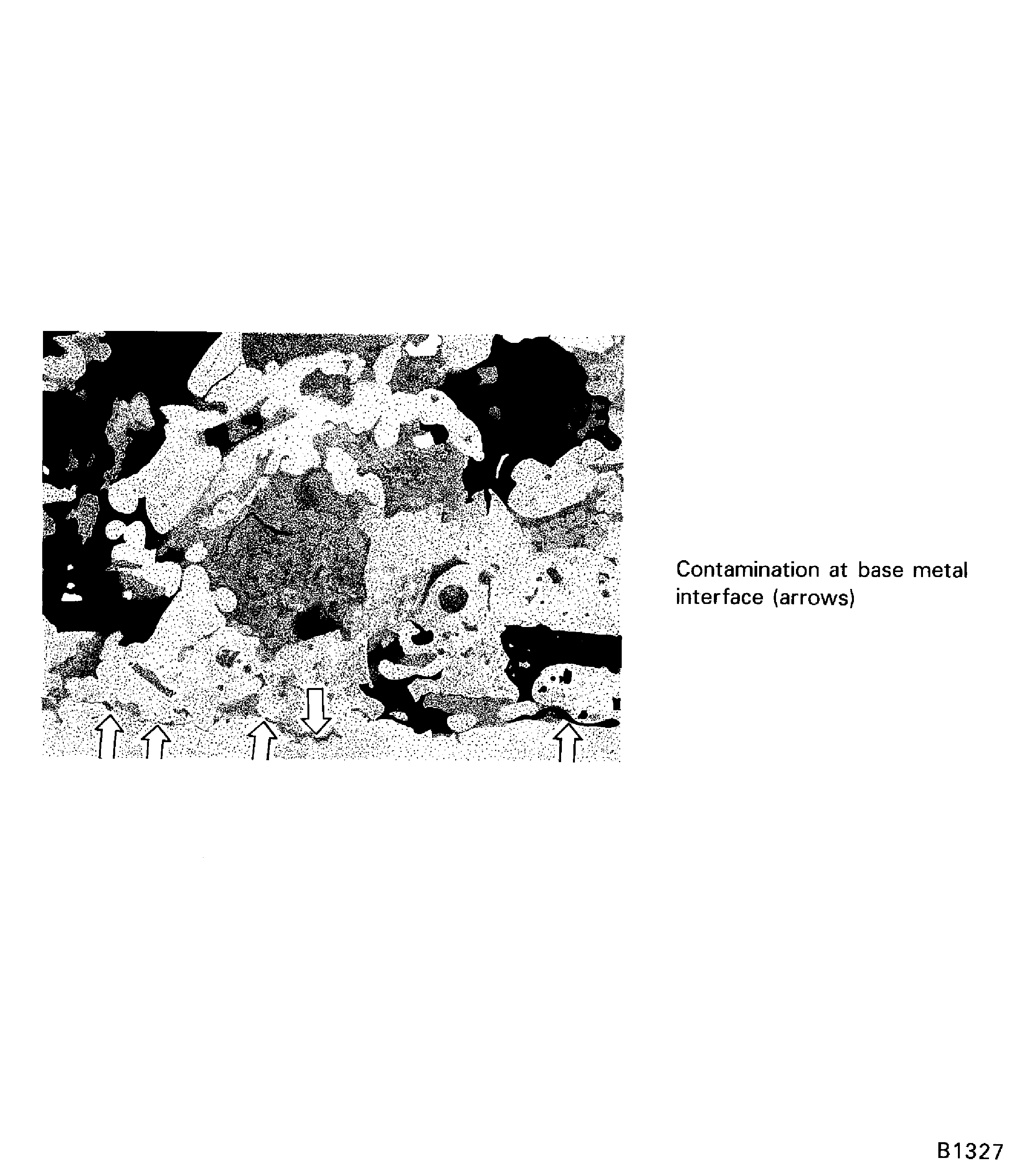
Figure: Satisfactory oxides in PWA 74-1 coating (500x)
Satisfactory oxides in PWA 74-1 coating (500x)
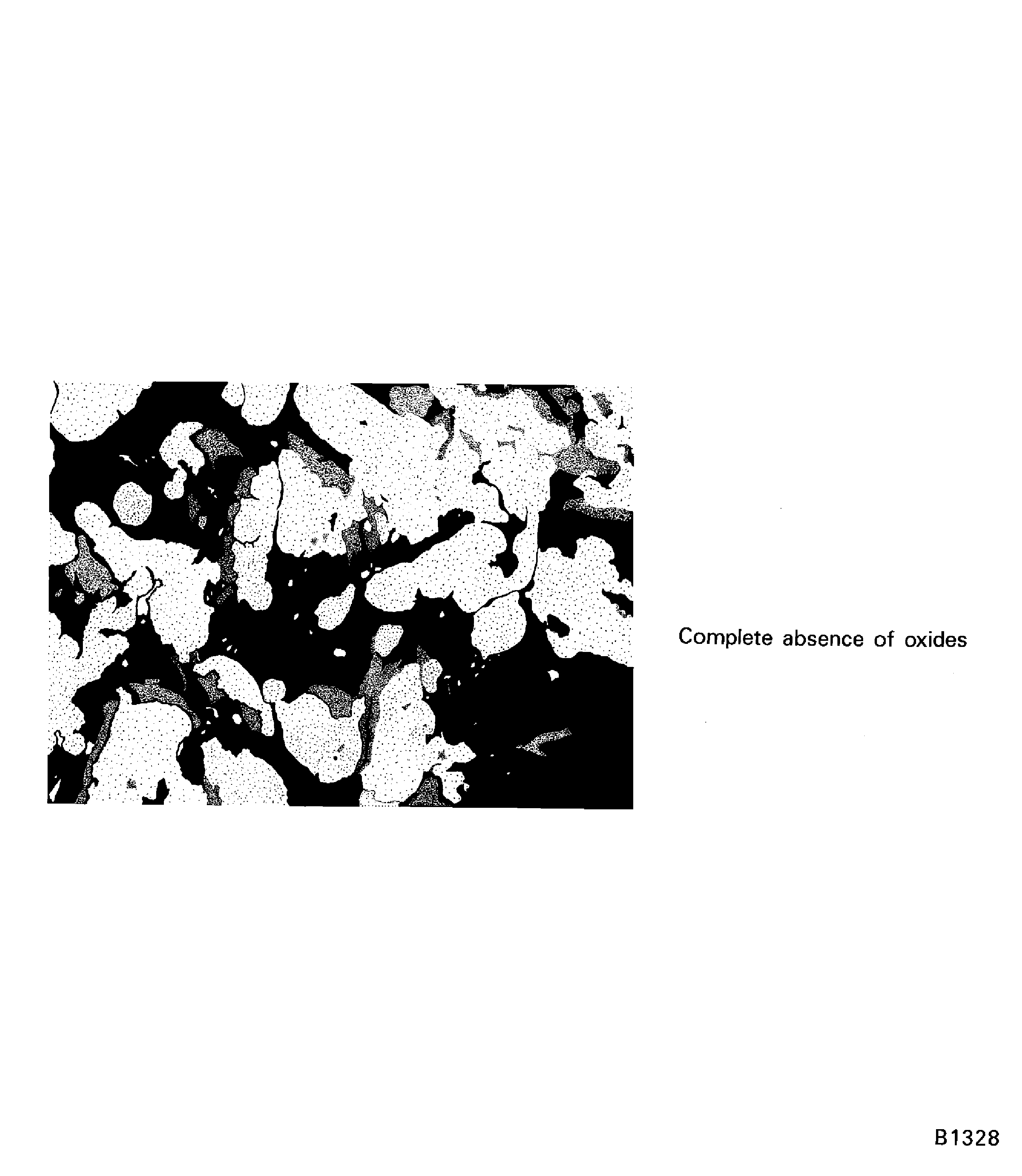
Figure: Satisfactory oxides in PWA 74-1 and PWA 74-2 coatings (500x)
Satisfactory oxides in PWA 74-1 and PWA 74-2 coatings (500x)
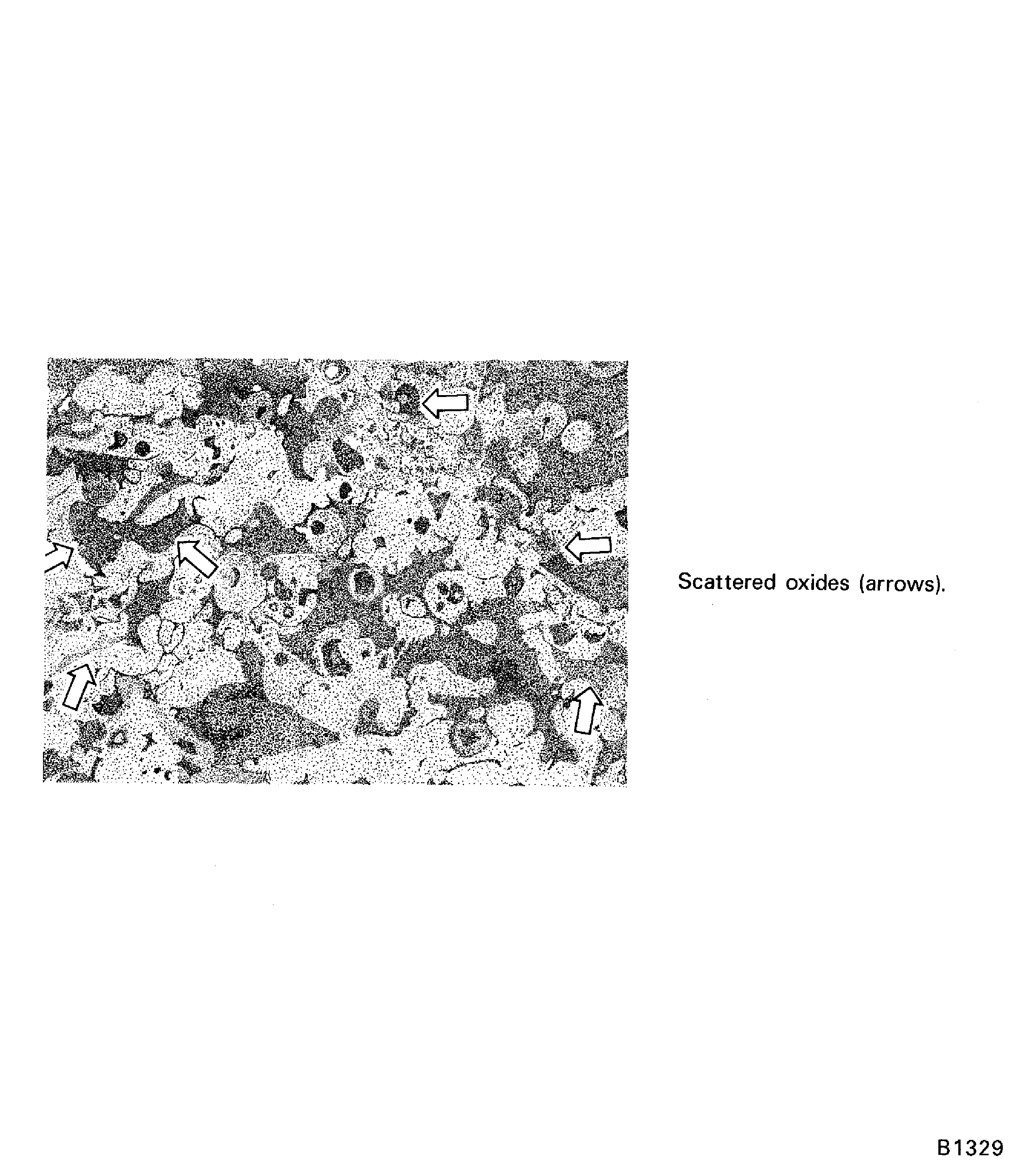
Figure: Unsatisfactory oxides in PWA 74-1 and PWA 74-2 coating (500x)
Unsatisfactory oxides in PWA 74-1 and PWA 74-2 coating (500x)
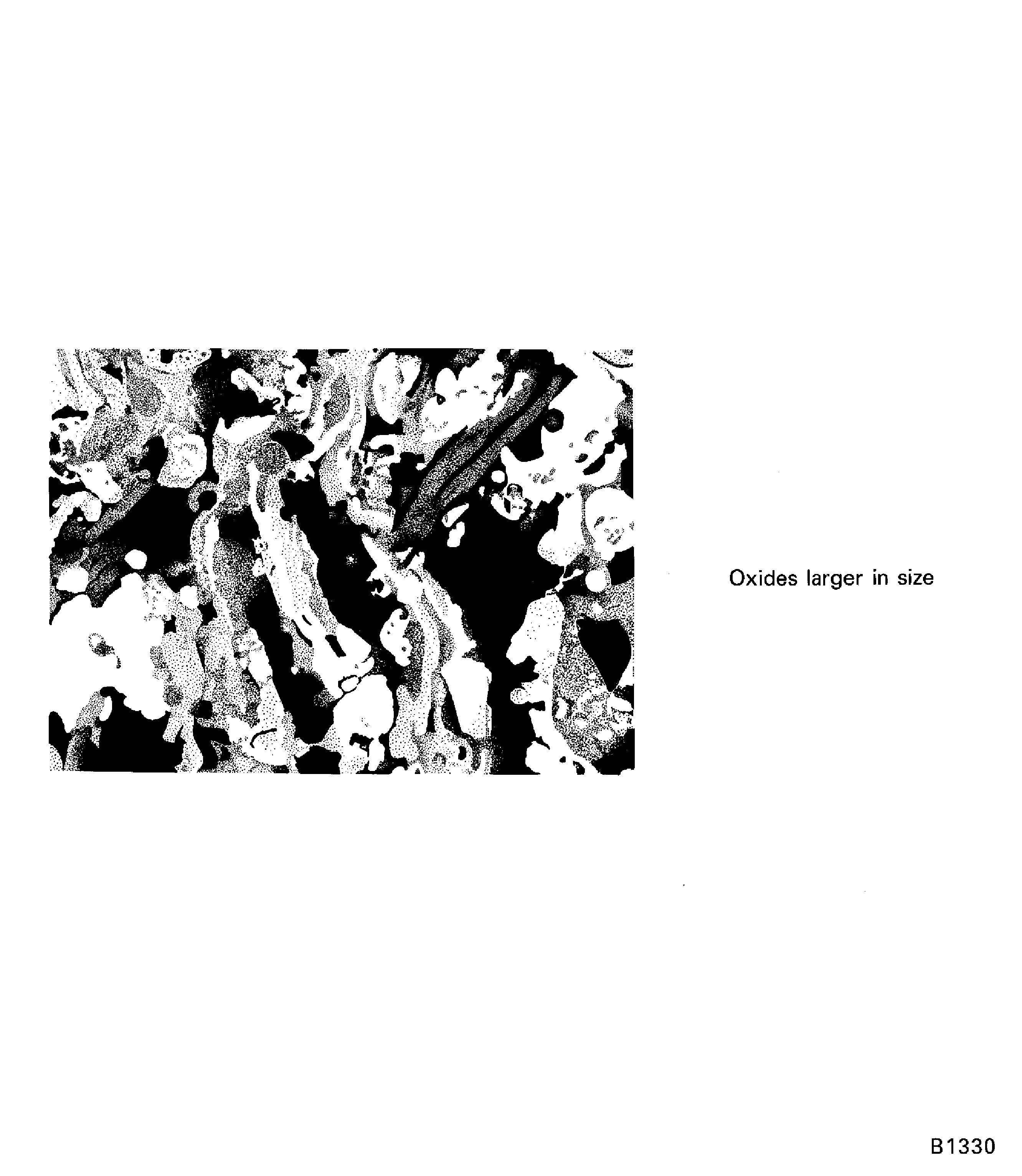
Figure: Satisfactory porosity in PWA 74-2 coating (100x)
Satisfactory porosity in PWA 74-2 coating (100x)
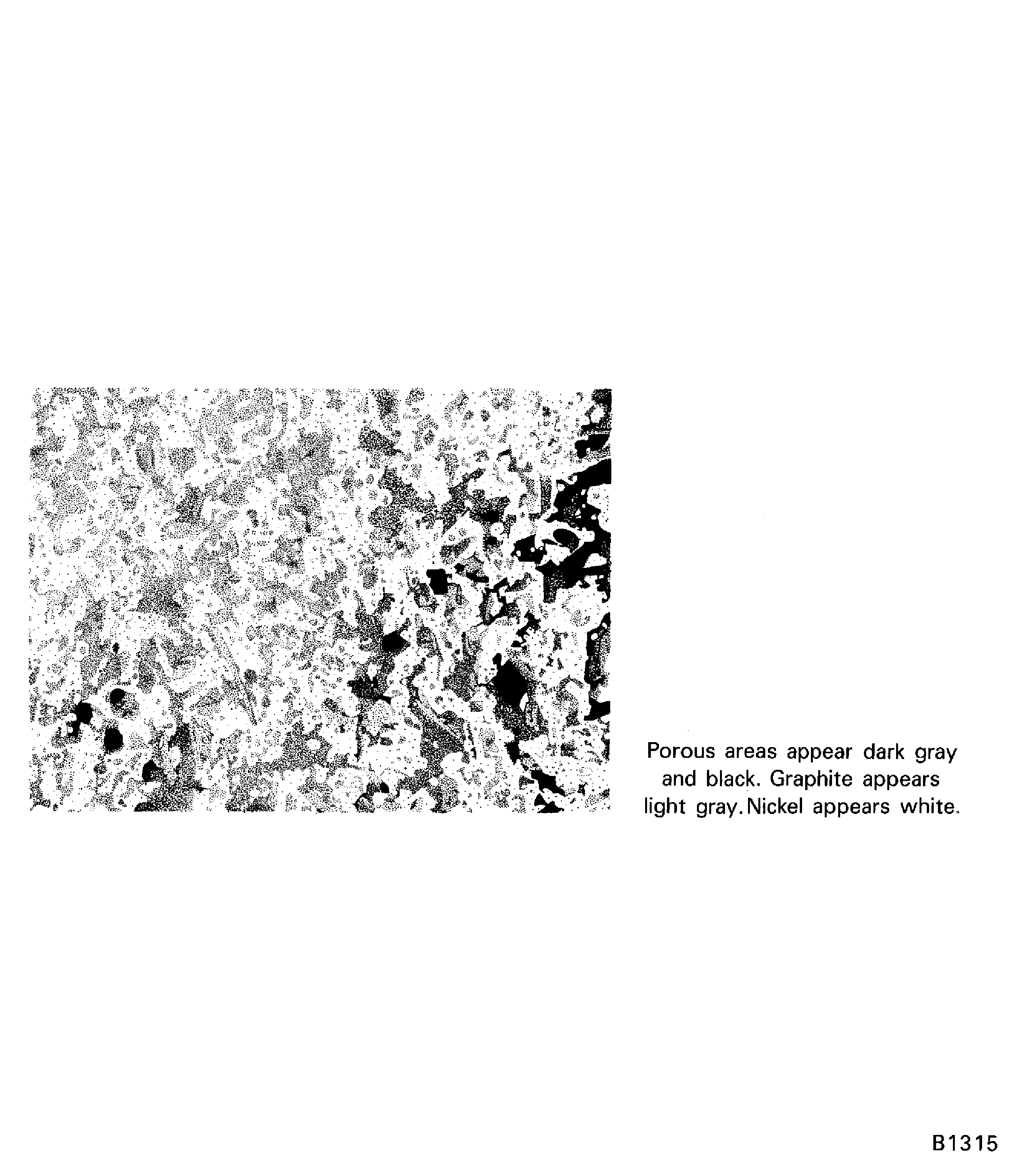
Figure: Satisfactory porosity in PWA 74-2 coating (100x)
Satisfactory porosity in PWA 74-2 coating (100x)
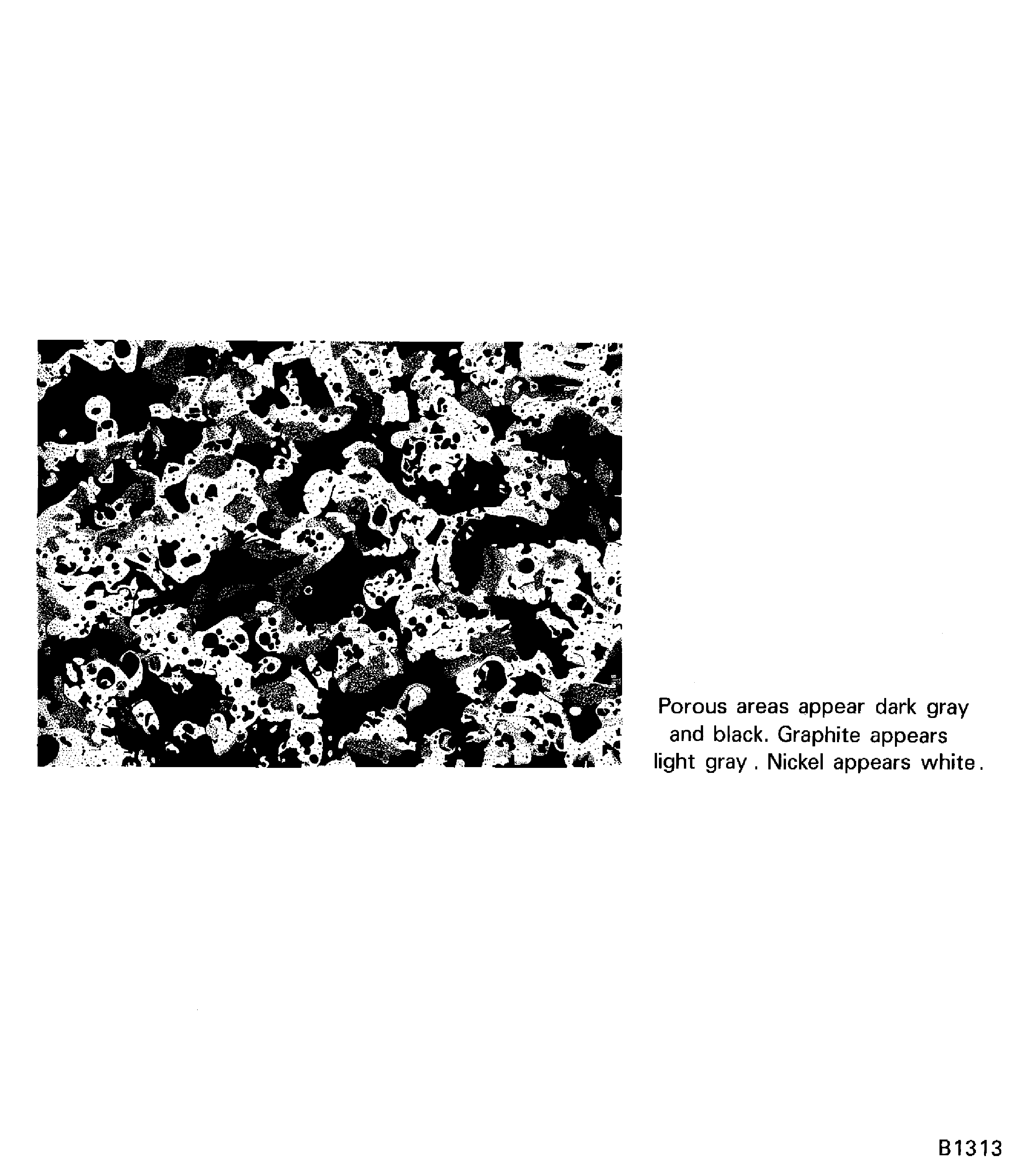
Figure: Too much porosity in PWA 74-2 coating (100x)
Too much porosity in PWA 74-2 coating (100x)
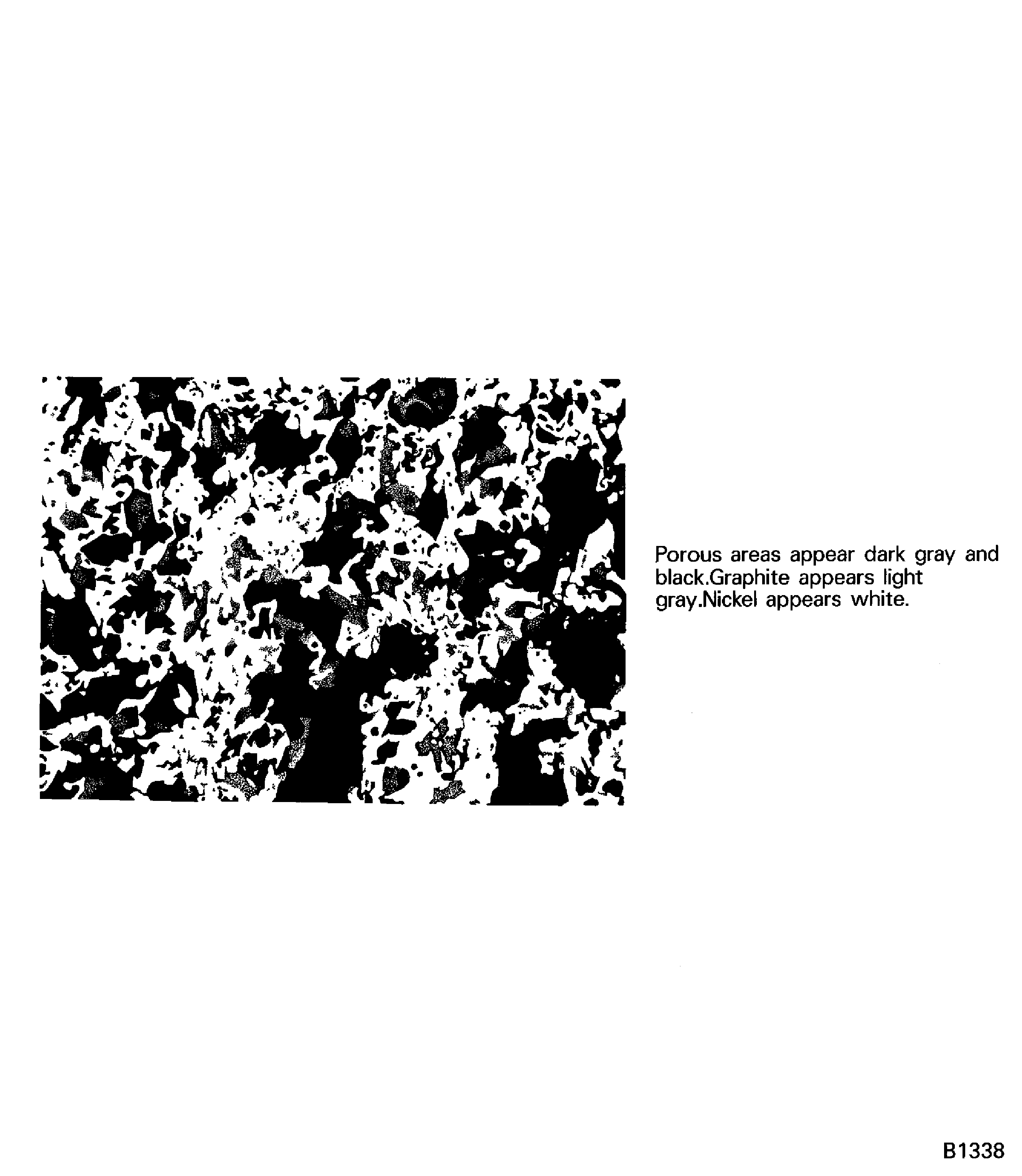
Figure: Unsatisfactory porosity in PWA 74-2 coating (100x)
Unsatisfactory porosity in PWA 74-2 coating (100x)
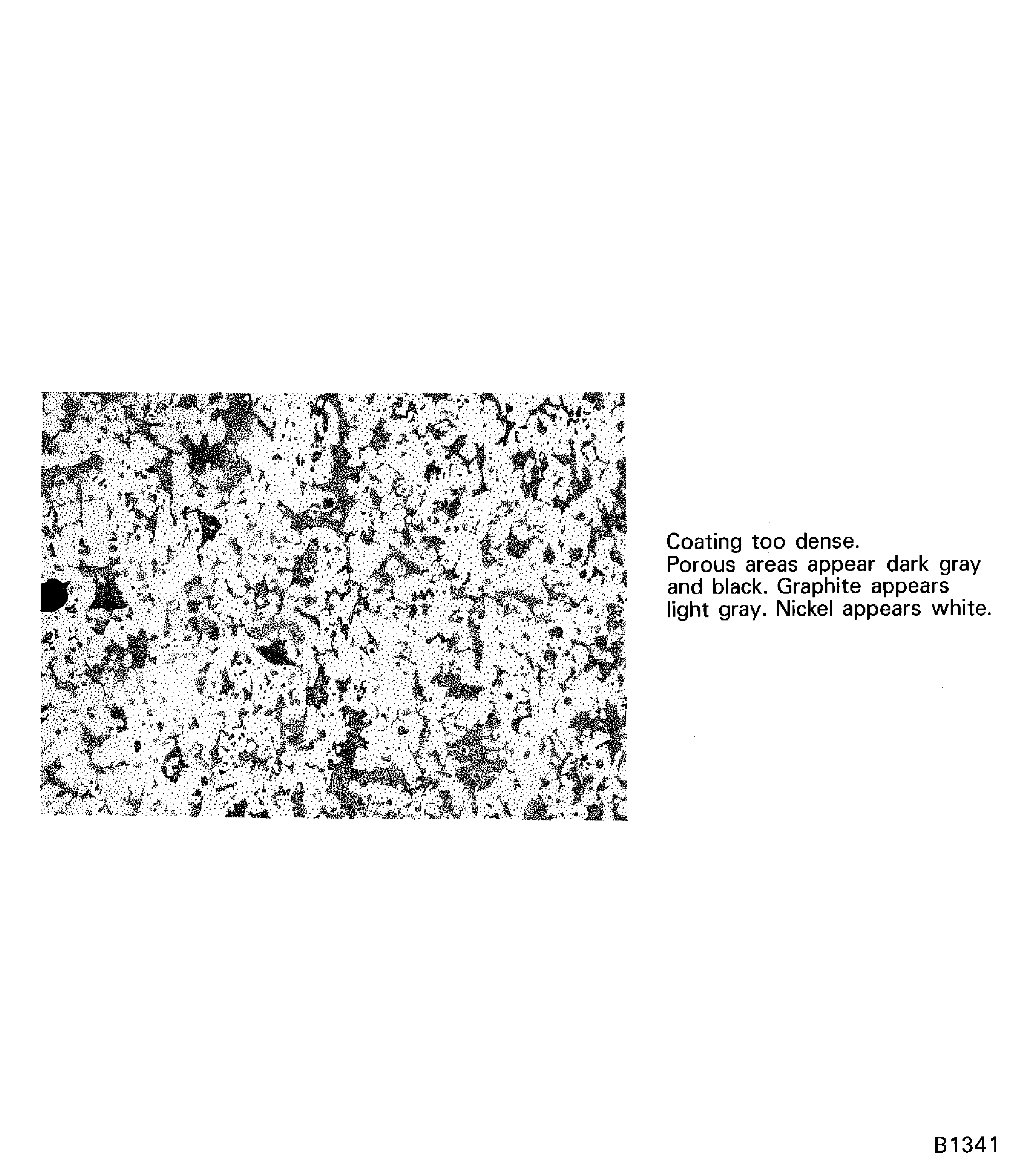
Figure: Satisfactory dispersal of nickel/graphite constituents in PWA 74-2 coating (100x)
Satisfactory dispersal of nickel/graphite constituents in PWA 74-2 coating (100x)
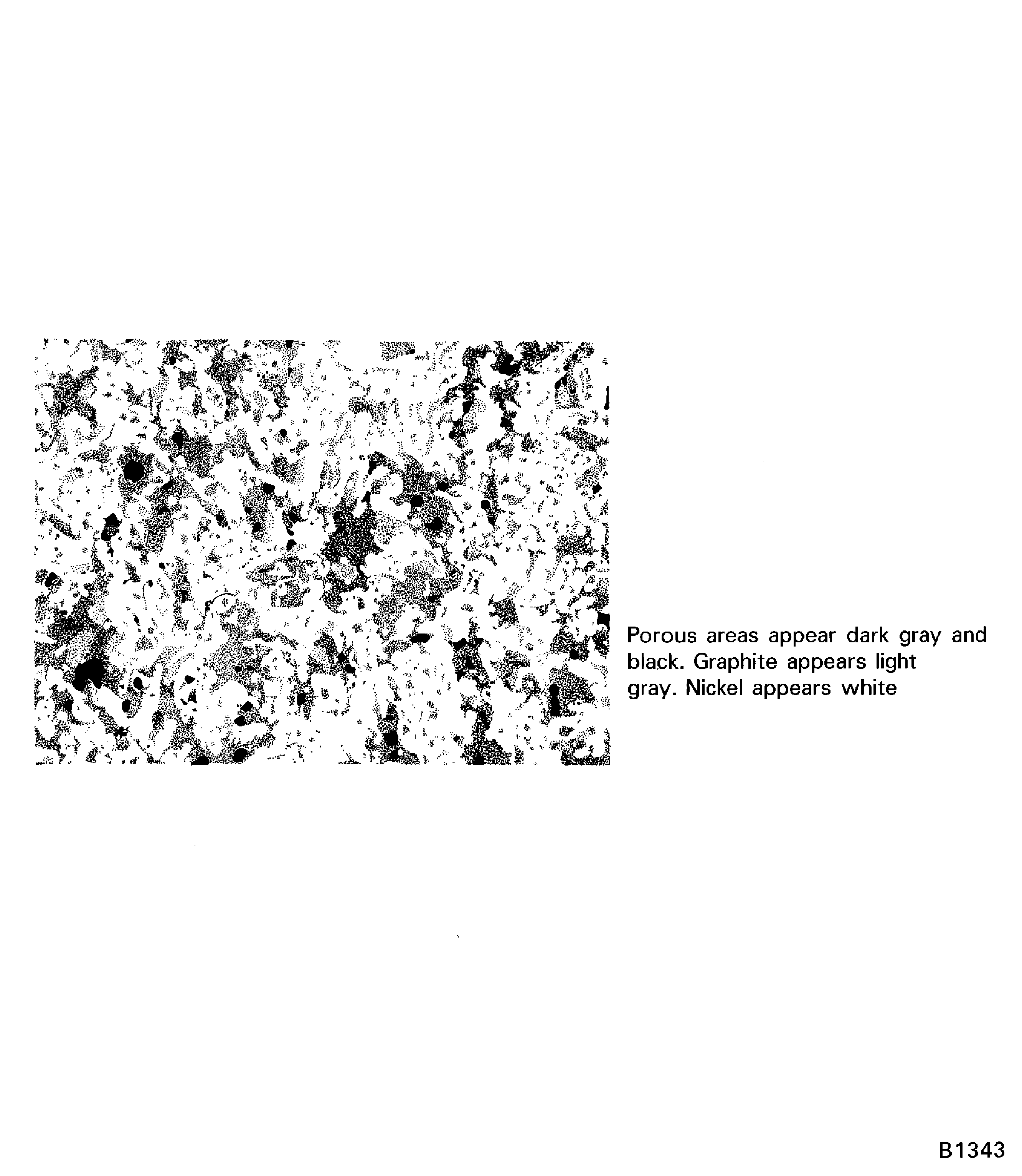
Figure: Satisfactory dispersal of nickel/graphite constituents in PWA 74-2 coating (100x)
Satisfactory dispersal of nickel/graphite constituents in PWA 74-2 coating (100x)
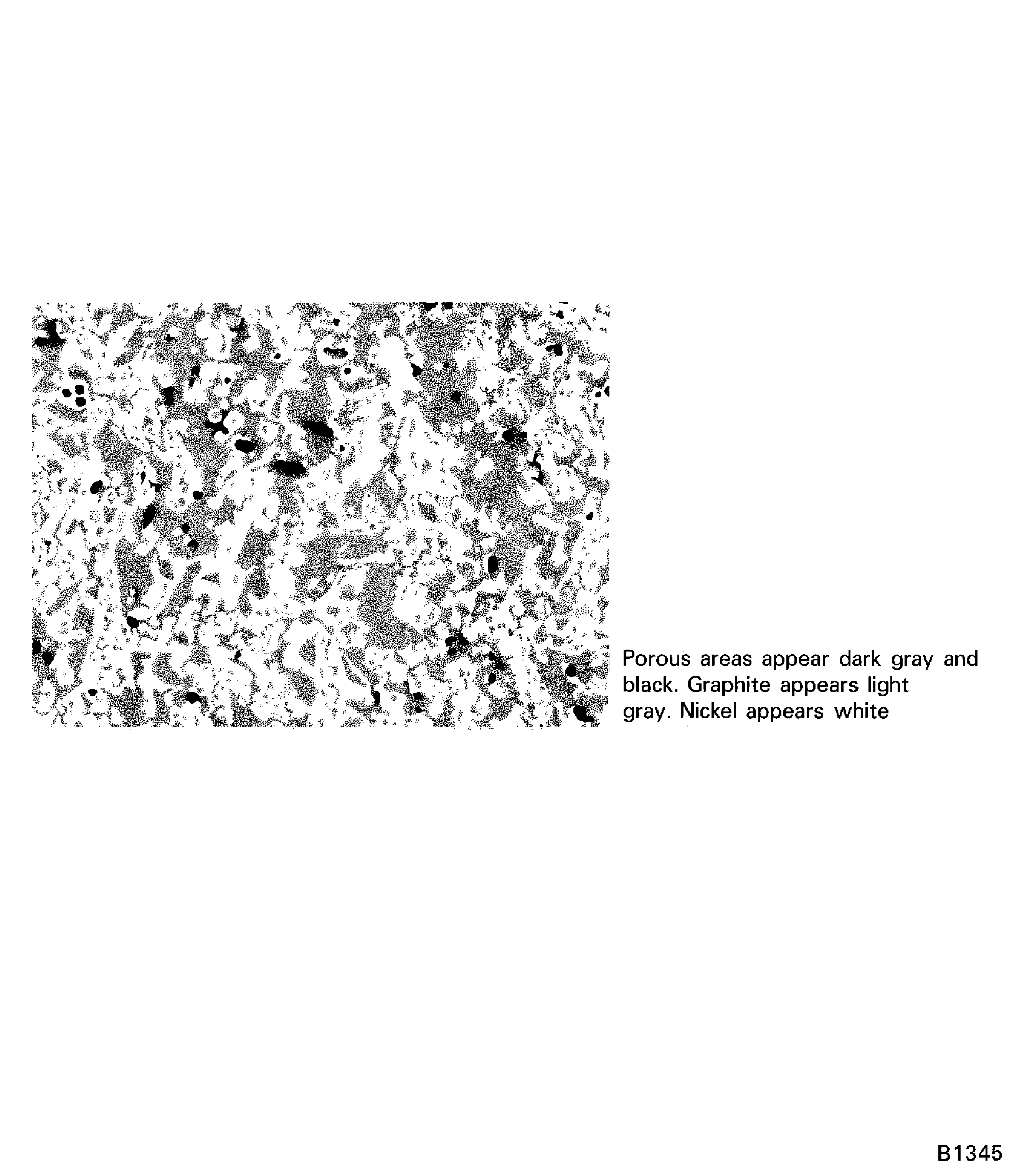
Figure: Unsatisfactory dispersal of nickel/graphite constituents in PWA 74-2 coating (graphite not sufficient) (100x)
Unsatisfactory dispersal of nickel/graphite constituents in PWA 74-2 coating (graphite not sufficient) (100x)
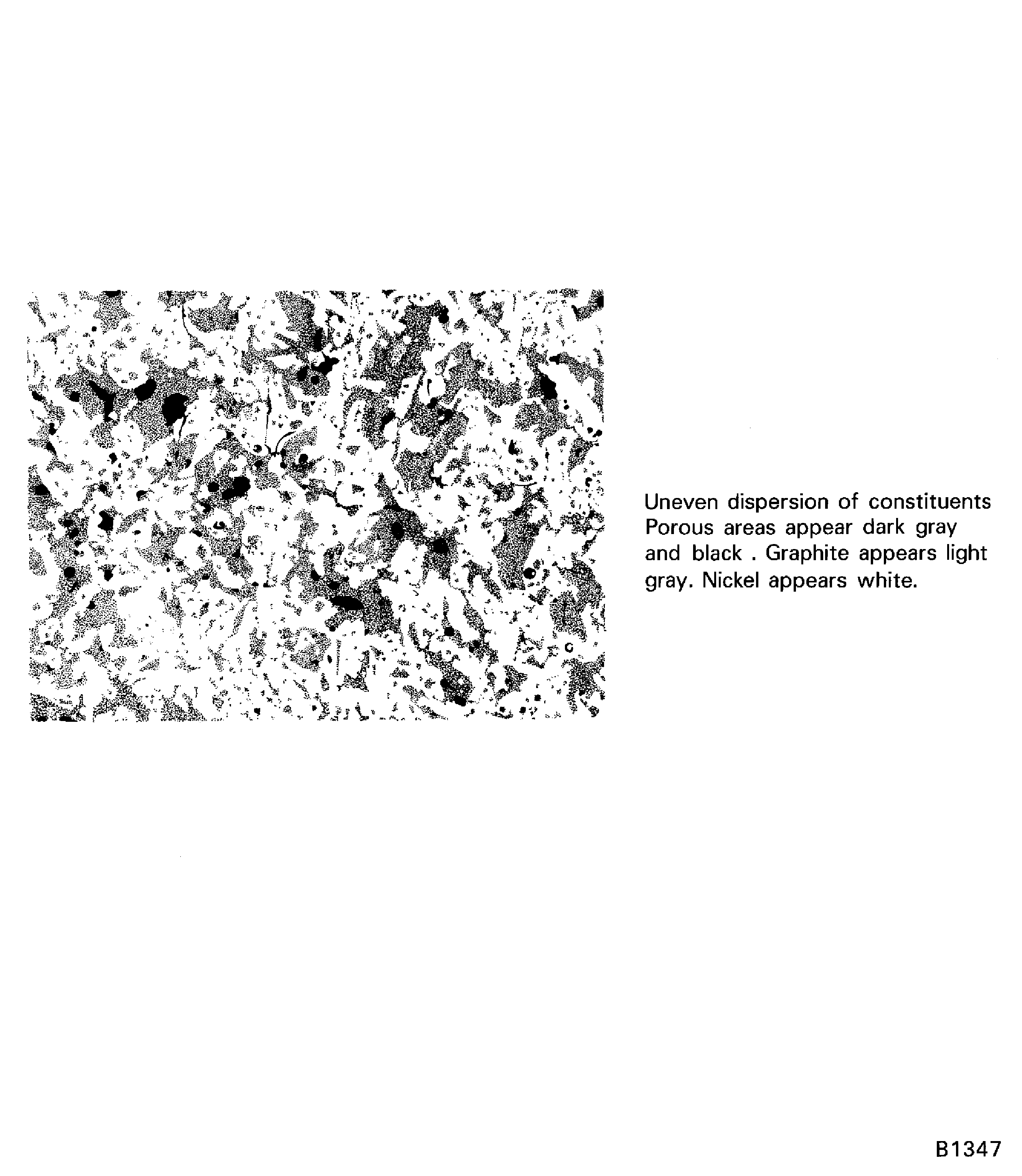
Figure: Condition of interface (400x)
Condition of interface (400x)
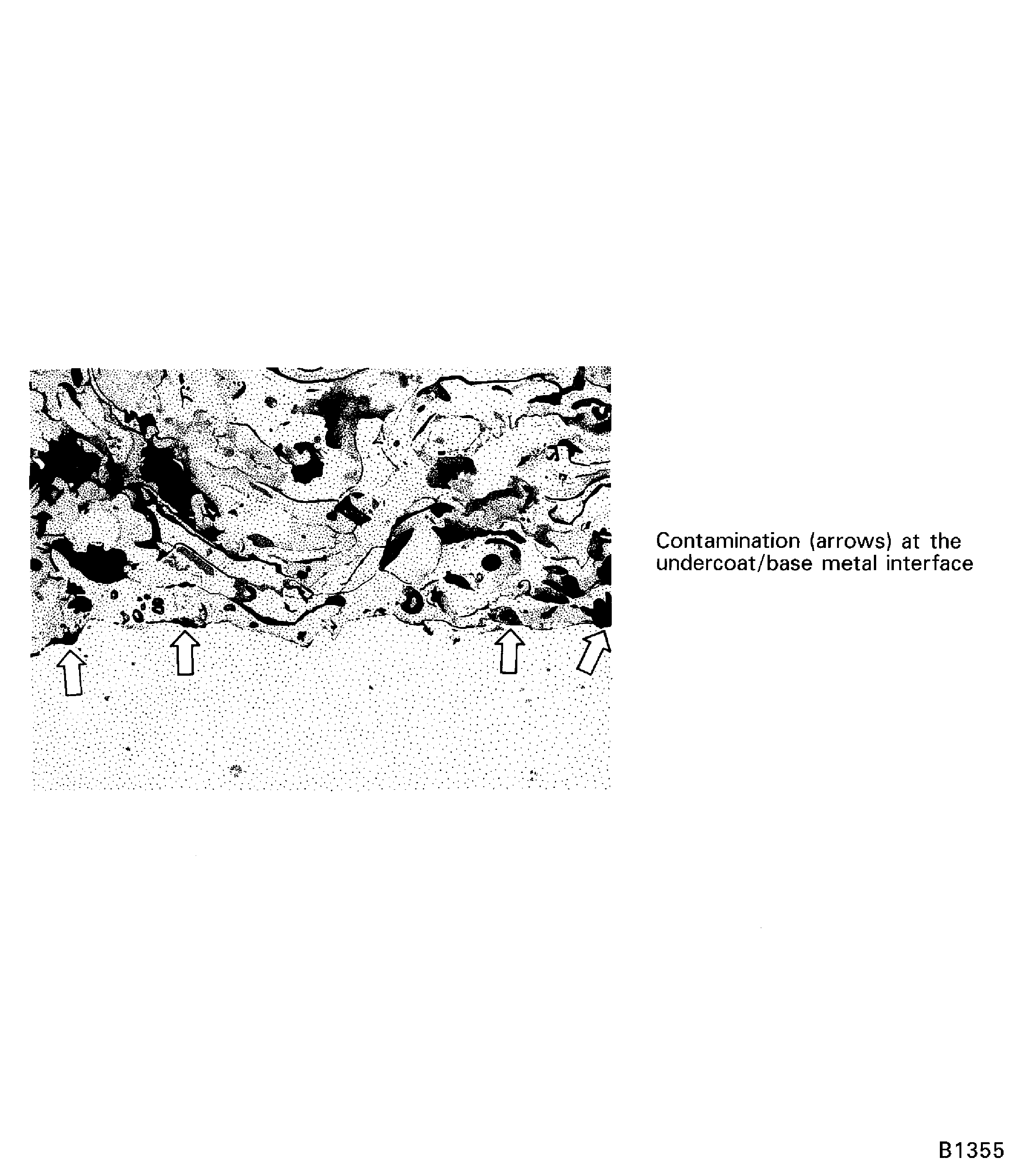
Figure: Condition of interface (400x)
Condition of interface (400x)
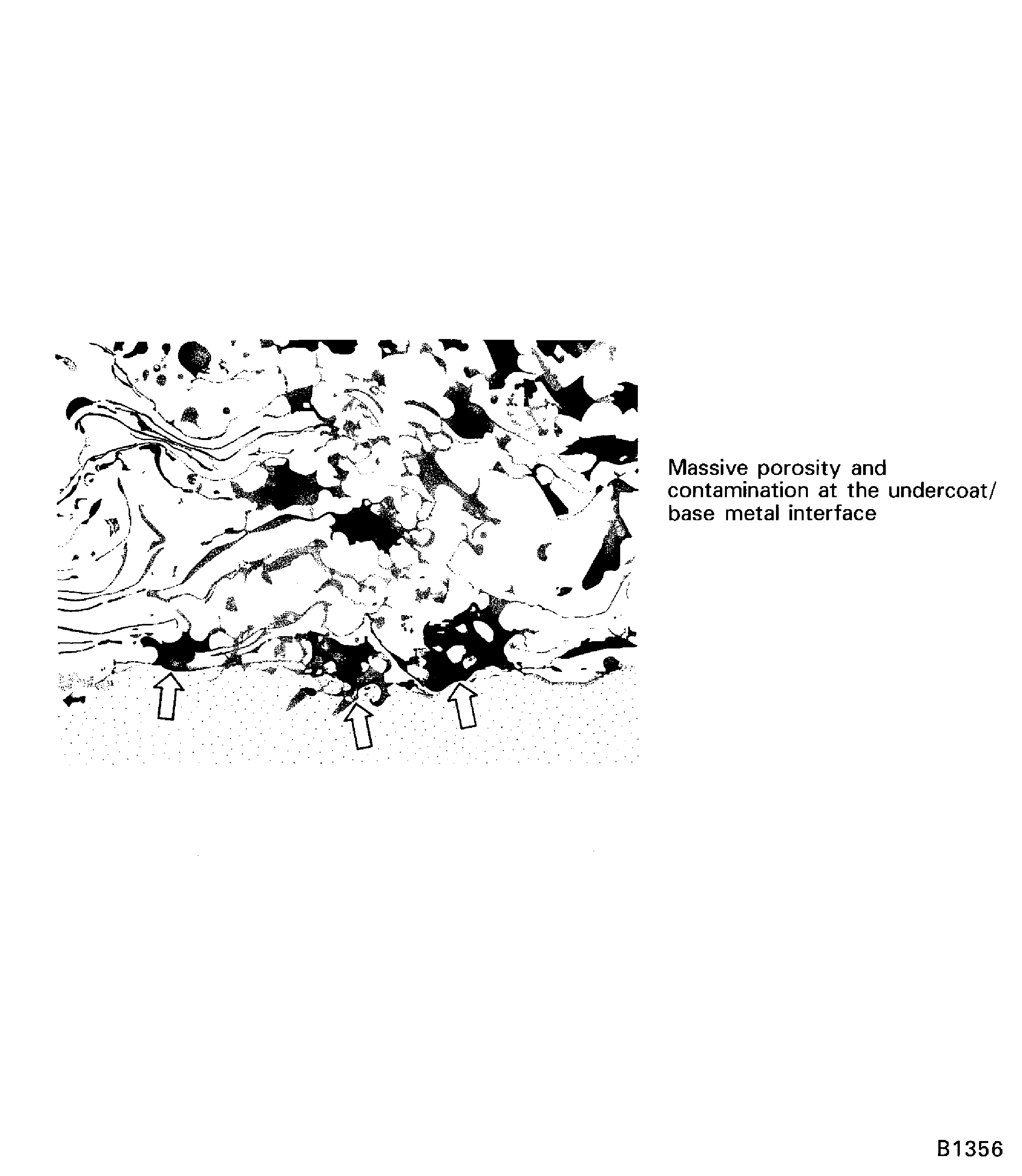
Figure: Oxides and porosity in PWA 53-37 undercoat (200x)
Oxides and porosity in PWA 53-37 undercoat (200x)
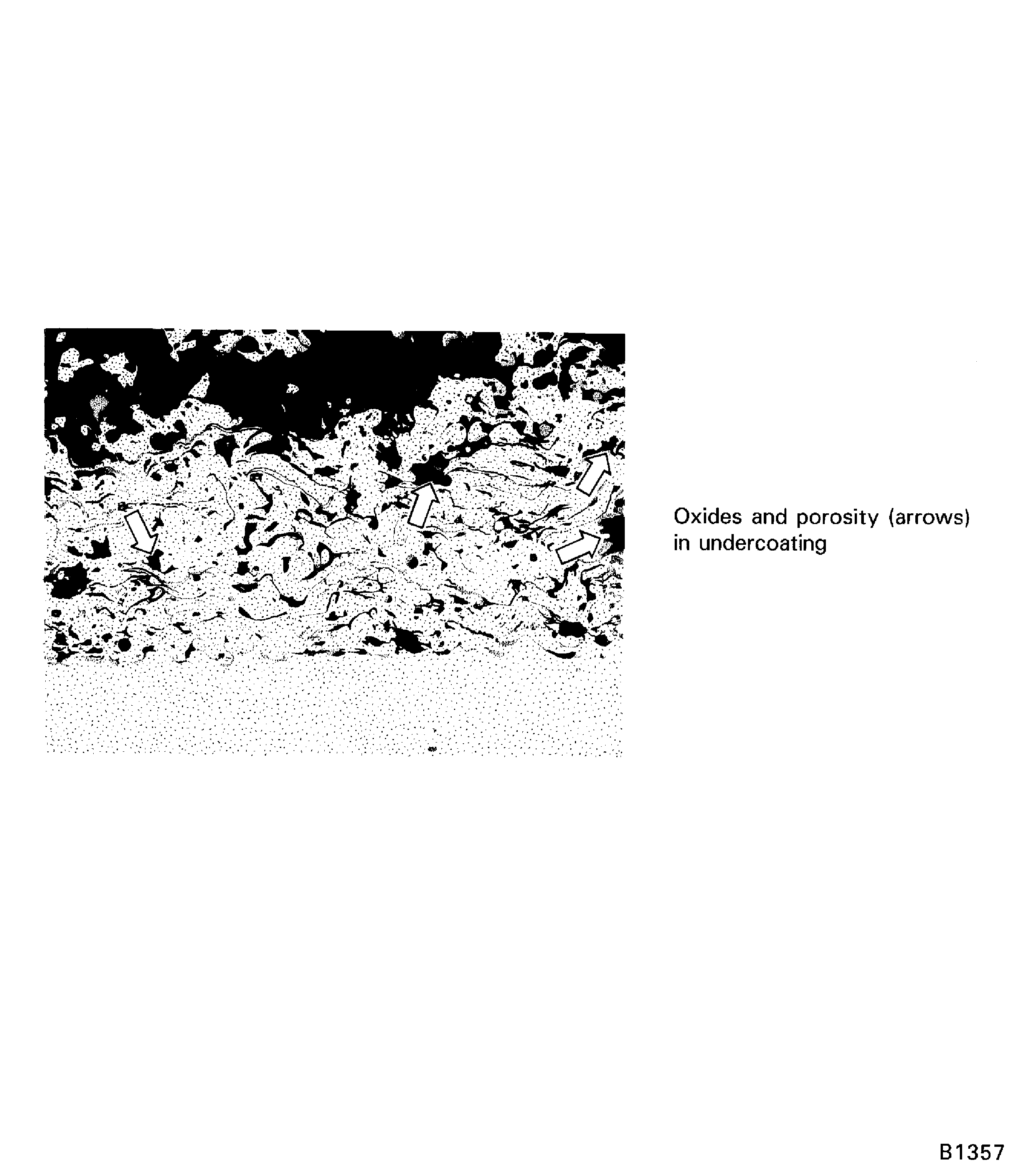
Figure: Oxides and porosity in PWA 53-37 undercoat (200x)
Oxides and porosity in PWA 53-37 undercoat (200x)
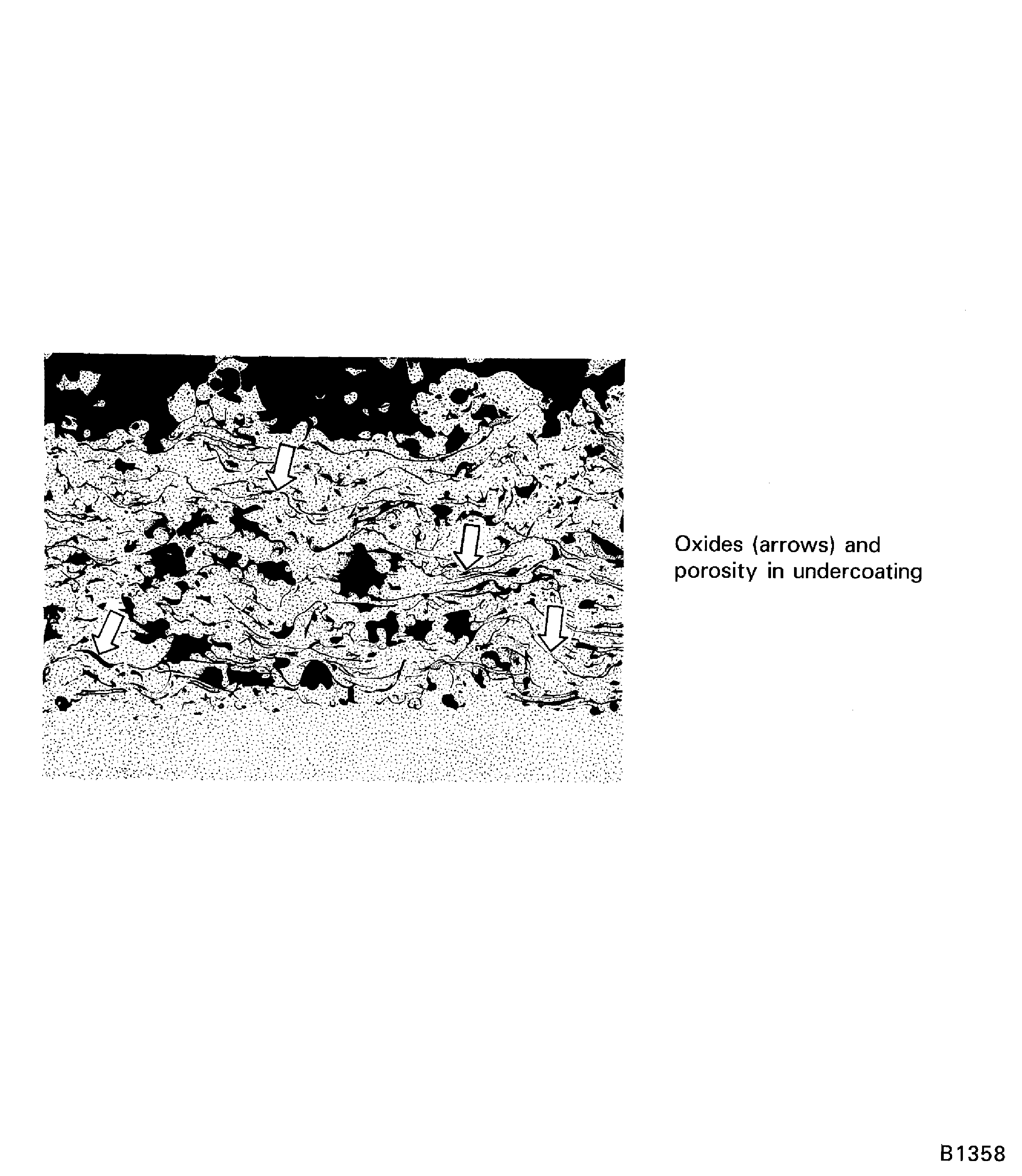
Figure: Oxides and porosity in PWA 53-37 undercoat (200x)
Oxides and porosity in PWA 53-37 undercoat (200x)
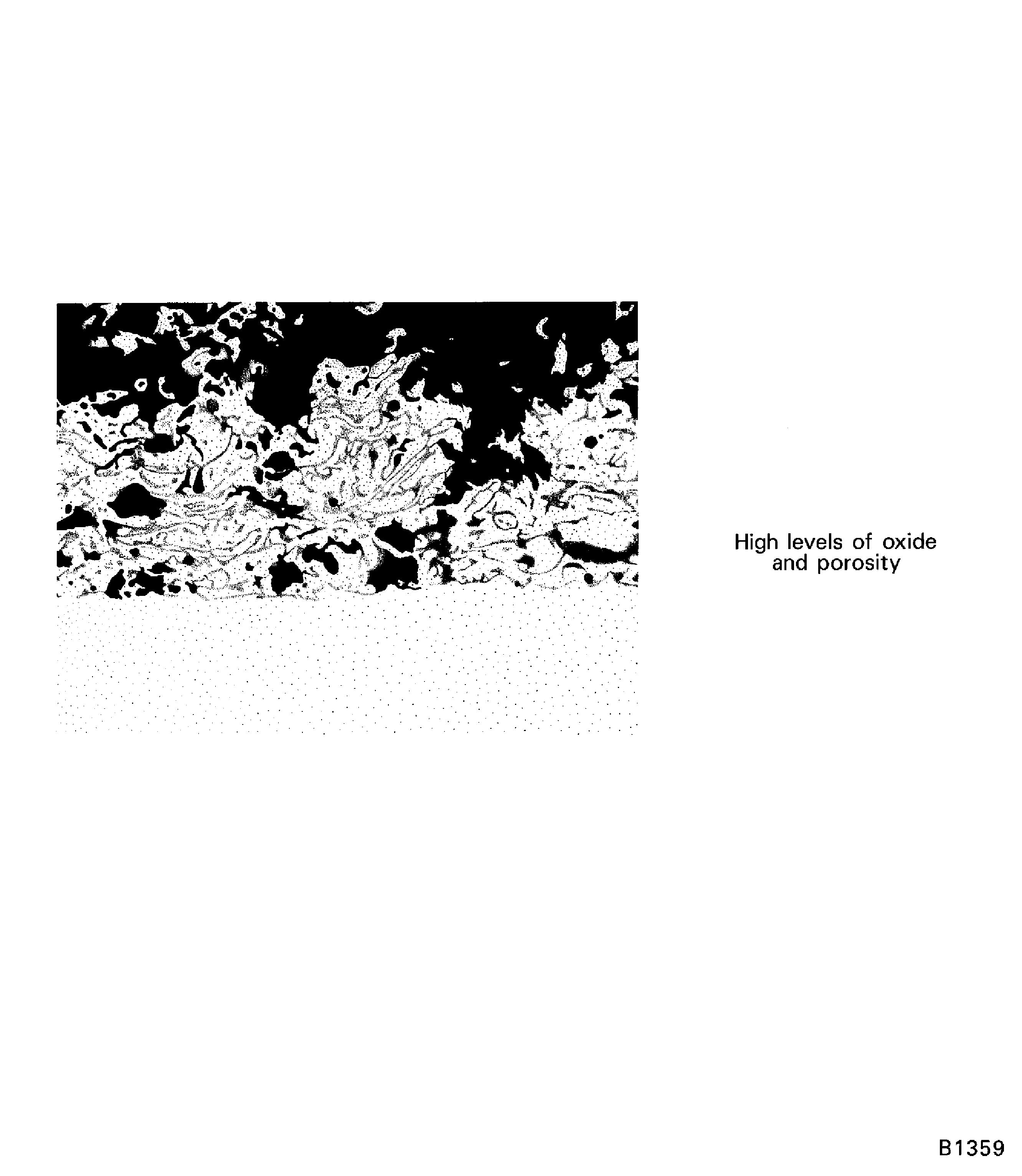
Figure: Band saw set-up
Band saw set-up
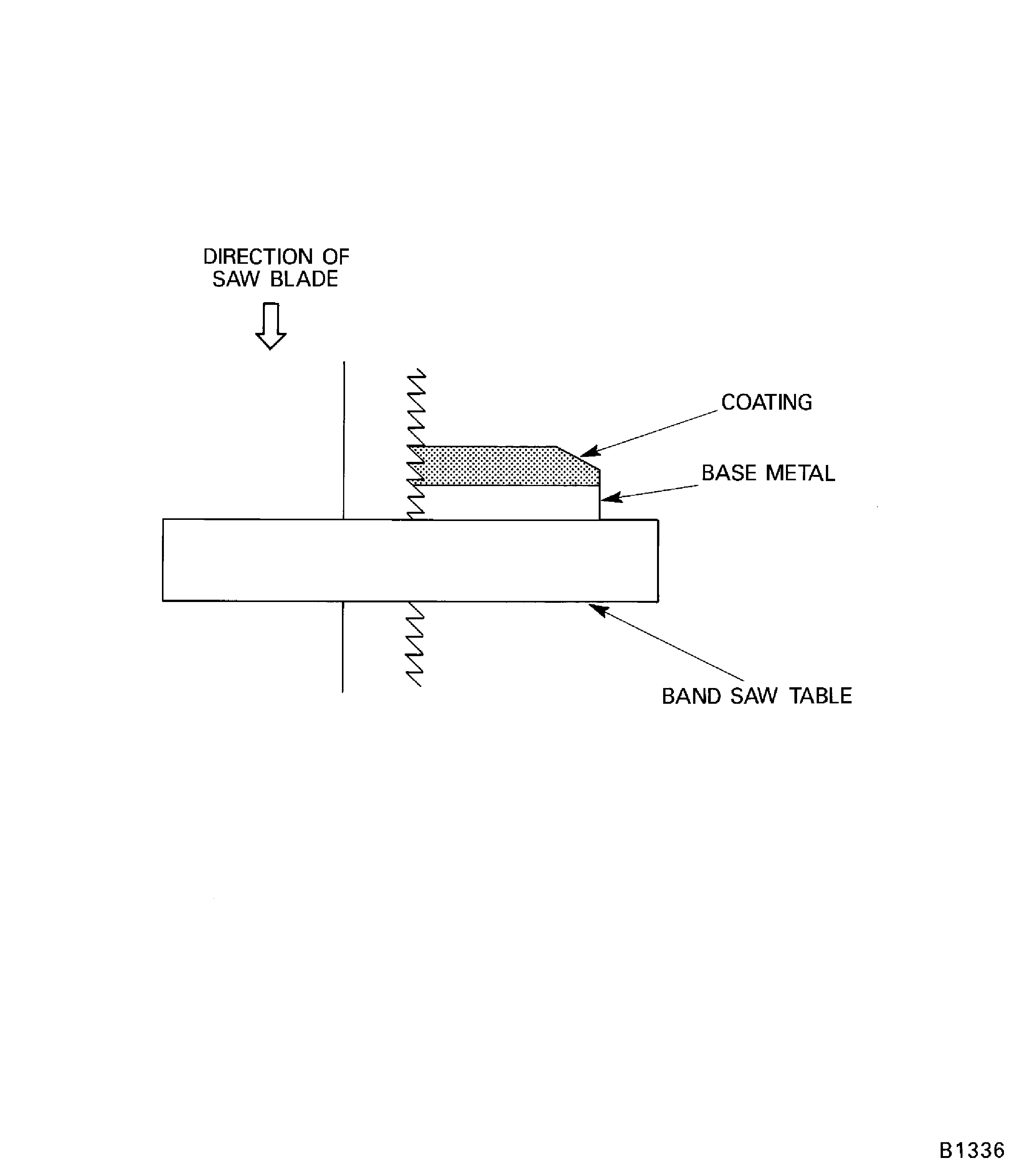
Figure: Satisfactory thermal shock test conditions in PWA 74-1 and PWA 74-2 coatings (3.5x)
Satisfactory thermal shock test conditions in PWA 74-1 and PWA 74-2 coatings (3.5x)
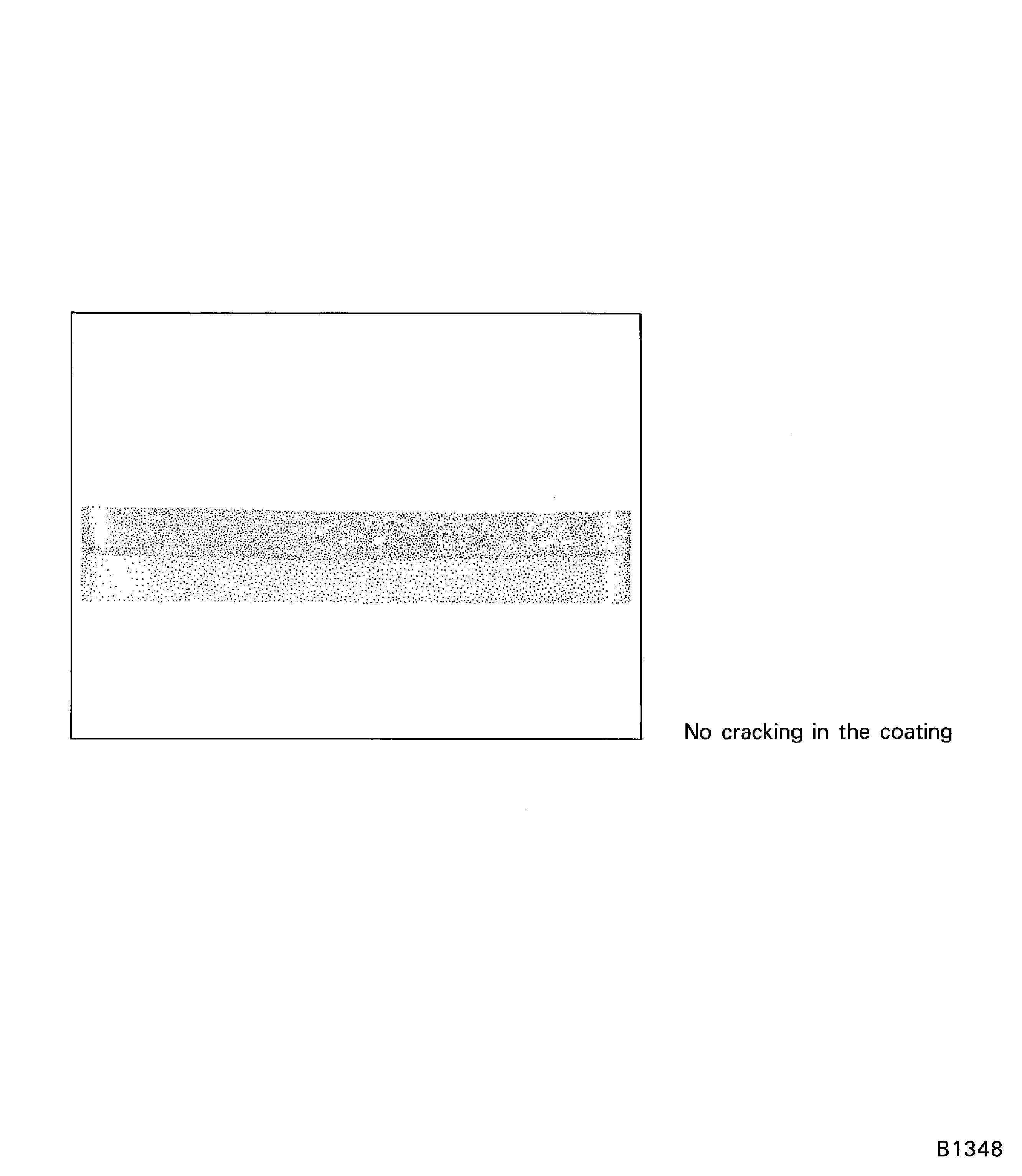
Figure: Satisfactory thermal shock test conditions (slight cracks) in PWA 74-1 and PWA 74-2 coatings (3.5x)
Satisfactory thermal shock test conditions (slight cracks) in PWA 74-1 and PWA 74-2 coatings (3.5x)
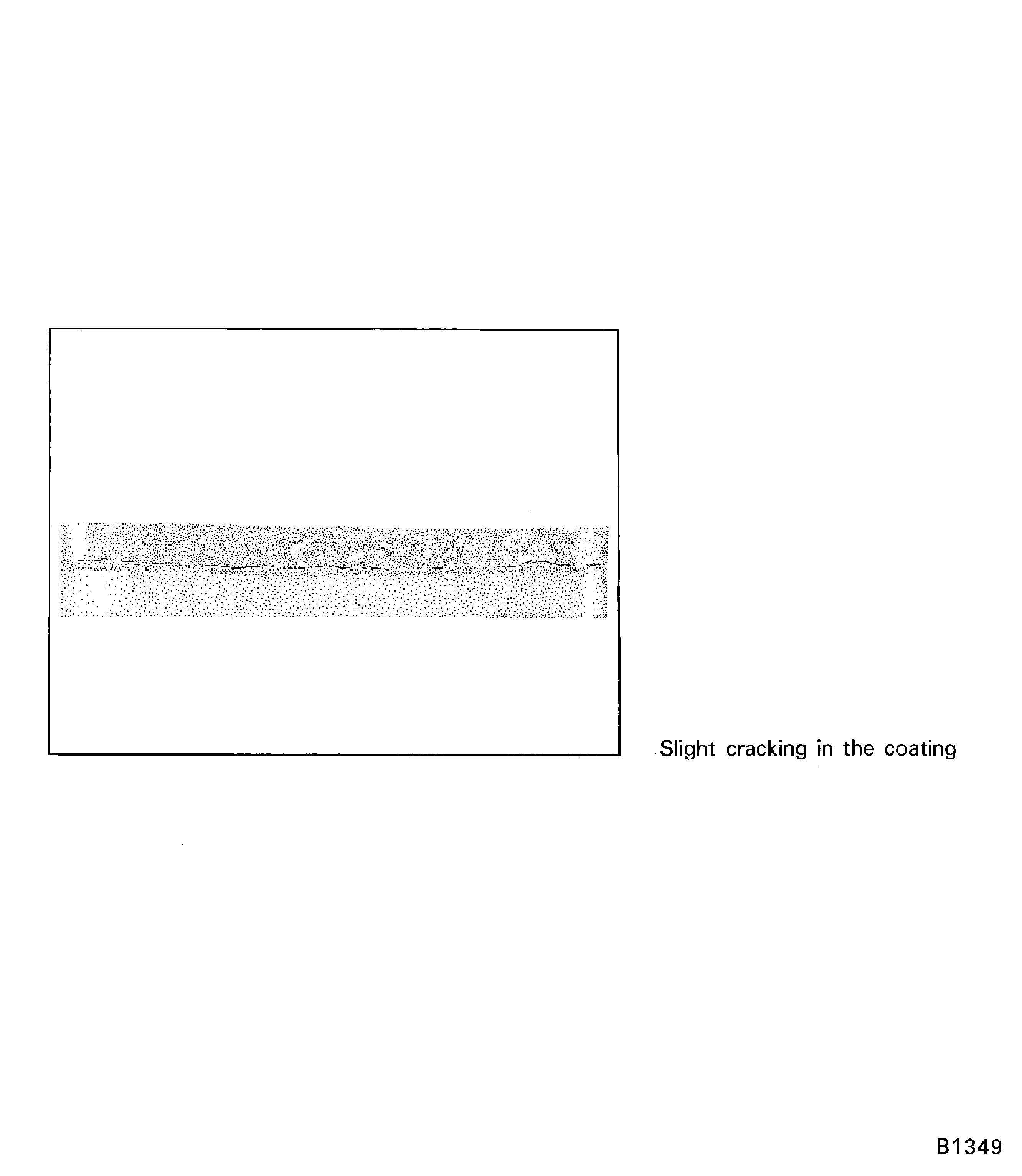
Figure: Thermal shock test conditions (moderate cracks) in PWA 74-1 and PWA 74-2 coatings (3.5 x) to be re-evaluated
Thermal shock test conditions (moderate cracks) in PWA 74-1 and PWA 74-2 coatings (3.5 x) to be re-evaluated
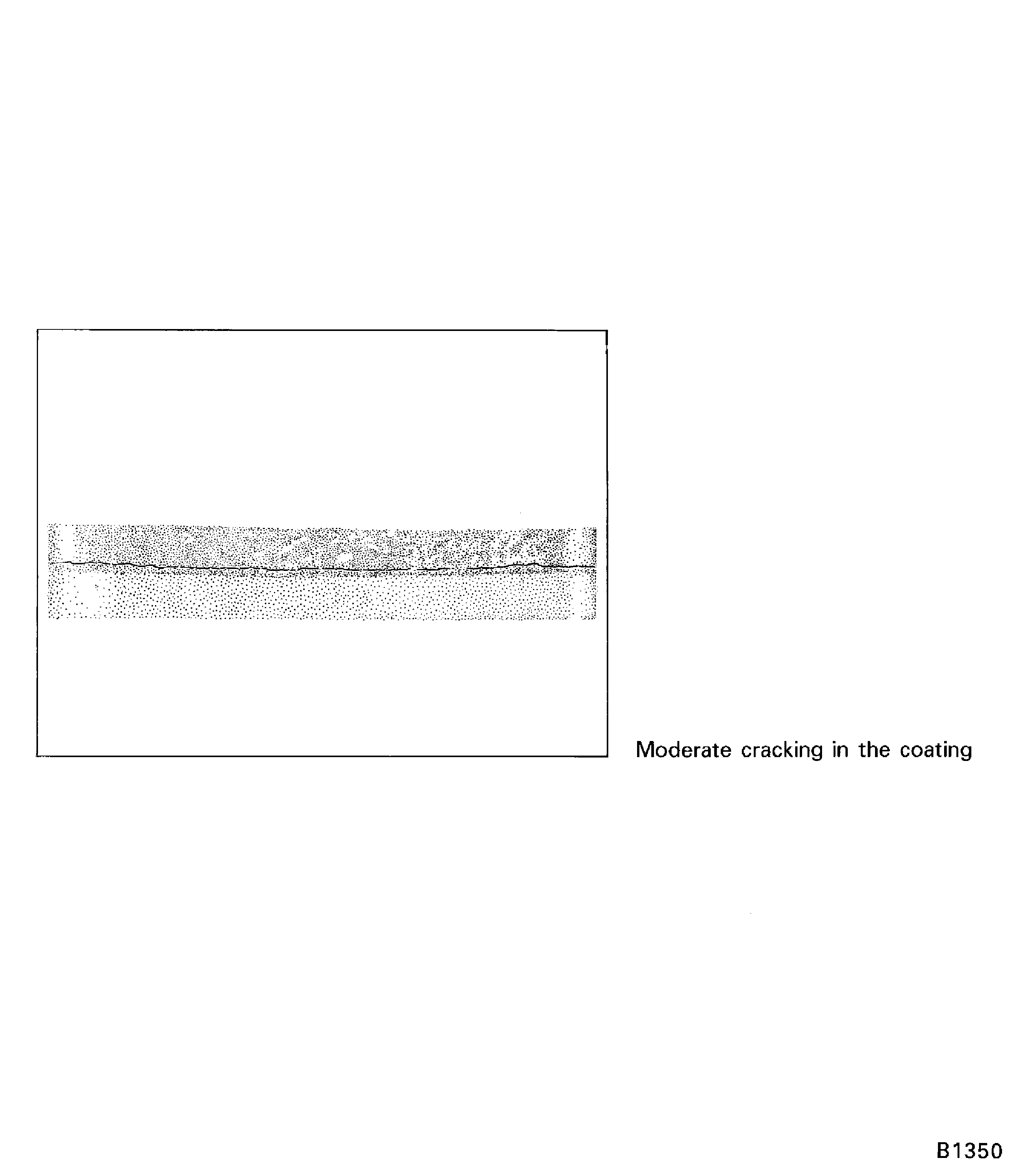
Figure: Unsatisfactory thermal shock test conditions (severe cracks) in PWA 74-1 and PWA 74-2 coatings (3.5x)
Unsatisfactory thermal shock test conditions (severe cracks) in PWA 74-1 and PWA 74-2 coatings (3.5x)
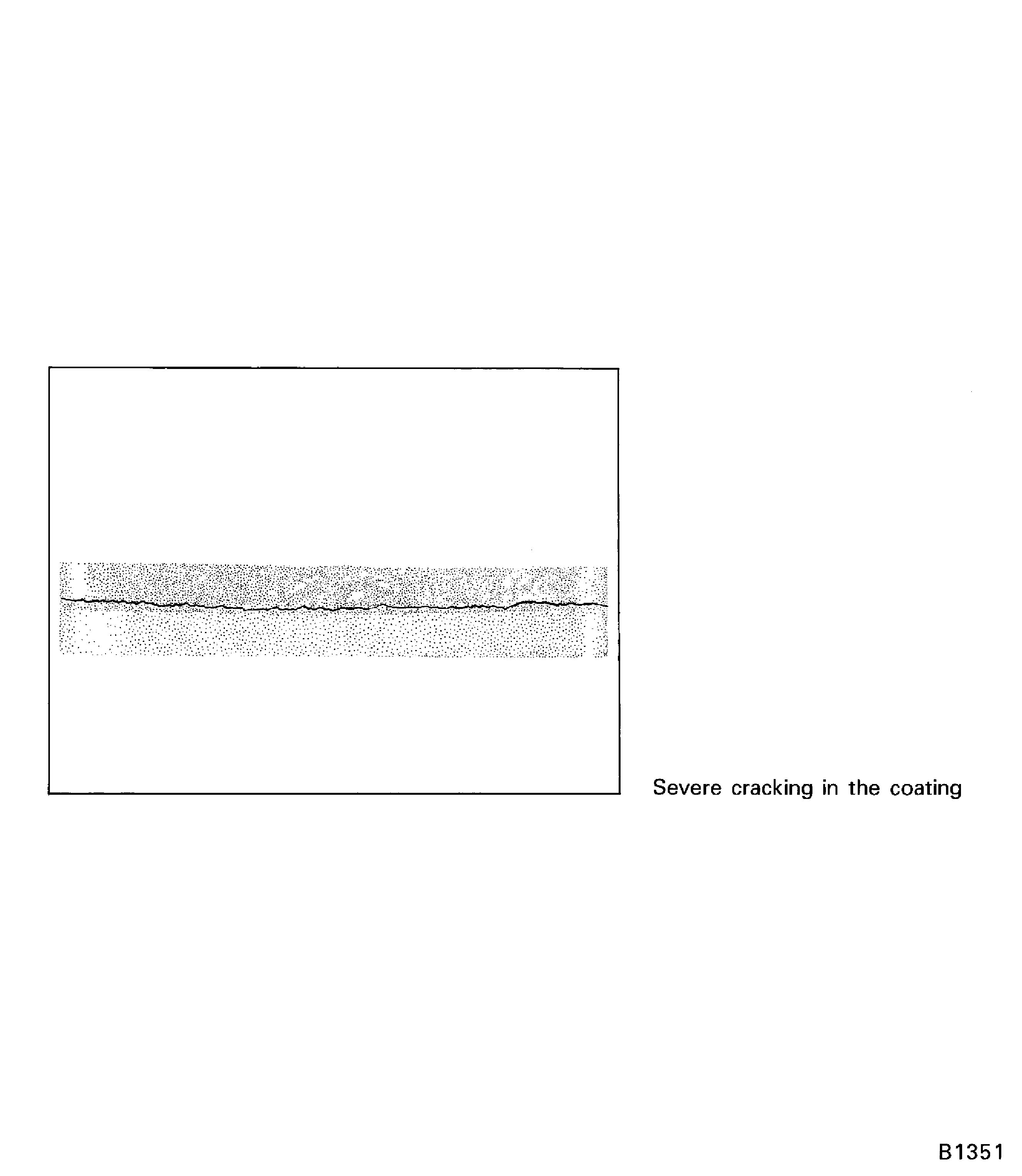
Figure: Scratch Hardness Tester
Scratch Hardness Tester
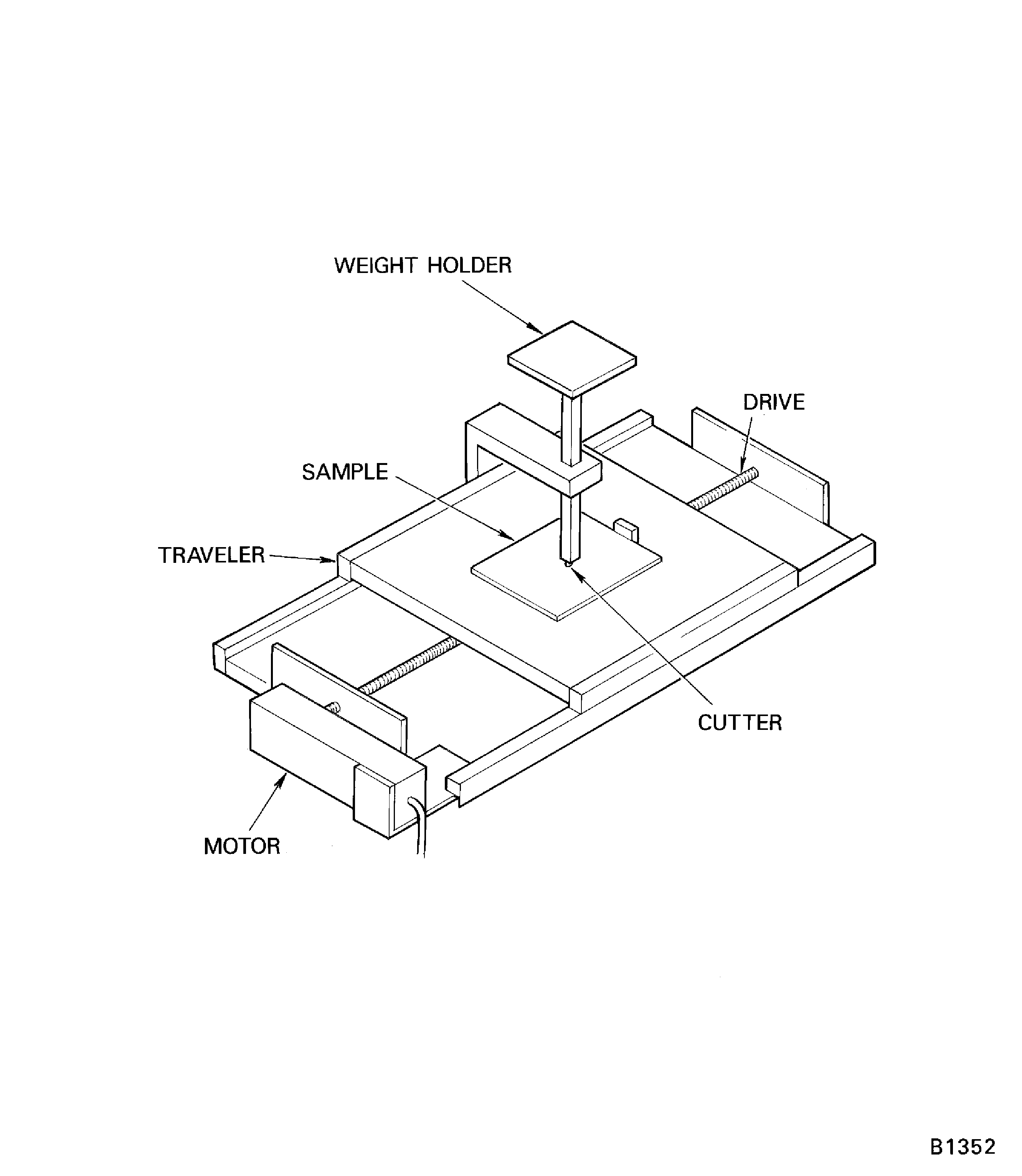
Figure: Typical Specimen Selection
Typical Specimen Selection
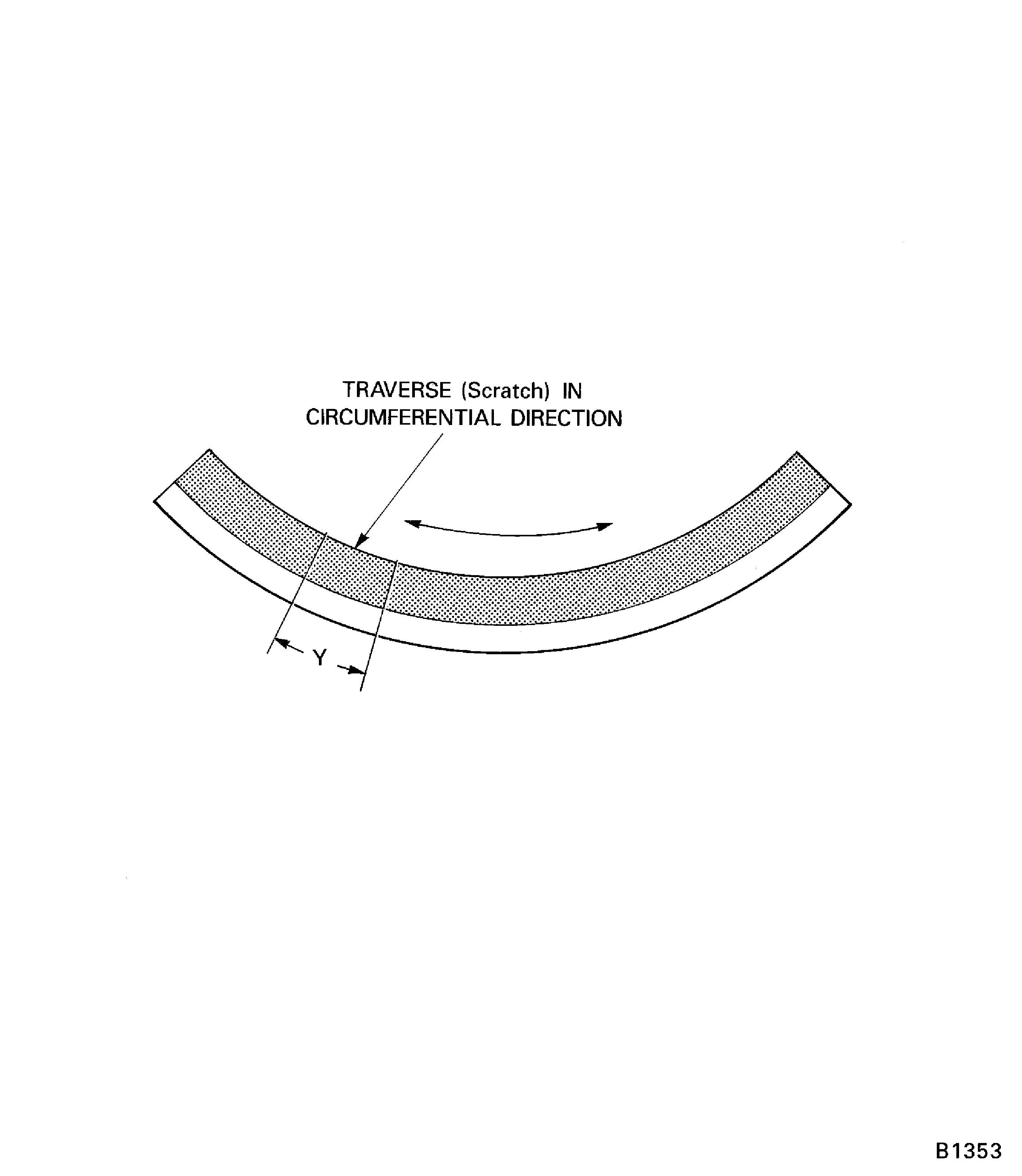
Figure: Scratch Width Measurement
Scratch Width Measurement