
TASK 72-41-31-200-010-B00 HPC Front Case Bushes - Examine, Inspection-010

DMC:V2500-A0-72-41-3130-00B-300A-C|Issue No:001.00|Issue Date:2013-11-01

Export Control

EAR Export Classification: Not subject to the EAR per 15 C.F.R. Chapter 1, Part 734.3(b)(3), except for the following Service Bulletins which are currently published as EAR Export Classification 9E991: SBE70-0992, SBE72-0483, SBE72-0580, SBE72-0588, SBE72-0640, SBE73-0209, SBE80-0024 and SBE80-0025.

Copyright

© IAE International Aero Engines AG (2001, 2014 - 2021) The information contained in this document is the property of © IAE International Aero Engines AG and may not be copied or used for any purpose other than that for which it is supplied without the express written authority of © IAE International Aero Engines AG. (This does not preclude use by engine and aircraft operators for normal instructional, maintenance or overhaul purposes.).

Applicability

All

Common Information

TASK 72-41-31-200-010-B00 HPC Front Case Bushes - Examine, Inspection-010

Effectivity

FIG/ITEM PART NO.

01-241

178636-2

01-243

178636-1

01-244

1035212

01-251

178639-2

01-253

178639-1

01-254

1035252

01-261

178637-2

01-263

178637-1

01-264

1035272

01-270

178638-1

01-271

178638-2

01-274

1035232

General

This TASK gives the procedure for the inspection of the spindle bushes

Fig/item numbers in parentheses in the procedure agree with those used in the IPC. Only the primary Fig/item numbers are used. For the service bulletin alpha variants refer to the IPC.

The policy that is necessary for inspection is given in the SPM TASK 70-20-01-200-501.

All the parts must be cleaned before any part is examined. Refer to TASK 72-41-31-100-000 (CLEANING-000).

All the parts must be visually examined for damage, corrosion and wear. Any defects that are not identified in the procedure must be referred to IAE.

A ** following repair referenced in this inspection indicates that the repair is not yet published in the current revision of the manual and the part must be rejected. Contact IAE for additional information concerning FAA approved repair date.

Do not discard any part until you are sure there are no repairs available. Refer to the instructions in Repair before a discarded part is used again or oversize parts are installed.

Parts which should be discarded can be held although no repair is available. The repair of a discarded part can be shown to be necessary at a subsequent date.

All the parts must be examined to make sure that all the repairs have been completed satisfactorily.

The practices and processes referred to in the procedure by the TASK/SUBTASK number are in the SPM.

References

Refer to the SPM for data on these items.

Definition of Damage, TASK 70-02-02-350-501

Inspection of Parts, TASK 70-20-01-220-501

Some data on these items is contained in this TASK. For more data on these items refer to the SPM.

Methods of Testing for Crack Indications

Chemical Processes

Surface Protection

Preliminary Requirements

Pre-Conditions

NONE

Support Equipment

NONE

Consumables, Materials and Expendables

NONE

Spares

NONE

Safety Requirements

NONE

Procedure

    1. SUBTASK 72-41-31-220-259 Measure the Spindle Bushes Outer Diameter at Location 1

    2. Refer to Figure.

      1. Bush (01-241).

        1. If the outer diameter is between 0.6561 to 0.6565 in. (16.666 to 16.676 mm)

        2. Accept

        1. Less than in step A.(1)

        2. Reject

      1. Bush (01-243).

        1. If the outer diameter is between 0.6557 to 0.6561 in. (16.656 to 16.666 mm)

        2. Accept

        1. Less than in step B.(1)

        2. Reject

      1. Bush (01-251).

        1. If the outer diameter is between 0.5774 to 0.5777 in. (14.666 to 14.676 mm)

        2. Accept

        1. Less than in step C.(1)

        2. Reject

      1. Bush (01-253).

        1. If the outer diameter is between 0.5770 to 0.5774 in. (14.656 to 14.666 mm)

        2. Accept

        1. Less than in step D.(1)

        2. Reject

      1. Bush (01-261).

        1. If the outer diameter is between 0.7348 to 0.7352 in. (18.666 to 18.676 mm)

        2. Accept

        1. Less than in step E.(1)

        2. Reject

      1. Bush (01-263).

        1. If the outer diameter is between 0.7344 to 0.7348 in.(18.656 to 18.666 mm)

        2. Accept

        1. Less than in step F.(1)

        2. Reject

      1. Bush (01-270).

        1. If the outer diameter is between 0.7344 to 0.7348 in. (18.656 to 18.666 mm)

        2. Accept

        1. Less than in step G.(1)

        2. Reject

      1. Bush (01-271).

        1. If the outer diameter is between 0.7348 to 0.7352 in. (18.666 to 18.676 mm)

        2. Accept

        1. Less than in step H.(1)

        2. Reject

    1. SUBTASK 72-41-31-220-195 Examine the Spindle Bushes at Location 1

    2. Refer to Figure.

      1. Scratched.

        1. Up to 0.002 in. (0.05 mm) in depth

        2. Accept

        1. More than in step A.(1)

        2. Reject

      1. Galled.

        1. Up to 0.002 in. (0.05 mm) in depth

        2. Accept

        1. More than in step B.(1)

        2. Reject

    1. SUBTASK 72-41-31-220-196 Measure the Spindle Bushes Bore at Location 2

    2. Refer to Figure.

      1. Bush (01-241 and 01-243).

        1. If the bore is between 0.5763 to 0.5771 in. (14.638 to 14.658 mm)

        2. Accept

        1. More than in step A.(1)

        2. Reject

      1. Bush (01-251 and 01-253).

        1. If the bore is between 0.4976 to 0.4984 in. (12.639 to 12.659 mm)

        2. Accept

        1. More than in step B.(1)

        2. Reject

      1. Bush (01-261, 01-263, 01-270 and 01-271).

        1. If the bore is between 0.6307 to 0.6322 in. (16.022 to 16.060 mm)

        2. Accept

        1. More than in step C.(1)

        2. Reject

    1. SUBTASK 72-41-31-220-197 Examine the Spindle Bushes Bore at Location 2

    2. Refer to Figure.

      1. Scored.

        1. Up to 0.002 in. (0.05 mm) in depth

        2. Accept

        1. More than in step A.(1)

        2. Reject

      1. Scratched.

        1. Up to 0.002 in. (0.05 mm) in depth

        2. Accept

        1. More than in step B.(1)

        2. Reject

    1. SUBTASK 72-41-31-220-198 Examine the Spindle Bushes Face at Location 3

    2. Refer to Figure.

      1. Galled.

        1. Up to 0.002 in. (0.05 mm) in depth

        2. Accept

        1. More than in step A.(1)

        2. Reject

    1. SUBTASK 72-41-31-220-199 Examine the Spindle Bushes Liner at Location 4

    2. Refer to Figure.

      1. Scored.

        1. Up to 0.002 in. (0.05 mm) in depth

        2. Accept

        1. More than in step A.(1)

        2. Reject

      1. Galled.

        1. Up to 0.002 in. (0.05 mm) in depth

        2. Accept

        1. More than in step B.(1)

        2. Reject

      1. Grooved.

        1. Up to 0.002 in. (0.05 mm) in depth

        2. Accept

        1. More than in step C.(1)

        2. Reject

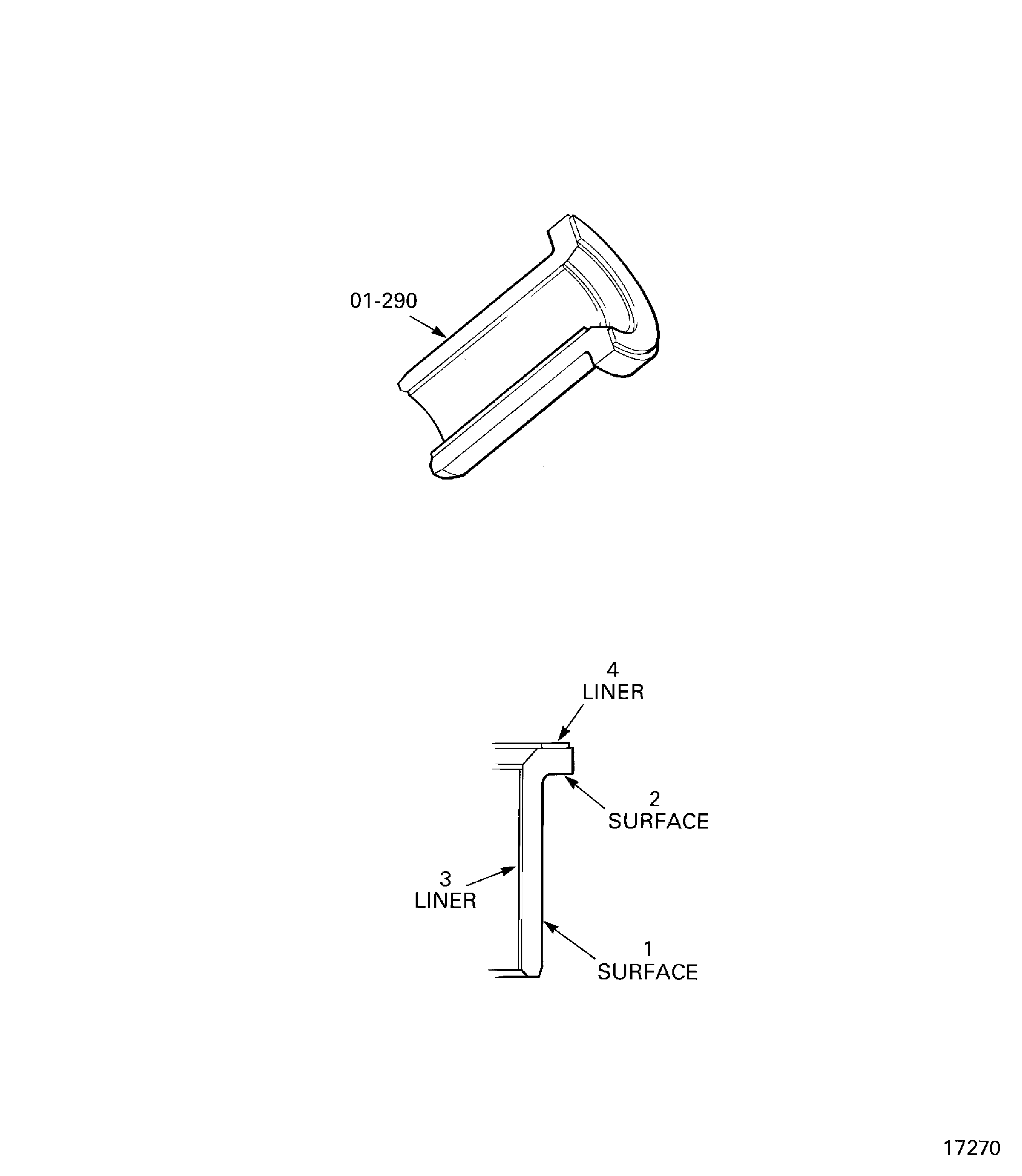
    1. SUBTASK 72-41-31-220-200 Examine the Stage 6 Inner Bushes Surfaces at Locations 1 and 2

    2. Refer to Figure.

      1. Galled.

        1. Up to 0.002 in. (0.05 mm) in depth

        2. Accept

        1. More than in step A.(1)

        2. Reject

      1. Scratched.

        1. Up to 0.002 in. (0.05 mm) in depth

        2. Accept

        1. More than in step B.(1)

        2. Reject

      1. Scored.

        1. Up to 0.002 in. (0.05 mm) in depth

        2. Accept

        1. More than in step C.(1)

        2. Reject

    1. SUBTASK 72-41-31-220-201 Examine the Stage 6 Inner Bushes Liner at Locations 3 and 4

    2. Refer to Figure.

      1. Scored.

        1. Up to 0.002 in. (0.05 mm) in depth

        2. Accept

        1. More than in step A.(1)

        2. Reject

      1. Scratched.

        1. Up to 0.002 in. (0.05 mm) in depth

        2. Accept

        1. More than in step B.(1)

        2. Reject

      1. Visible signs of wear

      2. Reject

  1. Figure: Locations to examine the spindle bushes
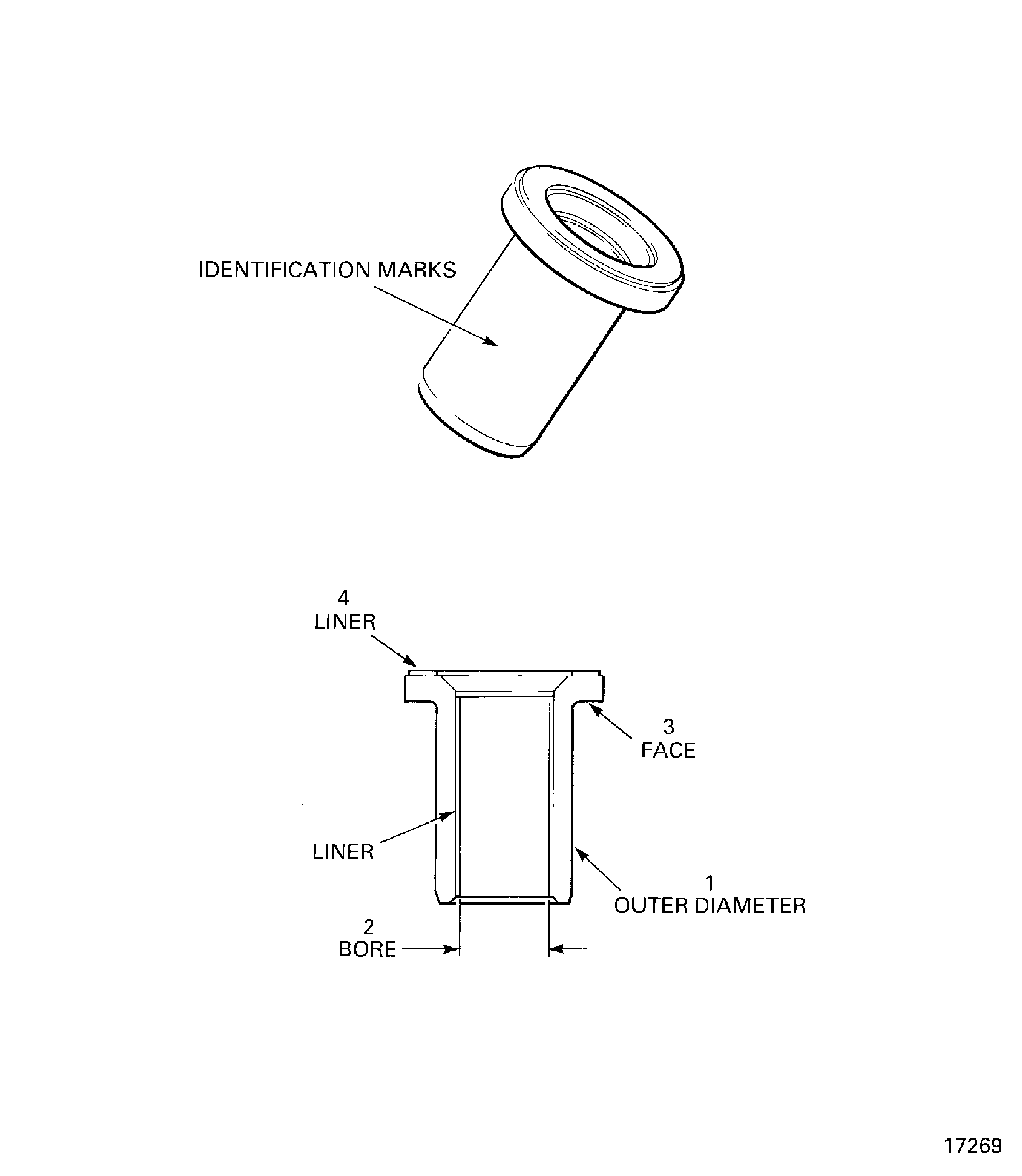
    Locations to examine the spindle bushes

    Figure: Locations to examine the spindle bushes

    Locations to examine the spindle bushes
Requirements After Job Completion

Follow-On Conditions

NONE