Export Control
EAR Export Classification: Not subject to the EAR per 15 C.F.R. Chapter 1, Part 734.3(b)(3), except for the following Service Bulletins which are currently published as EAR Export Classification 9E991: SBE70-0992, SBE72-0483, SBE72-0580, SBE72-0588, SBE72-0640, SBE73-0209, SBE80-0024 and SBE80-0025.Copyright
© IAE International Aero Engines AG (2001, 2014 - 2021) The information contained in this document is the property of © IAE International Aero Engines AG and may not be copied or used for any purpose other than that for which it is supplied without the express written authority of © IAE International Aero Engines AG. (This does not preclude use by engine and aircraft operators for normal instructional, maintenance or overhaul purposes.).Applicability
V2500-A1
Common Information
TASK 71-00-00-700-053-A01 Normal Engine Automatic Start Procedure, Testing-000
Normal Engine Automatic Start Procedure
General
If the engine was shutdown for more than 10 hours, motor the engine with the starter for a minimum of two minutes. Check the oil level after the rotor stops. Fill the oil tank as necessary. Refer to TASK 71-00-00-700-064-A00 (TESTING-000, CONFIG-001).
If the engine was shutdown for less than 10 hours, check the oil level. Fill the oil tank as necessary. Refer to TASK 71-00-00-700-064-A00 (TESTING-000, CONFIG-001).
Before the first start after an overhaul, or if you drained the fuel or oil compartments to repair the engine, prime the oil and fuel systems. Refer to TASK 71-00-00-700-061-A00 (TESTING-000, CONFIG-001).
NOTE
Before you start the engine, refer to procedure for a Bowed Rotor Start Prevention. Refer to TASK 71-00-00-700-065-A00 (TESTING-000, CONFIG-001).
Do the automatic start.
Set the mode to MIN IDLE.
Set Label 031 BITS 17, 18, 20 and 29 to = 1.
Set Label 222 to = 0.
Before you start the engine, do the steps that follow.
Turn on the test stand starter air.
Turn on the EEC ground test power.
Turn on the 400 Hz igniter power.
Turn on the fuel supply system.
Set the thrust lever to the idle flat.
Set the necessary Engine Interface Unit (EIU) inputs for AUTO START as shown in Figure.
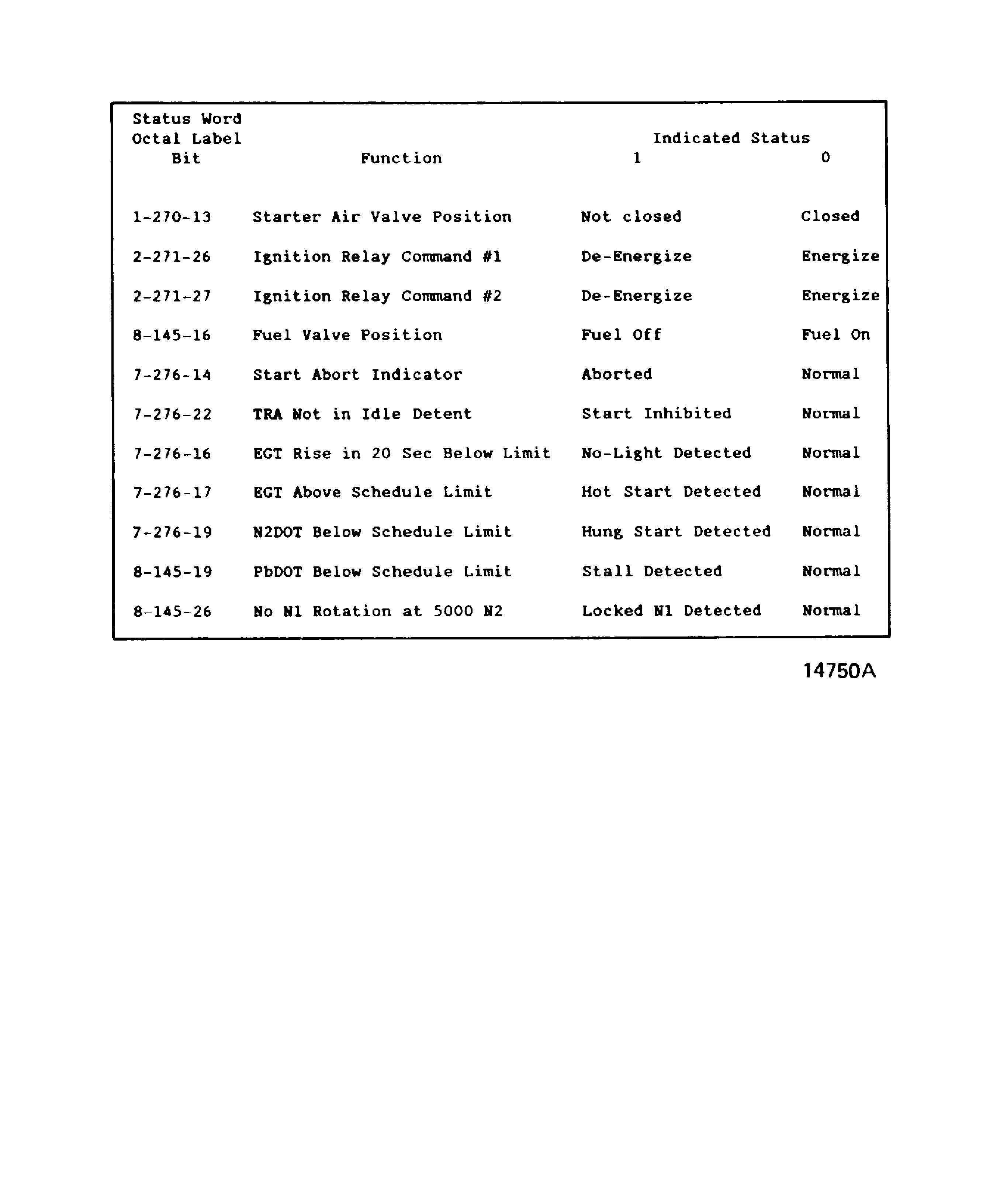
Make sure that N2 increases. The EEC monitors the start and gives engine limits protection (N1, N2, EGT). The EEC will automatically abort the start if there is a hung start, no light, locked low rotor, or a surge and N2 is less than 7460 RPM. If the start is automatically aborted, set the EIU inputs to the SHUTDOWN mode shown in Figure before you start the engine again.
NOTE
Monitor the EGT and N2 carefully during the start. The EEC will find unusual conditions and abort the start if N2 is less than 7460 RPM. If N2 is more than 7460 RPM, abort the start manually.
If the EGT was more than the start temperature limits, shut the engine down immediately. Write how much time the temperature was more than the limits and the highest temperature during overtemperature. Refer to the fault isolation TASK 71-00-00-810-017 (FAULT ISOLATION-017).
Abort the start if:
The fuel or ignition is accidentally stopped.
The oil pressure does not increase.
NOTE
Return the EIU inputs to the shutdown configuration after the automatic abort procedure is completed.
Engine Warm-up
Before you start the engine, refer to procedure for a Bowed Rotor Start Prevention. Refer to TASK 71-00-00-700-065-A00 (TESTING-000, CONFIG-001).
Preliminary Requirements
Pre-Conditions
NONESupport Equipment
NONEConsumables, Materials and Expendables
NONESpares
NONESafety Requirements
NONEProcedure
Figure: Engine interface unit (EIU) inputs
Engine interface unit (EIU) inputs
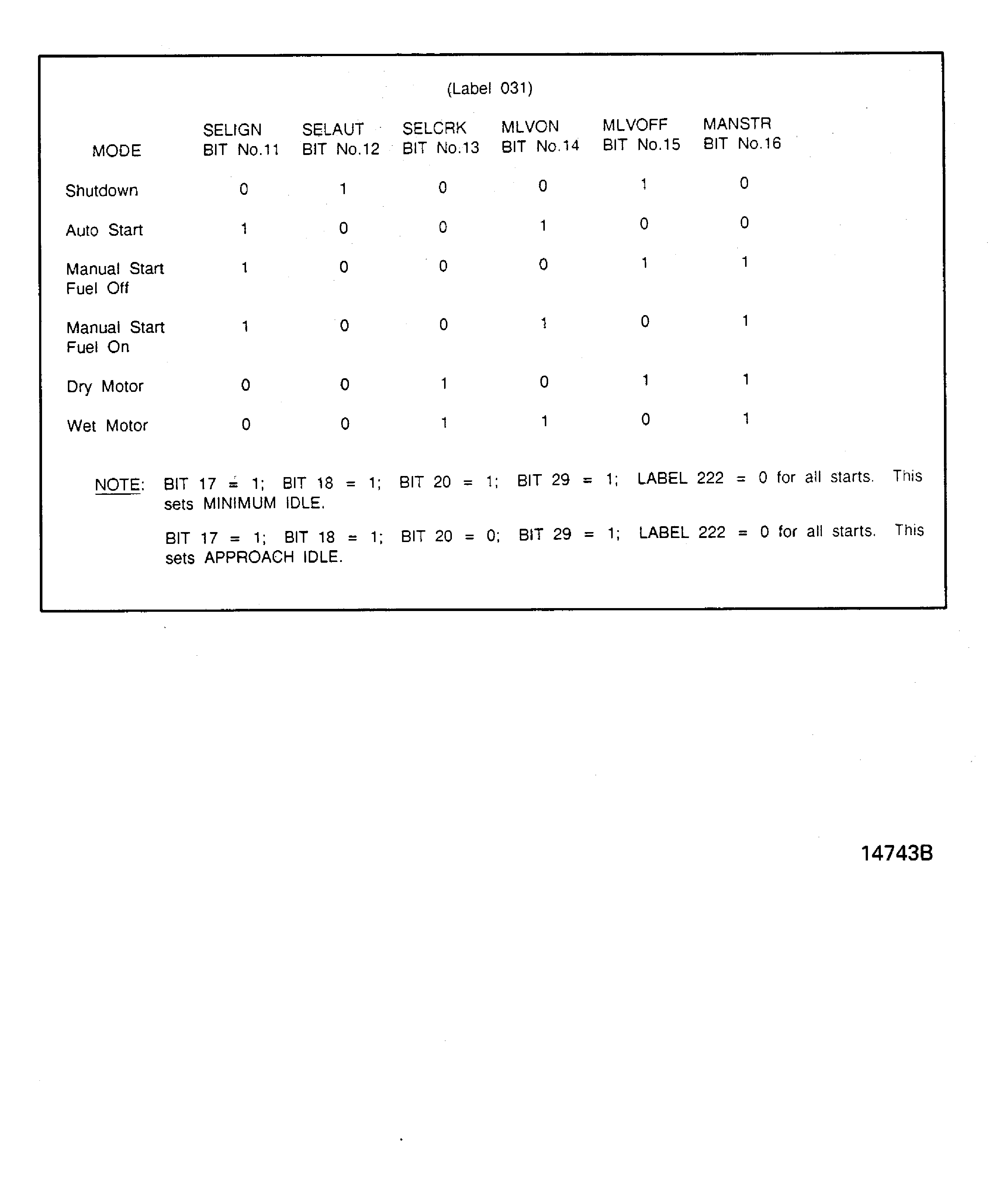
Figure: Start fault diagnostics
Start fault diagnostics

Figure: ARINC status messages
ARINC status messages