
TASK 72-00-00-200-004-C00 Engine General - Examine (Borescope) The HPT Stage 1 Blades And Duct Segments (Post SBE 72-0562) SelectOne Production Or Retrofit Standard, Inspection-004

DMC:V2500-A5-72-00-0000-06C-312A-B|Issue No:006.00|Issue Date:2019-05-01

Export Control

EAR Export Classification: Not subject to the EAR per 15 C.F.R. Chapter 1, Part 734.3(b)(3), except for the following Service Bulletins which are currently published as EAR Export Classification 9E991: SBE70-0992, SBE72-0483, SBE72-0580, SBE72-0588, SBE72-0640, SBE73-0209, SBE80-0024 and SBE80-0025.

Copyright

© IAE International Aero Engines AG (2001, 2014 - 2021) The information contained in this document is the property of © IAE International Aero Engines AG and may not be copied or used for any purpose other than that for which it is supplied without the express written authority of © IAE International Aero Engines AG. (This does not preclude use by engine and aircraft operators for normal instructional, maintenance or overhaul purposes.).

Applicability

V2500-A5

Common Information

TASK 72-00-00-200-004-C00 Engine General - Examine (Borescope) The HPT Stage 1 Blades And Duct Segments (Post SBE 72-0562) SelectOne Production Or Retrofit Standard, Inspection-004

General

All Fig/item numbers in the procedure agree with those used in the IPC. Only the primary Fig/item numbers are used. For the service bulletin alpha variants refer to the IPC.

For all parts identified in a different Chapter/Section/Subject, the applicable Chapter/Section/Subject comes before the Fig/item number.

For standard torque data and procedures refer to SPM TASK 70-41-00-400-501, SPM TASK 70-41-00-400-501 and SPM TASK 70-41-01-400-501.

Special torque data is identified with the symbol * after the torque value.

Assembly tolerances are included in this procedure.

Lubricate all threads and abutment faces of nuts and bolts with CoMat 10-077 APPROVED ENGINE OILS, unless other lubricants are referred to in the procedure.

The number for each radial location must be identified in a clockwise direction. These start at the engine top position when you look from the rear of the engine, unless stated differently in the procedure.

Definitions and General Information

This TASK is for A5 engines only, which have SBE 72-0562 incorporated (SelectOne Production or Retrofit Standard). This TASK gives the procedure for the borescope inspection of the stage 1 HPT blades and duct segments. This TASK recommends the use of a flexible borescope. You can use a rigid borescope to inspect for general damage to the blades, but a rigid borescope will not permit you to see sufficient detail to inspect the blades or duct segments to the limits in this TASK.

Borescope ports are identified in Figure, Figure and Figure.

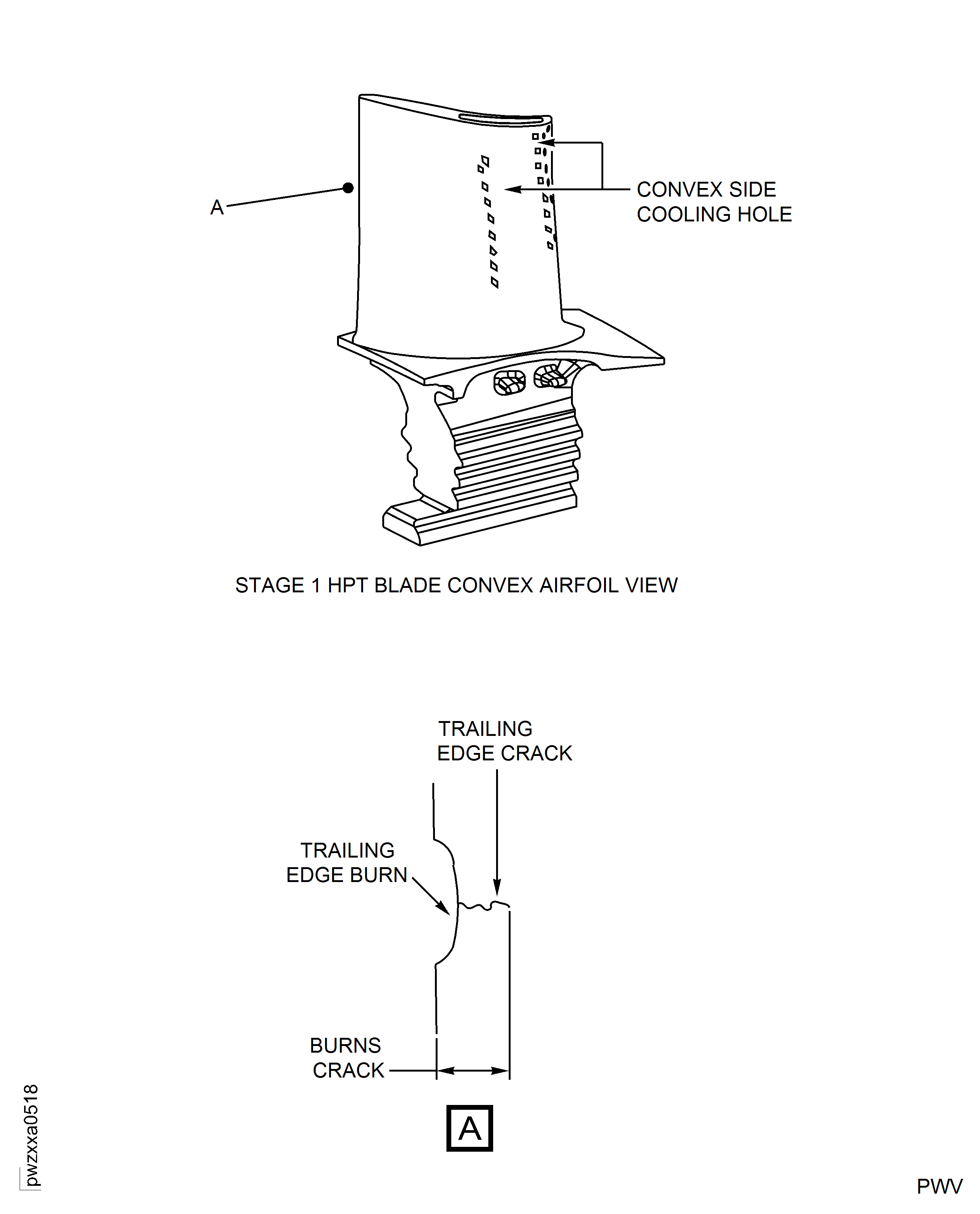
The names of the different parts and areas of the Stage 1 HPT blades are shown Figure.

Use the names which follow when you identify a blade condition seen at borescope inspection:

Erosion: A local area where material was removed by causes other than heat distress.

Leading Edge Hole: A hole in the leading edge open to the cooling air passage (can be caused by impact or burning).

Burns: A local area where material was removed because of heat distress.

Coating damage: Chipping, flaking, blistering, peeling or oxidation of blade confined to coating.

Trailing edge metal loss: A burn through the convex trailing edge wall that causes a shorter airfoil chord length.

Nick: A small surface Imperfection having sharp edges, corners or bottom caused by the impact of some object.

Dent: A surface depression normally having rounded edges, corners and bottom caused by the Impact of some object.

NOTE

To identify the consumable materials refer to the PCI.

NOTE

Special tools are identified in the procedure by the tool primary number.

NOTE

If damage is not listed contact your IAE representative.

Preliminary Requirements

Pre-Conditions

NONE

Support Equipment

NameManufacturerPart Number / IdentificationQuantityRemark
Cover (eye)LOCAL
Flexible borescope (probe dia. 0.24 to 0.31 in. (6.0 to 8.0 mm) with view capability of 180 degrees up and down)LOCALFlexible Borescope
Motor Drive UnitLOCAL
Rigid borescopeLOCAL
Torque wrench, range 0 to 250 lbfin (0 to 20 Nm)LOCALTorque Wrench 0-250
IAE 1P16184 Puller0AM53IAE 1P161841
IAE 2P16204 Guide Tube0AM53IAE 2P162041

Consumables, Materials and Expendables

NameManufacturerPart Number / IdentificationQuantityRemark
CoMat 02-024 MASKING TAPE (CREPE PAPERBACKING)LOCALCoMat 02-024
CoMat 02-141 LOCKWIRELOCALCoMat 02-141
CoMat 10-077 APPROVED ENGINE OILSX333XCoMat 10-077
CoMat 10-094 ANTI-SEIZE COMPOUND, PURE Ni-SPECIALLOCALCoMat 10-094
CoMat 10-129 ANTI-SEIZE PASTE34568CoMat 10-129

Spares

NameManufacturerPart Number / IdentificationQuantityRemark
GasketGasket2
GasketGasket2

Safety Requirements

WARNING

THE ENGINE IS HOT IMMEDIATELY AFTER SHUTDOWN AND CAN CAUSE BURNS AND DAMAGE TO THE BORESCOPE EQUIPMENT. WAIT 2 TO 3 HOURS AFTER SHUTDOWN BEFORE YOU DO A BORESCOPE INSPECTION.

CAUTION

THE LIMITS WHICH FOLLOW ARE APPLICABLE ON A CONTINUE IN SERVICE BASIS ONLY. EACH LIMIT IS BASED ON WHAT THE STRUCTURE OF THE BLADE MUST BE AND DOES NOT INDICATE THAT THERE WILL NOT BE A DETERIORATION OF THE ENGINE PERFORMANCE, STABILITY, OPERATING LIMITS OR PART REPAIRABILITY.

Procedure

    1. SUBTASK 72-00-00-420-088 Install the Foot-Operated Motor Drive Unit to the Gearbox Crank Pad

    2. Refer to Figure.

    3. Install the foot-operated motor drive unit to the gearbox crank pad.

    1. SUBTASK 72-00-00-420-089 Install the Guide Tube and the Flexible Borescope into the IP1 Borescope Port to Examine the Stage 1 Blades

    2. Refer to Figure, Figure, and Figure.

    3. Remove the igniter plug.

    4. Do not remove the igniter insert.

    5. Put the flexible borescope into the IAE 2P16204 Guide Tube 1 off until the end of the borescope is even with the end of the tube. This will be a limit mark on the borescope so you will not insert the borescope too far and cause damage to the borescope.

    6. Put a piece of CoMat 02-024 MASKING TAPE (CREPE PAPERBACKING) on the borescope fiber bundle 3.250 in. (82.55 mm) from the other end of the guide tube.

    7. Put the end of the tube nearest the tape mark in the down position and the plane of the tube at a right angle to the engine axis.

      1. Install the tube into the IP1 port.

      2. As the tube is put in, turn it clockwise carefully and connect the fitting to the igniter insert.

      3. Push the guide tube in until it touches the stop.

        NOTE

        1. In this position, the slot will be up.

        2. A cover for the eye which is not used will decrease eye tension.

        3. If you use an adjustable clamp to hold the borescope, you will be able to easily move the borescope dial and the fiber bundle.

        4. Some borescope units have closed-circuit television adapters. We highly recommend this unit.

      4. Turn the guide tube clockwise until it stops. Hold the tube in this position and tighten the locking wheel to secure the guide tube.

      5. Slowly push in the borescope through the guide tube while looking through the eye piece.

        NOTE

        At this point, the borescope is between two Stage 1 HPT vanes and at a location to see the concave side of the Stage 1 HPT blades.
      6. Move the borescope end slightly, while pushing in, and find the Stage 1 HPT blades. Turn the borescope fiber bundle to help you locate the stage 1 HPT blades. Do not push the borescope past the tape mark.

    8. CAUTION

      MAKE SURE THAT THE BORESCOPE TIP IS NOT IN THE PATH OF THE STAGE 1 HPT BLADES BEFORE YOU TURN THE ENGINE.

      Examine the blades for damage.

    1. SUBTASK 72-00-00-020-079 Install a Rigid Borescope to Examine the Stage 1 HPT Blades through the B3 or B4 and T1/2L or T1/2R Ports

      NOTE

      1. For a close up inspection, do the procedure in the paragraph above.

      2. An eye cover for the eye which is not used will decrease eye tension.

      3. Removal of the plugs at both of the locations will permit you to examine both leading and trailing edges.

    2. Refer to Figure, Figure, Figure, Figure and Figure.

      1. Get access to the stage 1 HPT blades through the B3 or B4 port, Figure.

      2. Remove the lockwire from the plug.

      3. Loosen and remove the plug and the gasket from the B3 or B4 port, Figure.

      1. WARNING

        MAKE SURE THAT THE BLANKING PLUG IS COOL BEFORE YOU REMOVE IT. THE PLUG STAYS HOT FOR A SHORT TIME AFTER THE ENGINE IS SHUTDOWN.

        Get access to the stage 1 HPT blades through the T1/2L and the T1/2R ports, Figure.

      2. Remove the lockwire and the bolts which hold the plugs.

      3. Put the IAE 1P16184 Puller 1 off in to the center hole of the plug (use if required).

      4. Remove the plug from the port with the puller.

      5. Remove the gasket from the plug.

      6. Remove the plug from the puller.

      7. Do Step to Step for the other plug.

    3. Put a rigid borescope through the B3 or B4 port, Figure.

    4. Examine the blades for damage.

    5. Put a rigid borescope through the T1/2L or T1/2R port, Figure.

    6. Examine the blades for damage.

    1. SUBTASK 72-00-00-220-163 Examine the Stage 1 HPT Blades for Nicks or Dents on the Airfoil

    2. Refer to Figure, Figure, Figure and Figure.

      1. Accept with an inspection each 750 hours If:

      2. There is a nick or dent with cracks on the leading edge outer 50 percent span which has a total radial or axial length of up to 0.20 ln. (5.08 mm).

      1. Accept with an inspection each 600 hours if:

      2. The nick or dent is in Area A or Area B and is larger than 0.200 in. (5.08 mm).

        1. Reject if:

        2. The nick or dent is in Area A or Area B (not to include the blade trailing edge tip) and shows signs of torn metal or cracks.

        3. The nick or dent causes internal areas to show. These are areas where the air that is used to cool the blade goes.

      1. Accept with an inspection each 300 hours If:

      2. There is a nick or dent with cracks on the leading edge outer 50 percent span which has a total axial length up to 0.27 ln. (6.8 mm) and a total radial length of greater than 0.20 in. (5.08 mm) and up to a total radial length of 0.50 in. (12.7 mm).

    1. SUBTASK 72-00-00-220-164 Examine the Stage 1 HPT Blades for Cracks on the Airfoil

    2. Refer to Figure, Figure, Figure, Figure and Figure.

      NOTE

      1. There will be unwanted material on the airfoil because of the casting procedure. Refer to Figure. During borescope inspection, this material will look like small bumps on the concave and convex surfaces of the airfoil. These bumps are usually round or oval, are between 0.100 to 0.200 in. (2.54 to 5.08 mm) wide and are 0.005 in. (0.13 mm) high. These bumps are acceptable. No action is necessary.

      2. Tip Zone - The lower edge of the upper tip cooling holes to tip. In this zone a crack going through another crack is permitted.

      1. Accept with an inspection each 600 hours if:

      2. The crack in Area A or Area B is longer than 0.070 in. (1.78 mm).

      3. The crack in Area A (this does not include the inner 25 percent of the leading or trailing edge span) or Area B extends from a burned area and the combination of a burn plus a crack is longer than 0.120 in. (3.05 mm) in each direction.

      4. The crack in the inner 25 percent of the leading or trailing edge span in Area A extends from a burned area and the combination of the burn plus the crack is longer than 0.070 in. (1.78 mm).

      5. The crack in Area C is longer than 0.10 in. (2.5 mm).

      6. The crack in Area C extends from a burned area and a combination of the burn plus a crack is longer than 0.100 in. (2.54 mm).

      7. A radial crack on the airfoil starts at the blade tip and is longer than 0.200 in. (5.08 mm). The number of cracks is not important.

      8. Axial crack is more than 0.14 in. (3.6 mm) in the tip zone.

      9. There is missing material which extends more than 0.050 in. (1.27 mm) radially from the tip.

      1. Accept with an inspection each 300 hours if:

      2. Axial crack is more than 0.20 in. (5.1 mm) in the tip zone.

      3. If there is missing material which extends more than 0.080 in. (2.03 mm) radially from the tip.

      4. If there is missing material which extends more than 0.060 in. (1.52 mm) radially and more than 0.120 in. (3.05 mm) axially.

      5. The crack on the leading edge (in the outer 50 percent span) extends from a burned area or burn through and the combination of a burn or burn through plus a crack is equal to or more than 0.20 in. (5.08 mm) in the radial direction and the crack is less than 0.15 in. (3.81 mm) in the radial direction.

      1. Accept with an inspection each 150 hours if:

      2. Axial crack is more than 0.24 in. (6.1 mm) in the tip zone.

      3. If there is missing material which extends more than 0.10 in. (2.5 mm) radially from the tip.

      4. If there is missing material which extends more than 0.080 in. (2.03 mm) radially and more than 0.18 in. (4.6 mm) axially in the tip zone.

      5. The crack on the leading edge (in the outer 50 percent span) extends from a burned area or burn through and the combination of a burn or burn through plus a crack is equal to or more than 0.50 in. (12.7 mm) in the radial direction and the crack is less than 0.15 in. (3.81 mm) in the radial direction.

      1. Reject if:

      2. The crack on the leading edge in the outer 50 percent span extends from a burned area or burn through and the combination of a burn or burn through plus a crack is longer than 0.70 in. (17.78 mm) in the radial direction.

      3. The crack in Area A (other than a radial crack that start at the blade tip) more than or equal to 0.15 in. (3.81 mm).

      4. The crack in Area A (this does not include the inner 25 percent of the leading or trailing edge span, or a radial crack and burn or burn through on the outer 50 percent span of the leading edge) extends from a burned area and the combination of a burn plus a crack is longer than 0.22 in. (5.59 mm).

      5. The crack in the inner 25 percent of the trailing edge span in Area A extends from a burned area, and the combination of the burn plus the crack is longer than 0.130 in. (3.30 mm).

      6. The crack in Area B is longer than 0.15 in. (3.81 mm).

      7. The crack in Area B extends from a burned area and the combination of the burn plus a crack is longer than 0.15 in. (3.81 mm).

      8. The crack in Area C is longer than 0.20 in. (5.08 mm).

      9. The crack in Area C extends from a burned area and the combination of the burn plus a crack is longer than 0.20 in. (5.08 mm).

      10. A radial crack on the airfoil starts at the blade tip and is longer than 0.35 in. (8.89 mm).

      11. The cracks form closed loops between cooling holes except in the tip zone.

      12. The crack goes through other cracks except in the tip zone.

      13. The internal cooling passages can be seen at the blade tip.

      14. There is missing material which extends more than 0.09 in. (2.29 mm) radially and 0.28 in. (7.11 mm) axially in the tip zone.

      15. There is axial crack that has a length more than 0.30 in. (7.62 mm) in the tip zone.

      16. There is a crack in the airfoil fillet radius or combination of a burn and crack.

    1. SUBTASK 72-00-00-220-165 Examine the Stage 1 HPT Blades for Cracks on the Platform

    2. Refer to Figure.

      1. Accept with an inspection each 600 hours if:

      2. The crack is longer than 0.150 in. (3.81 mm) and does not go up to the platform-to-airfoil fillet radius. The number of cracks is not important.

      1. Accept with an inspection each 300 hours if:

      2. The crack goes into the platform to airfoil fillet radius. The crack is longer than 0.20 in. (5.1 mm) and does not go into the platform to the airfoil radius.

      1. Reject if:

      2. The crack goes through the platform to airfoil fillet radius. The crack is longer than 0.25 in. (6.35 mm) and does not go into the platform to airfoil fillet radius.

        NOTE

        Crack is not permitted in airfoil fillet radius.
    1. SUBTASK 72-00-00-220-166 Examine the Stage 1 HPT Blades for Erosion or Burns on the Airfoil or Platform

    2. NOTE

      The SelectOne(TM) Stage 1 HPT Blades have an outer ceramic coating and protective coatings underneath the ceramic coating. Erosion or chipping of the ceramic outer coating is acceptable. A reduced inspection inerval or engine removal is not necessary until burning or erosion of the base material of the blade occurs as specified below. Thus, it is not necessary to remove the engine or reduce the inspection interval because of coating loss.
      1. Accept with an inspection each 1500 hours If:

      2. The leading edge hole beyond the 75 percent span is less than 0.10 in. (2.54 mm) axially and 0.15 in. (3.81 mm) radially.

      1. Accept with an inspection each 750 hours if:

      2. The leading edge hole beyond the 50 percent span Is less than 0.10 in. (2.54 mm) axially and less than 0.20 ln. (5.08 mm) radially.

      1. Accept with an inspection each 600 hours if:

      2. The erosion or burns on the leading edge is more than one quarter of the airfoil radial length.

      3. The erosion or burns on the leading edge have changed the airfoil shape.

      4. The erosion or burns on the airfoil or platform have gone through the coating. This does not include the burns on the leading edge, trailing edge or tip.

      5. The erosion or burns on the trailing edge in the inner 25 percent span are more than 0.07 in. (1.78 mm) and less than 0.11 in. (2.79 mm) axially.

      6. The erosion or burns on the trailing edge beyond the inner 25 percent span are more than 0.12 in. (3.05 mm) and less than 0.20 in. (5.08 mm) axially. This does not include the blade tip.

      7. The burning at the blade tip in Zone 1 is at the bottom of the lower tip cooling row holes.

      8. The burning at the remainder of the tip (but not including the trailing edge tip) is more than 0.06 in. (1.52 mm) radially and above the top edge of the upper cooling holes.

      9. There is material that is burned away or missing on the blade trailing edge tip that is more than 0.07 in. (1.78 mm) axially from the trailing edge.

        NOTE

        The blade trailing edge tip is 0.15 in. (3.81 mm) radially from the tip and 0.100 in. (2.54 mm) from the trailing edge and burning or erosion is permitted in this area.
      1. Accept with an inspection each 300 hours if:

      2. The erosion or burns on the trailing edge in the inner 25 percent span are more than or equal to 0.11 in. (2.79 mm) and less than 0.15 in. (3.81 mm) axially.

      3. The erosion or burns on the trailing edge beyond the inner 25 percent span are more than or equal to 0.20 in. (5.1 mm) and less than 0.30 in. (7.6 mm) axially. This does not include the blade tip.

      4. The burns on the trailing edge platform corner are more than 0.250 in. (6.35 mm) axially or 0.450 in. (11.43 mm) tangentially.

      5. The leading edge hole on the outer 50 percent span is equal to or greater than 0.10 in. (2.54 mm) and less than 0.20 in. (5.08 mm) in the axial direction and is equal to or greater than 0.20 in. (5.08 mm) and less than 0.50 in. (12.70 mm) in the radial direction.

      6. There is visible platform material missing due to erosion or burning.

      7. The burning at the tip (except in Zone 1 and the trailing edge tip) is below the upper edge of the upper tip cooling row but above the upper edge of the lower tip cooling row.

      8. There is material that is burned away or missing on the blade trailing edge tip that is more than 0.09 in. (2.29 mm) axially from the trailing edge,

      1. Do an inspection each 150 hours if:

      2. The leading edge hole on the outer 50 percent span is less than 0.20 in. (5.08 mm) in the axial direction and in the radial direction is between 0.50 in. (12.70 mm) and 0.70 in. (17.78 mm) and the burning at the tip does not extend beyond the first row of cooling holes.

      3. The trailing edge tip has missing or burned-away material that is less than or equal to 0.50 in. (12.70 mm) in the axial direction and less than or equal to 0.15 in. (3.81 mm) in the radial direction.

      1. Reject if:

      2. The leading edge hole on the outer 50 percent span is equal to or more than 0.20 in. (5.08 mm) in the axial direction or equal to or more than 0.70 in. (17.78 mm) in the radial direction and the burning at the tip does not extend beyond the first row of cooling holes.

      3. The erosion or burn (in each location other than the outer 50 percent span) lets internal areas and walls show. The internal areas are where the air that is used to cool the blades goes.

      4. The burn on the platform increases the gap to the adjacent platform to more than 0.05 in. (1.27 mm) or a crack has increased to more than 0.05 in. (1.27 mm) wide. This does not include the trailing edge platform corner burning.

      5. The burn on the trailing edge platform corner is more than 0.40 in. (10.16 mm) axially or 0.60 in. (15.24 mm) circumferentially.

      6. The erosion or burns on the trailing edge in the inner 25 percent span are more than or equal to 0.15 in. (3.81 mm) axially.

      7. The erosion or burns on the trailing edge beyond the inner 25 percent span are equal to or more than 0.30 in. (7.62 mm) axially. This does not include the blade tip.

      8. The burning at the tip has extended to completely include the lower tip cooling row holes or burn through at the tip has occured.

      9. The leading edge hole on the outer 50 percent span is equal to or more than 0.20 in. (5.08 mm) in the axial direction and the burning at the tip extends beyond the first row of cooling holes.

      10. The leading edge hole on the outer 50 percent span is equal to or more than 0.50 in. (12.70 mm) in the radial direction and the burning at the tip extends beyond the first row of cooling holes.

      11. The inner wall (as you can see through the burn-through hole in the outer 50 percent span of the leading edge) has burns or was breached.

        NOTE

        The trailing edge and the inner row of blade tip holes is 0.15 in. (3.81 mm) radially.
      12. The trailing edge tip has missing or buned-away material more than 0.50 in. (12.70 mm) in the axial direction and more than 0.15 in. (3.81 mm) in the radial direction.

    1. SUBTASK 72-00-00-220-167 Examine the Stage 1 HPT Duct Segments

    2. Refer to Figure and Figure.

      1. If an engine is in the shop for maintenance other than the HPT, you must do a 360-degree inspection of the stage 1 HPT duct segments.

      2. Damage in columns A, B and C will need reduced on-wing inspections of either 375 hours, 300 hours or 125 hours if you do not replace the damaged duct segments. It is recommended that, because of the reduced inspection intervals, you review the timing of the next maintenance interval for the HPT and find out if you must replace the duct segments before the engine can be returned to service.

      3. Damage in column D means you must replace the duct segments before you return the engine to service.

        NOTE

        The HPT Stage 1 BOAS has a protective coating underneath the ceramic coating. Chipping and spalling of the ceramic coating is acceptable without a decrease in borescope inspection interval. The smearing of blade tip material on the HPT Stage 1 BOAS is acceptable without a decrease in the borescope inspection interval.

        CONDITION

        A. 375-HR. INSPECTION

        B. 300-HR. INSPECTION

        C. 125-HR. INSPECTION

        D. REPLACE THE DUCT SEGMENT

        Axial cracks

        All cracks shorter than 0.40 in. (10.16 mm)

        All cracks greater than or equal to 0.40 in. (10.16 mm) but shorter than 0.500 in. (12.70 mm)

        All cracks longer than or equal to 0.500 in. (12.70 mm) but shorter than 1.20 in. (30.48 mm) in Area 1, Area 2 or Area 1 and Area 2 together

        All cracks longer than or equal to 1.20 in. (30.48 mm) in Area 1, Area 2 or Area 1 and Area 2 together

        Circumferential cracks

        All cracks shorter than 0.40 in. (10.16 mm)

        All cracks greater than or equal to 0.40 in. (10.16 mm) but shorter than 0.500 in. (12.70 mm)

        All cracks longer than or equal to 0.500 in. (12.70 mm) but shorter than 1.50 in. (38.10 mm) in Area 1, Area 2 or Area 1 and Area 2 together

        All cracks longer than or equal to 1.50 in. (38.10 mm) in Area 1, Area 2 or Area 1 and Area 2 together

        Burning or erosion of the base metal at Area 1 (no burn-through)

        Any amount

        Does not apply

        Does not apply

        Does not apply

        Burning or erosion of the base metal at Area 2 (no burn-through)

        Inter-segment burning less than 0.15 in. (3.81 mm)

        Inter-segment burning greater than or equal to 0.15 in. (3.81 mm) but less than 0.20 in. (5.08 mm)

        Inter-segment burning more than 0.20 in. (5.08 mm)

        Does not apply

        Burn-through in Area 1 and Area 2

        Does not apply

        Does not apply

        Does not apply

        Any amount

        Material on the leading edge is lifted up

        Does not apply

        Does not apply

        Does not apply

        Lifting of seal edge

        Loss of leading edge material (parent material loss)

        Less than 0.240 in. (6.096 mm)

        Greater than or equal to 0.240 in. (6.096 mm) but less than 0.300 in. (7.62 mm)

        All losses of 0.300 in. (7.62 mm) or more, but shorter than 0.500 in. (12.70 mm)

        More than or equal to 0.500 in. (12.70 mm)

    1. SUBTASK 72-00-00-020-080 Remove the Borescope Equipment from the Borescope Inspection Ports

    2. Remove the borescope equipment from the borescope inspection ports.

    1. SUBTASK 72-00-00-420-090 Close the Borescope Inspection Ports

    2. Refer to Figure and Figure.

    3. For the IP1 igniter port, install the igniter plug.

      1. For the B3 or B4 port proceed as follows:

        NOTE

        It is permissible to correct minor thread damage to the threaded hole with a 0.5625-18UNF-3B die.
      2. Lubricate the plug threads with CoMat 10-129 ANTI-SEIZE PASTE or CoMat 10-094 ANTI-SEIZE COMPOUND, PURE Ni-SPECIAL. Wipe off excess paste.

      3. Torque the plug 70 lbfin to 80 lbfin (7.91 Nm to 9.04 Nm).

      4. Safety the plug with CoMat 02-141 LOCKWIRE.

      1. For the T1/T2 and T1/2R port proceed as follows:

      2. Put the HP Turbine (HPT) Rotor And Stator Assembly gasket 1 off in the case recess, refer to Figure.

      3. Replace the gasket if the seal is not above the case surface.

      4. CAUTION

        USE CAUTION WHEN INSTALLING PLUG. IF THE PLUG BREAKS DURING INSTALLATION AND FALLS INTO 2ND STAGE VANE CAVITY, REMOVE PLUG PIECE PRIOR TO RETURNING ENGINE TO SERVICE. IF NECESSARY, ACCESS TO THE CAVITY CAN BE OBTAINED BY REMOVING THE TCA TUBE.

        Put the gasket on the plug (2) HP Turbine (HPT) Rotor And Stator Assembly and install it in the case.

        NOTE

        It is permissible to correct minor thread damage to the threaded hole with a 0.5625-18UNF-3B die.
      5. Lubricate the plug threads with CoMat 10-129 ANTI-SEIZE PASTE or CoMat 10-094 ANTI-SEIZE COMPOUND, PURE Ni-SPECIAL. Wipe off excess paste.

        NOTE

        Make sure that the borescope plug is correctly installed and bolt holes are aligned prior to continuing to next step.
      6. Torque the bolts to 75 lbfin to 85 lbfin (8.48 Nm to 9.60 Nm).

      7. Safety the bolts with CoMat 02-141 LOCKWIRE.

    1. SUBTASK 72-00-00-020-081 Remove the Foot-Operated Motor Drive Unit from the Gearbox Crank Pad

    2. Remove the foot-operated motor drive unit from the gearbox crank pad.

  1. Figure: Crank Pad Location

    Crank Pad Location
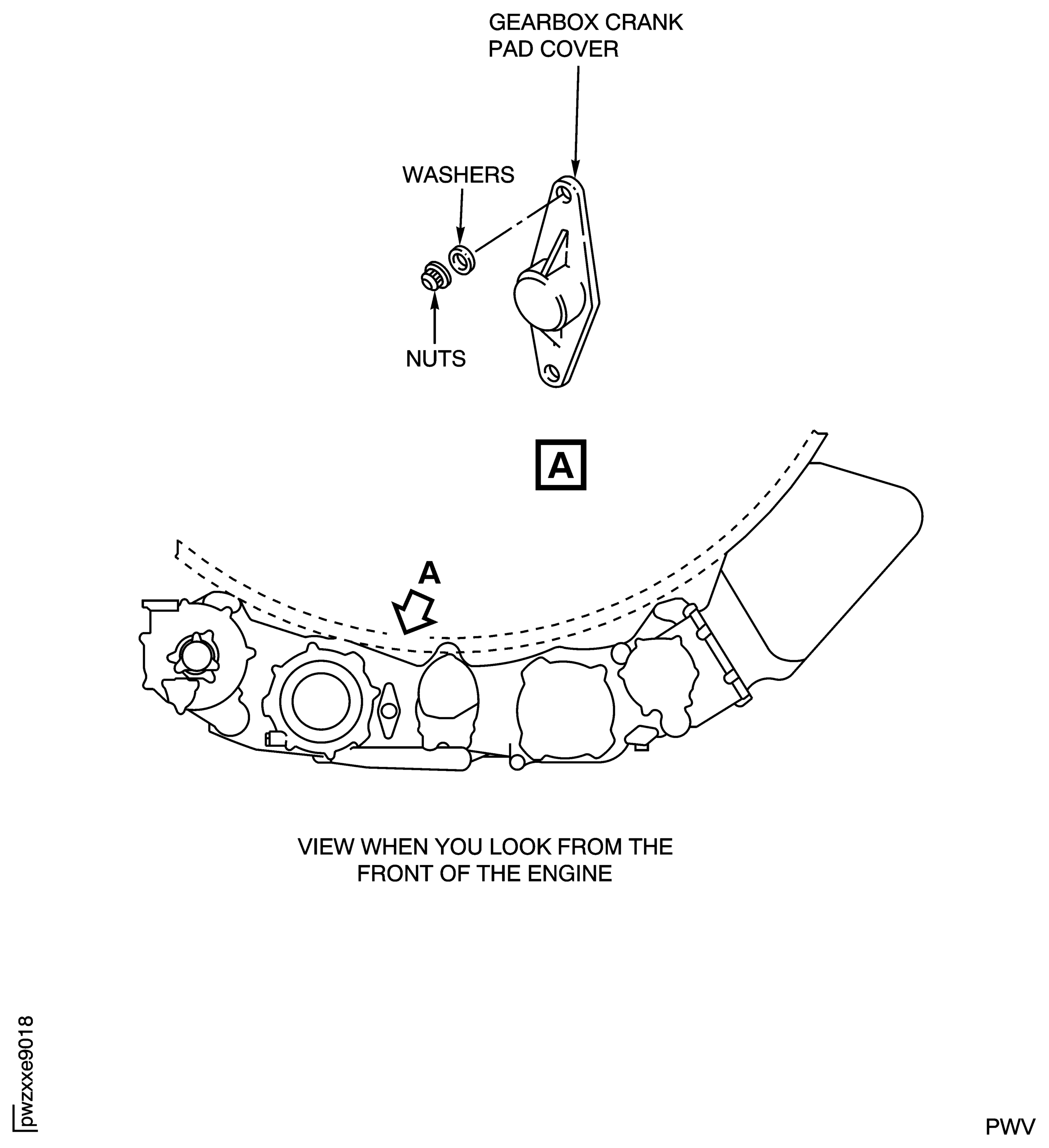
    Figure: HPT Borescope Locations for Inspection of the Stage 1 HPT Blades (Left Side)

    HPT Borescope Locations for Inspection of the Stage 1 HPT Blades (Left Side)
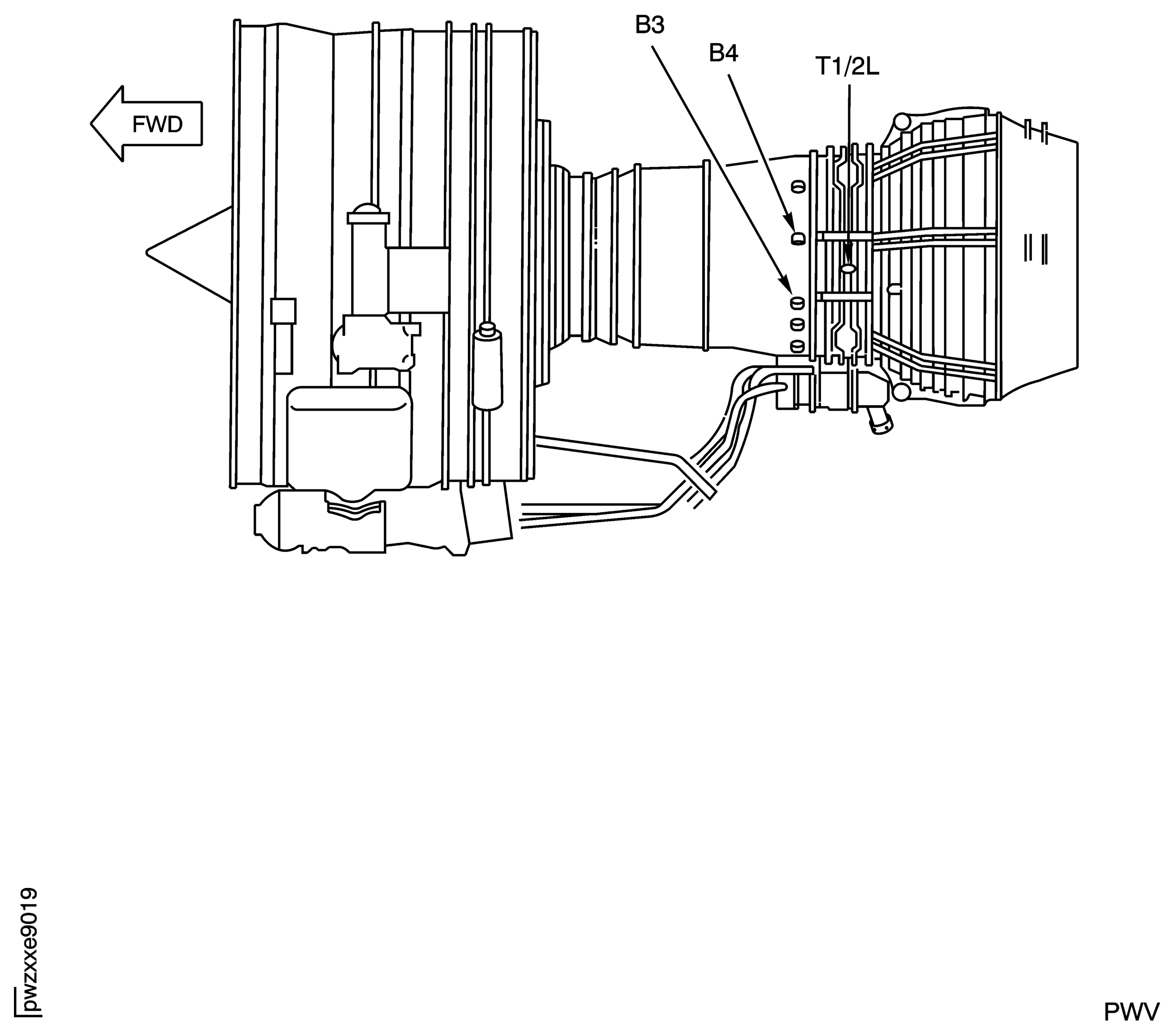
    Figure: HPT Borescope Ports for Inspection of the Stage 1 HPT Blades (Right Side)

    HPT Borescope Ports for Inspection of the Stage 1 HPT Blades (Right Side)
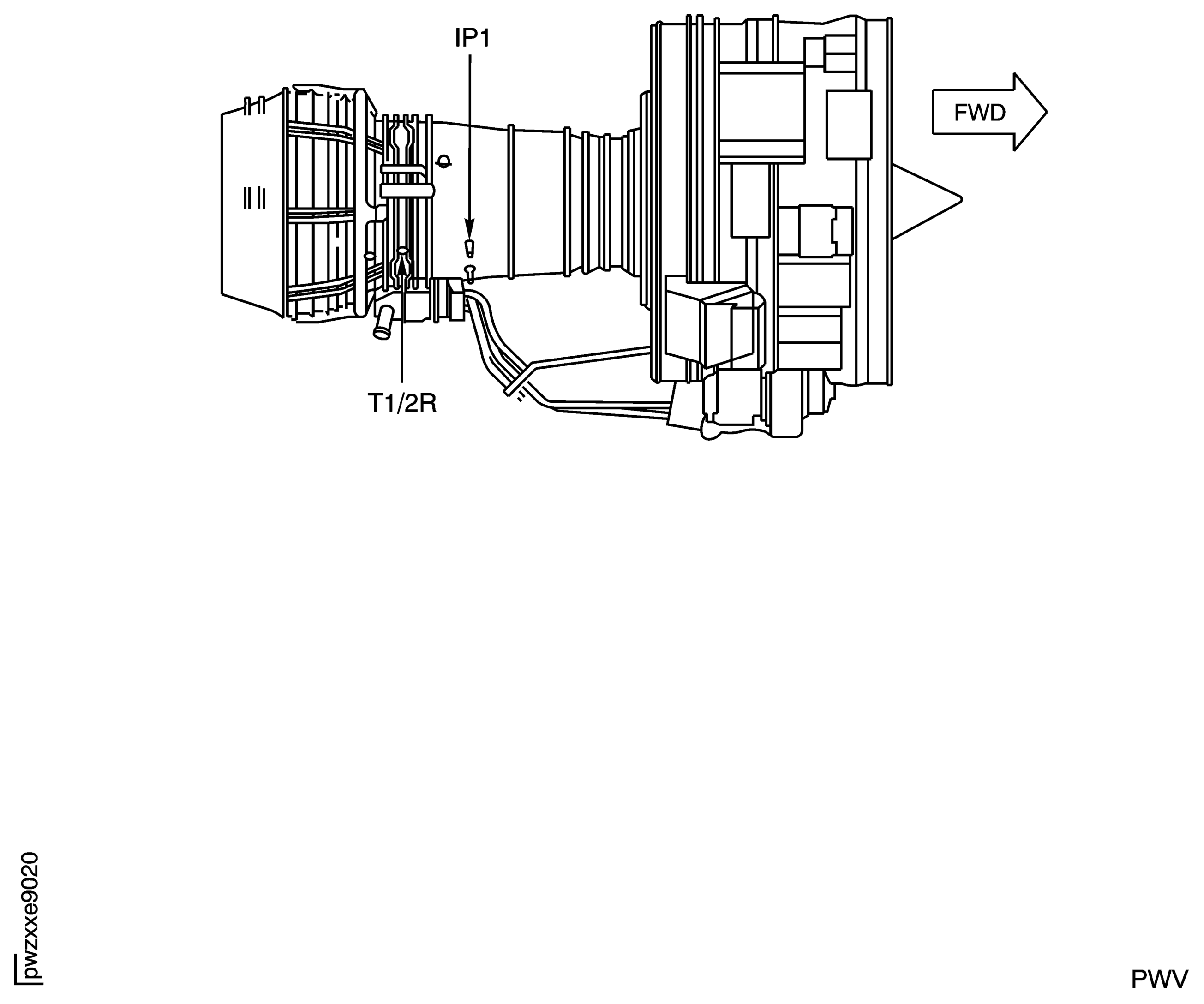
    Figure: HPT Ports for Inspection of the Stage 1 HPT Blades

    HPT Ports for Inspection of the Stage 1 HPT Blades
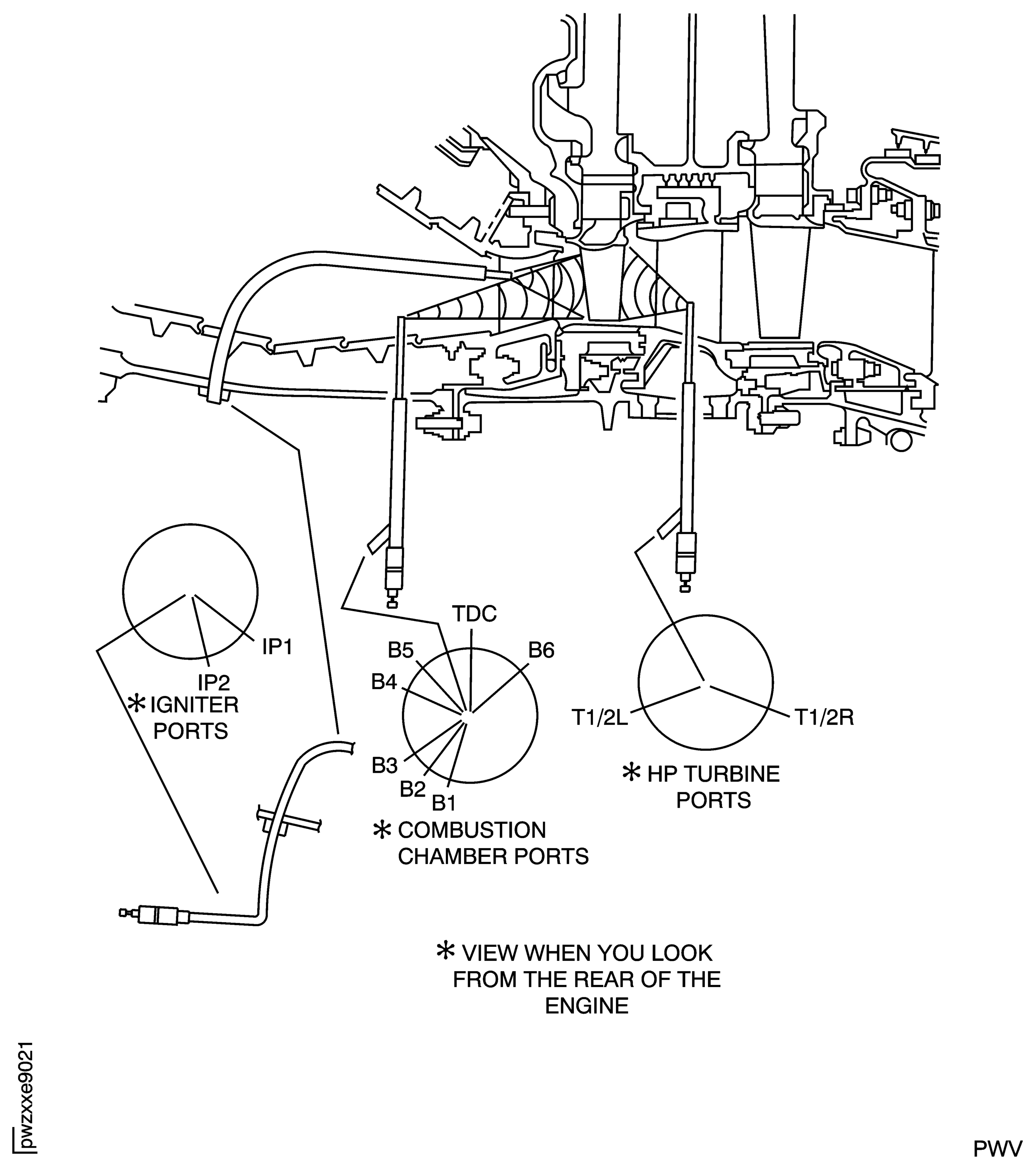
    Figure: Borescope Equipment

    Borescope Equipment
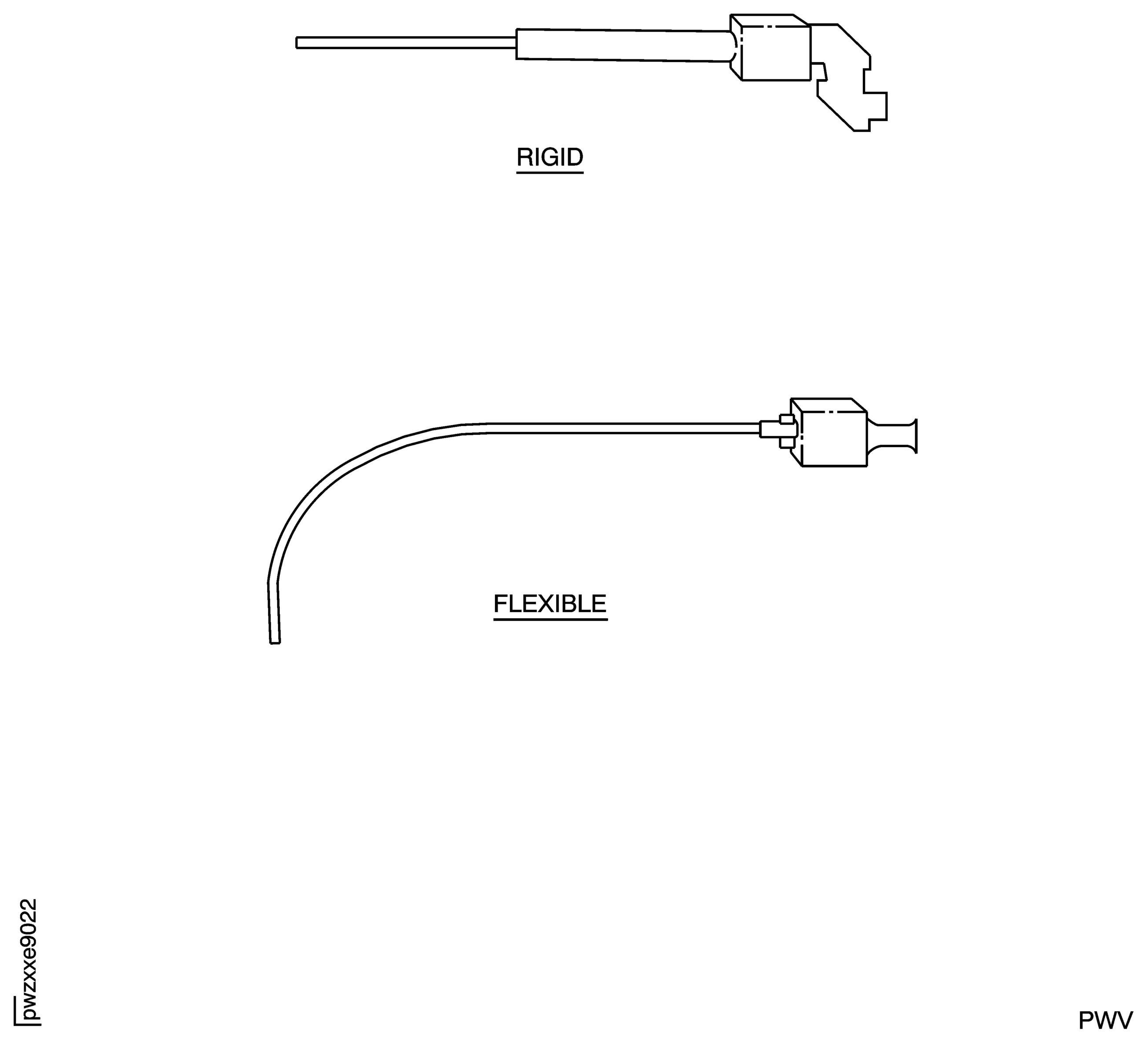
    Figure: Borescope Ports

    Borescope Ports
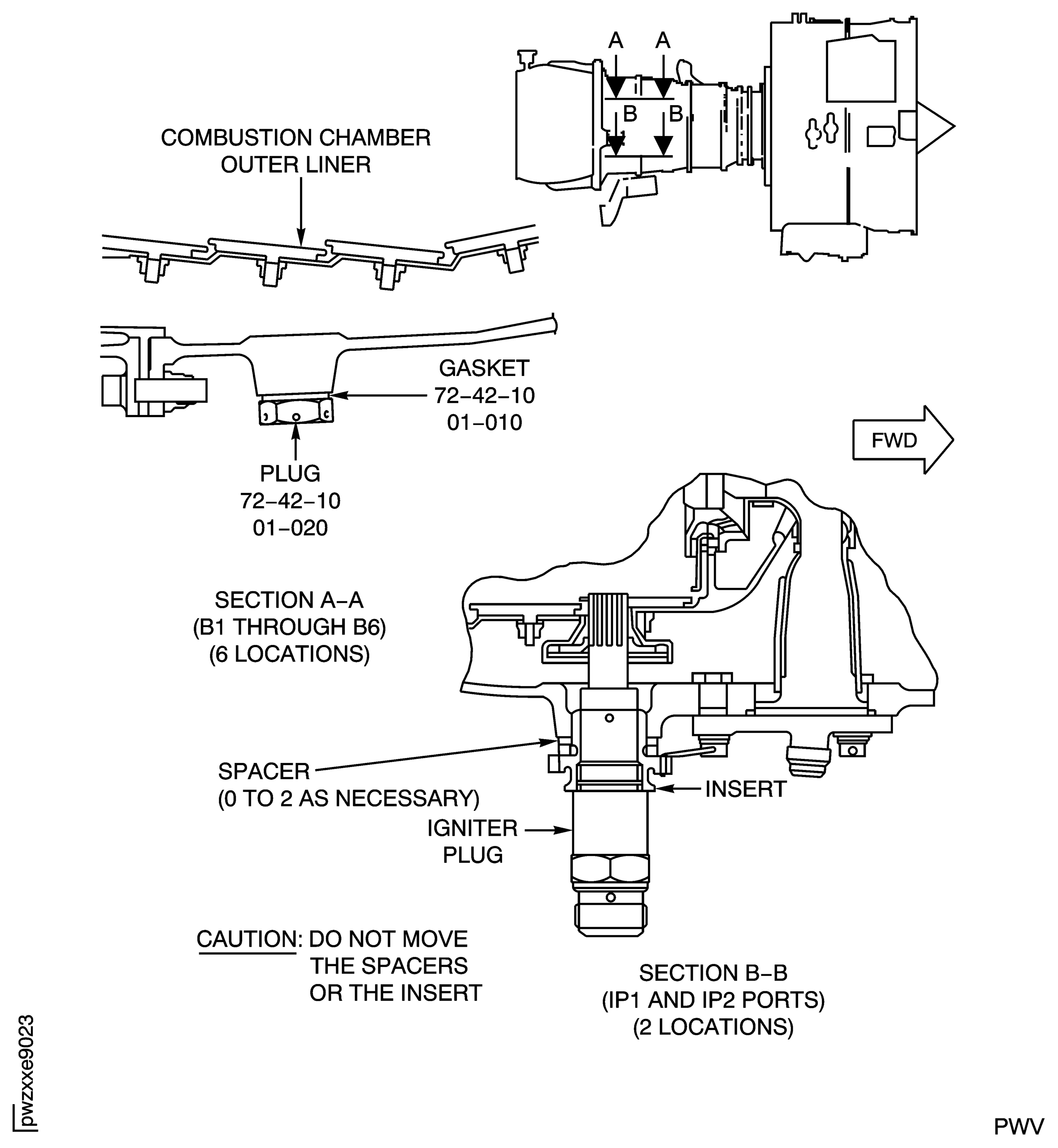
    Figure: Borescope Ports

    Borescope Ports
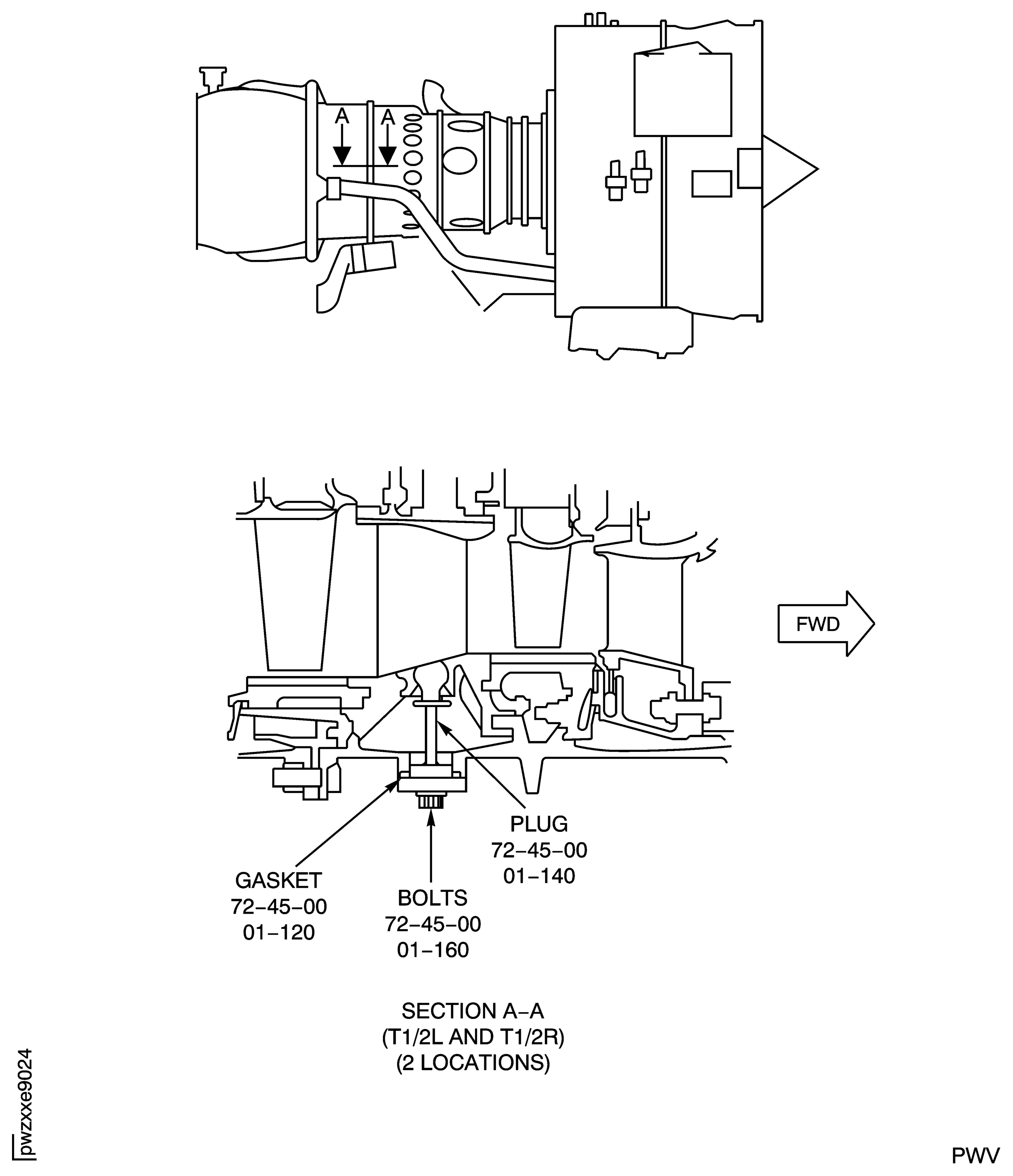
    Figure: Borescope Ports

    Borescope Ports
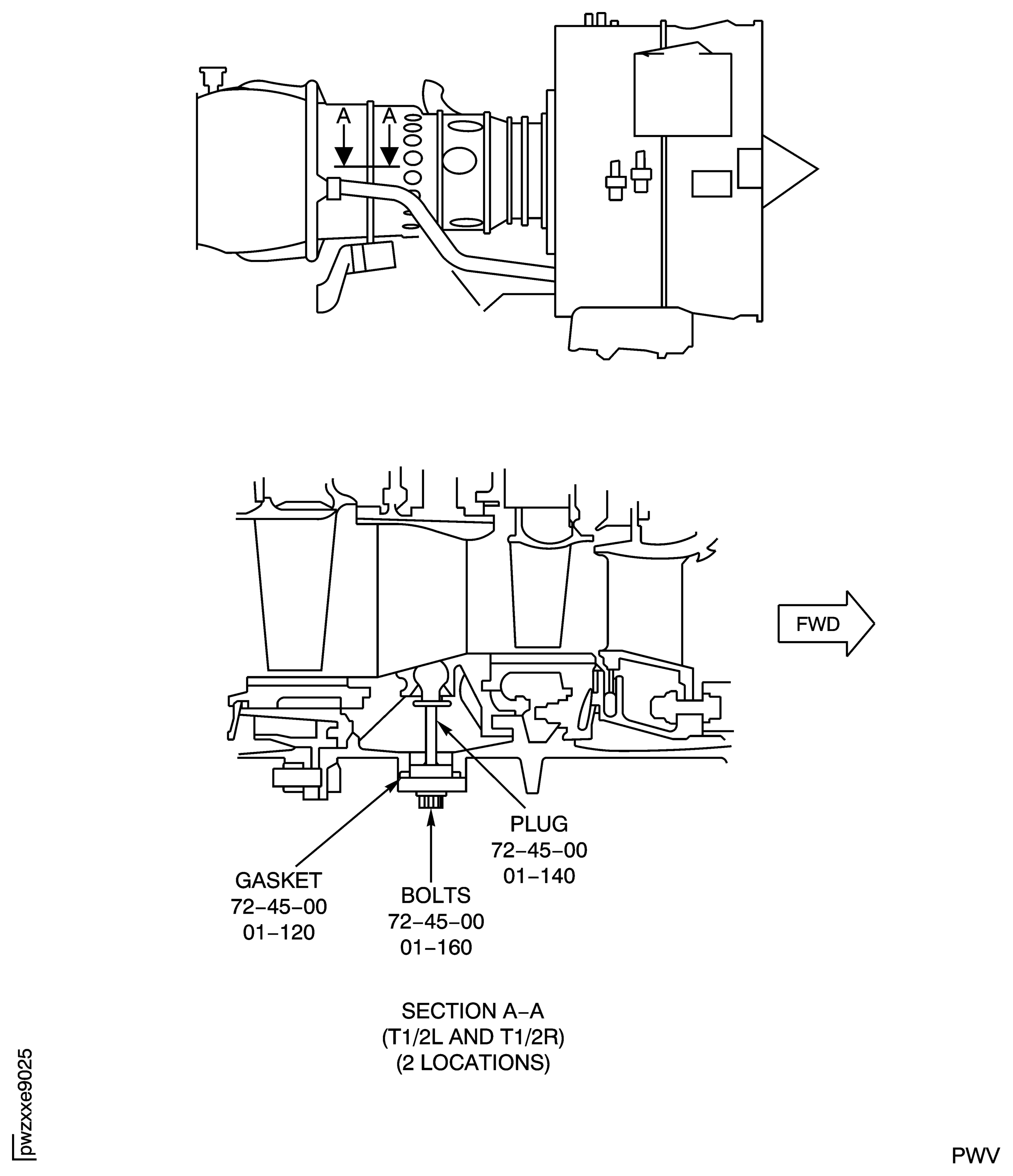
    Figure: Stage 1 HPT Blade Inspection Areas

    Stage 1 HPT Blade Inspection Areas
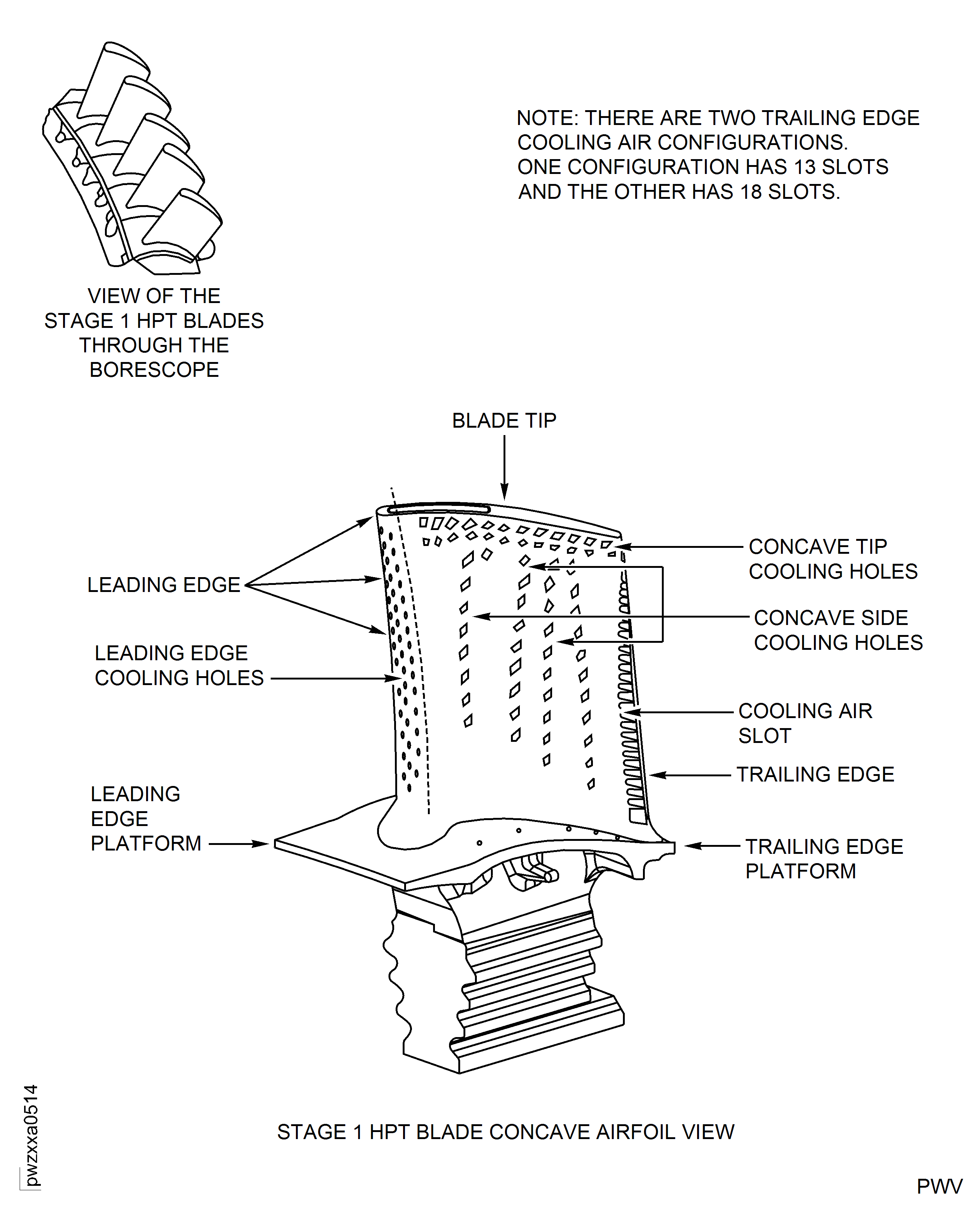
    Figure: Stage 1 HPT Blade Inspection Areas

    Stage 1 HPT Blade Inspection Areas
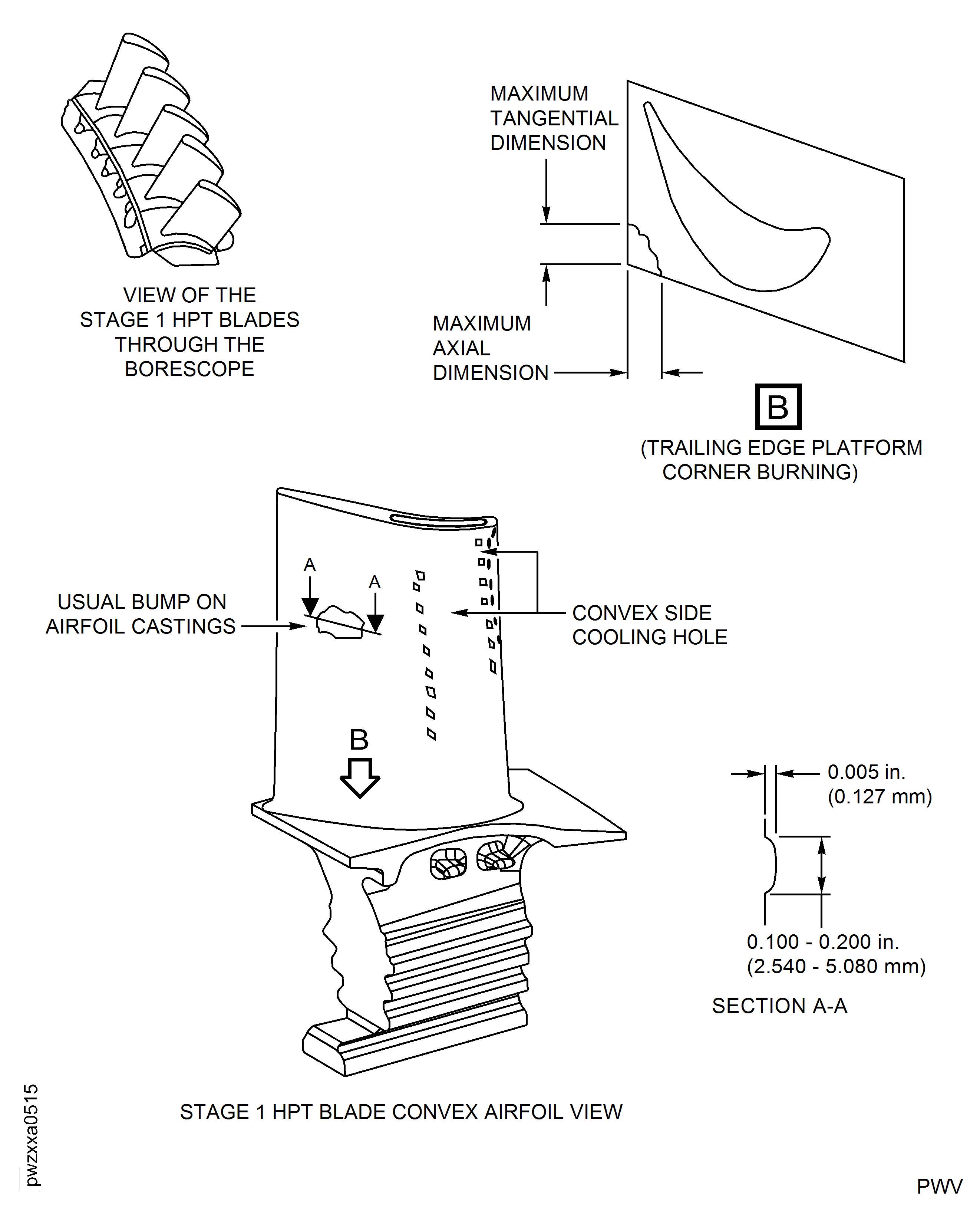
    Figure: Stage 1 HPT Blade Inspection Areas

    Stage 1 HPT Blade Inspection Areas
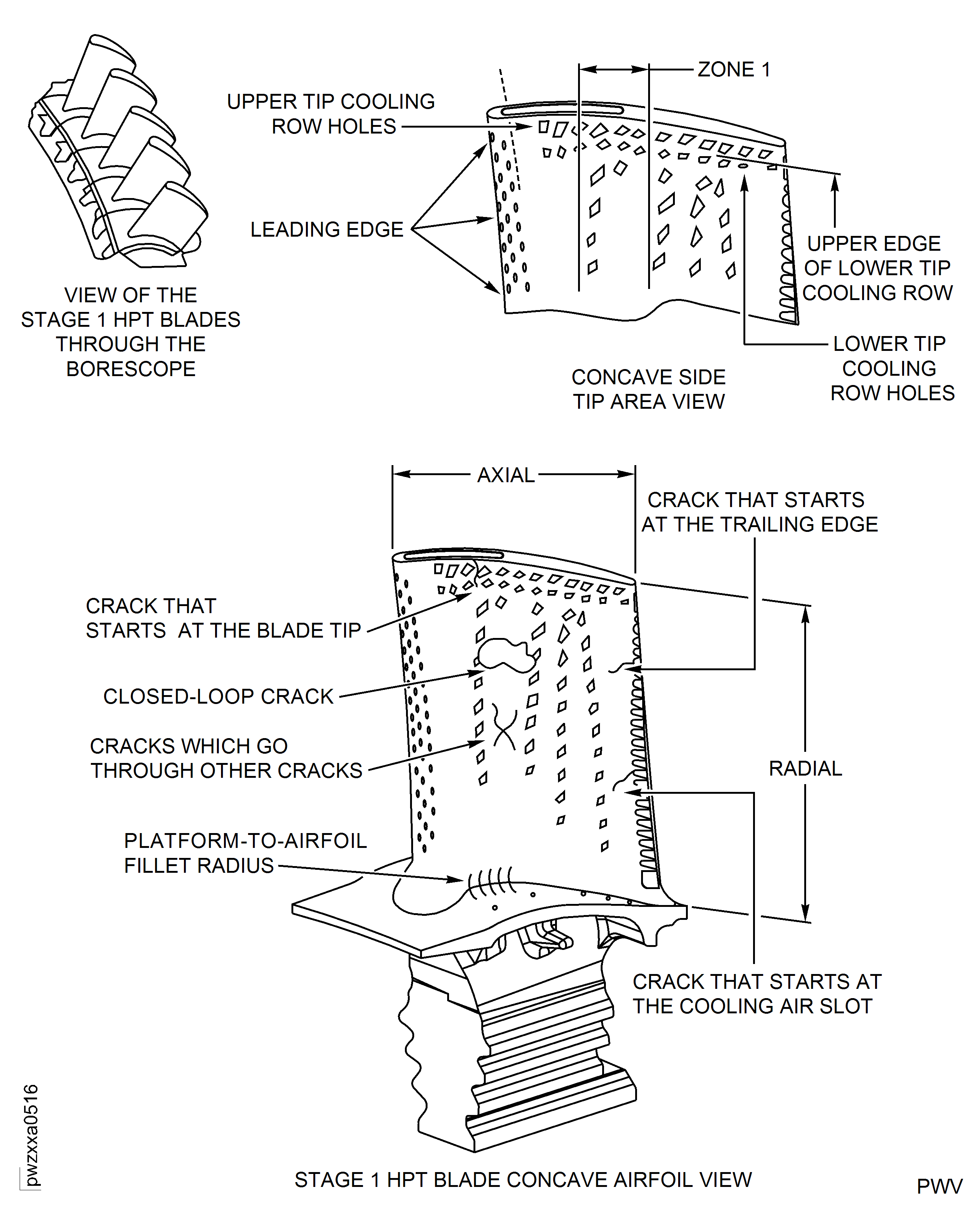
    Figure: Stage 1 HPT Blade Inspection Areas

    Stage 1 HPT Blade Inspection Areas
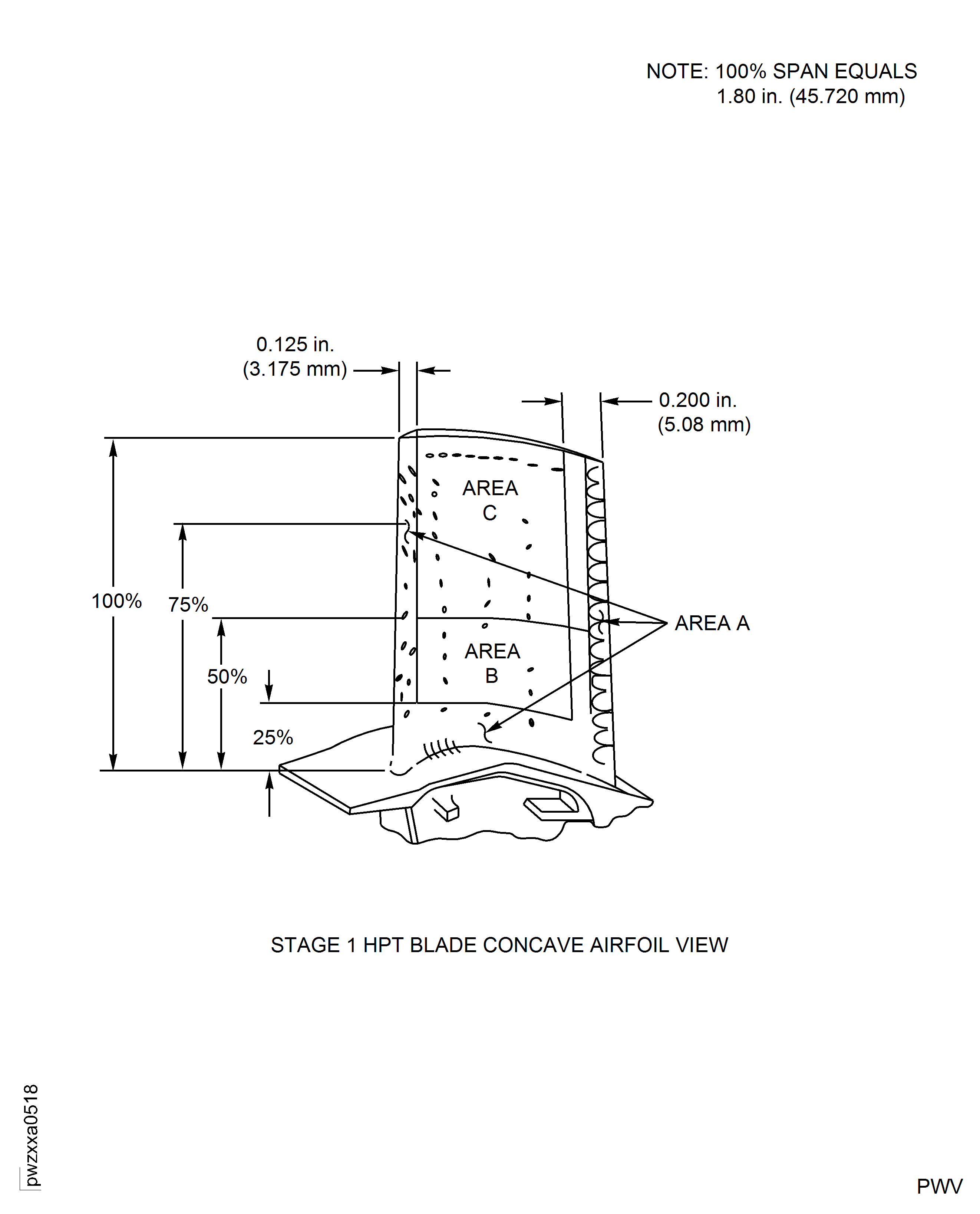
    Figure: Stage 1 HPT Duct Segment Inspection Locations

    Stage 1 HPT Duct Segment Inspection Locations
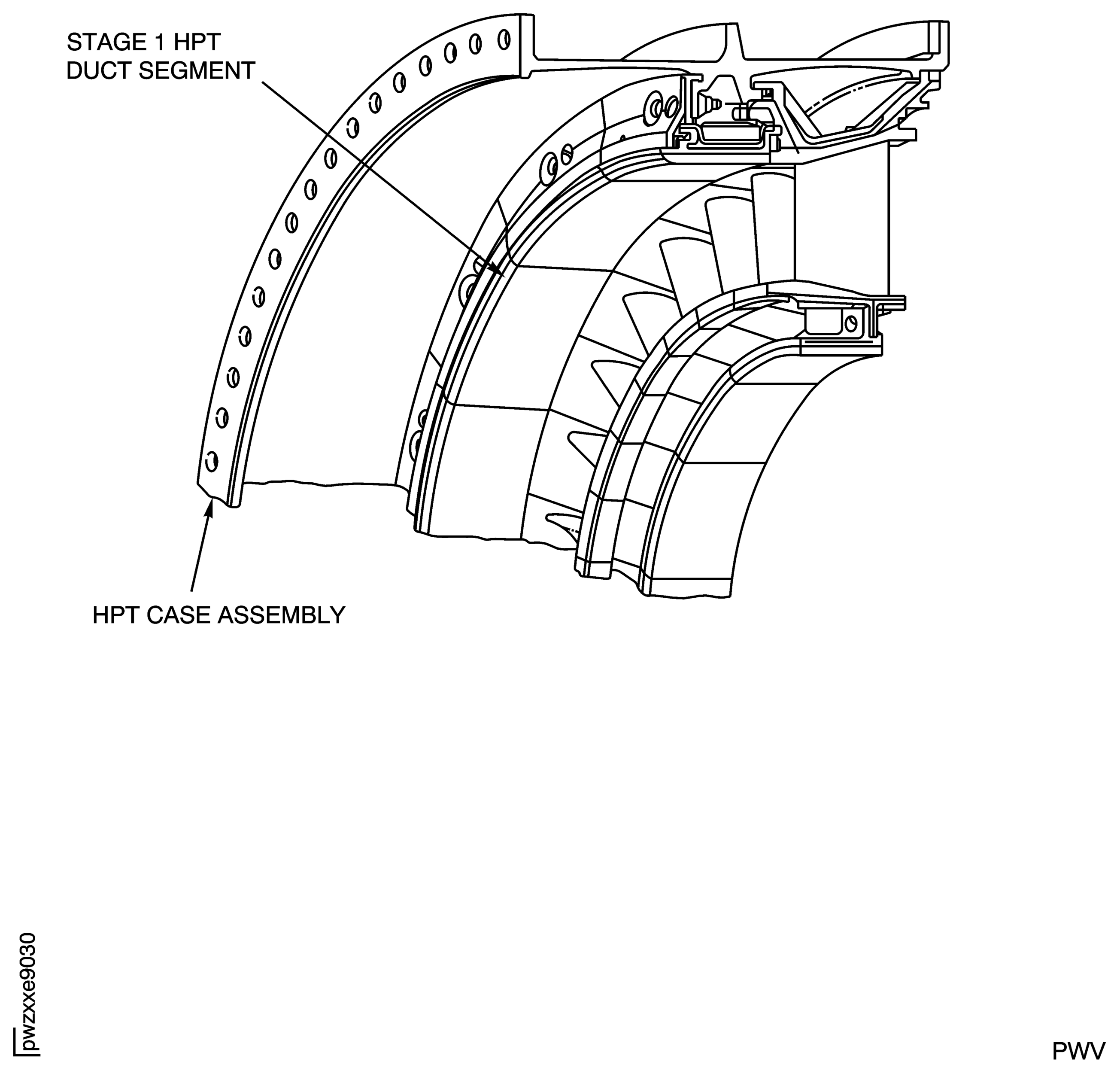
    Figure: Stage 1 HPT Segment Inspection Locations

    Stage 1 HPT Segment Inspection Locations
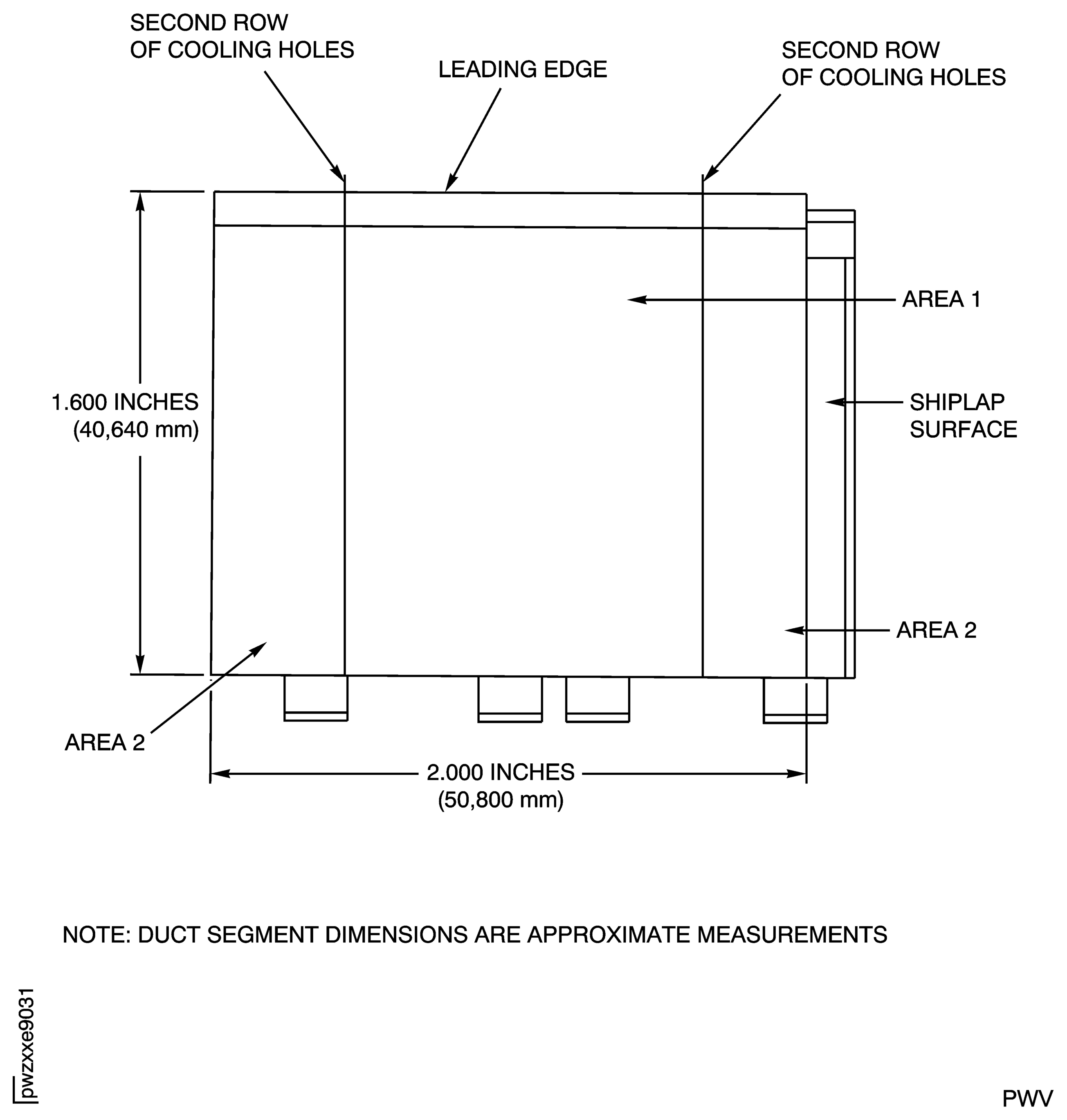
    Figure: Stage 1 HPT Blade Inspection Areas

    Stage 1 HPT Blade Inspection Areas
Requirements After Job Completion

Follow-On Conditions

NONE
Change Type:

Revised figures 9, 10, 11, 12, and 15. (18VC499)

Change Type:

Revised the procedure to update task titles. (17VC017)

Change Type:

Revised the common Information, procedure and figure 12. (16VC455A)

Link not Found
Manufacturer Code:0AM53
Enterprise Name:IAE INTERNATIONAL AERO ENGINES AG
BU Name:NULL
Building:SUITE 400
Street:628 HEBRON AVENUE
City:GLASTONBURY
State:CT
Zip Code:06033
Country:USA
Manufacturer Code:34568
Enterprise Name:TIODIZE CO., INC.
BU Name:TIODIZE CO., INC.
Street:5858 ENGINEER DRIVE
City:HUNTINGTON BEACH
State:CA
Zip Code:92649
Country:USA
Phone Number:1-714-898-4377
Fax Number:1-714-891-7467
Internet:www.tiodize.com
Manufacturer Code:LOCAL
Enterprise Name:LOCALLY SUPPLIED
Manufacturer Code:X333X
Enterprise Name:REFER TO V2500 SB ENG-79-0108
Link not Found
Manufacturer Code:0AM53
Supply Number:CoMat 02-024
Type:sp01
Supply Short Name:CoMat 02-024 MASKING TAPE (CREPE PAPER BACKING)
Supply Name:CoMat 02-024 MASKING TAPE (CREPE PAPERBACKING)
Suppliers:
ManufacturerRemarks
0AM53
Manufacturer Code:LOCAL
Supply Number:CoMat 02-141
Type:sp01
Supply Short Name:CoMat 02-141 LOCKWIRE
Supply Name:CoMat 02-141 LOCKWIRE
Specification Groups:
Doc NumberType
AS3214-02 (0.8 mm)AMS 5689
Suppliers:
ManufacturerRemarks
LOCAL
81343
IE508
58401
Manufacturer Code:X333X
Supply Number:CoMat 10-077
Type:sp01
Supply Short Name:CoMat 10-077 APPROVED ENGINE OILS
Supply Name:CoMat 10-077 APPROVED ENGINE OILS
Specification Groups:
Doc NumberType
For V2500-A1/A5/D5 models - Refer to V2500 Service Bulletin ENG-79-0108
For V2500-E5 model - Refer to Service Bulletin E5-79-0001
Suppliers:
ManufacturerRemarks
X333X
Manufacturer Code:K2147
Supply Number:CoMat 10-094
Type:sp01
Supply Short Name:CoMat 10-094 ANTI-SEIZE COMPOUND, PURE Ni-SPECIAL
Supply Name:CoMat 10-094 ANTI-SEIZE COMPOUND, PURE Ni-SPECIAL
Specification Groups:
Doc NumberType
BOSTIK NEVER-SEEZ PURE NICKEL SPECIAL
Suppliers:
ManufacturerRemarks
K2147
K6835
5W425
Manufacturer Code:34568
Supply Number:CoMat 10-129
Type:sp01
Supply Short Name:CoMat 10-129 ANTI-SEIZE PASTE
Supply Name:CoMat 10-129 ANTI-SEIZE PASTE
Specification Groups:
Doc NumberType
TIODIZE T8E PASTE
Suppliers:
ManufacturerRemarks
34568
Manufacturer Code:LOCAL
Tool Number:Flexible Borescope
Tool Name:Flexible borescope (probe dia. 0.24 to 0.31 in. (6.0 to 8.0 mm) with view capability of 180 degrees up and down)
Manufacturer Code:0AM53
Tool Number:IAE 1P16184
Tool Name:IAE 1P16184 Puller
Manufacturer Code:0AM53
Tool Number:IAE 2P16204
Tool Name:IAE 2P16204 Guide Tube
Manufacturer Code:LOCAL
Tool Number:Torque Wrench 0-250
Tool Name:Torque wrench, range 0 to 250 lbfin (0 to 20 Nm)
Link not Found