Export Control
EAR Export Classification: Not subject to the EAR per 15 C.F.R. Chapter 1, Part 734.3(b)(3), except for the following Service Bulletins which are currently published as EAR Export Classification 9E991: SBE70-0992, SBE72-0483, SBE72-0580, SBE72-0588, SBE72-0640, SBE73-0209, SBE80-0024 and SBE80-0025.Copyright
© IAE International Aero Engines AG (2001, 2014 - 2021) The information contained in this document is the property of © IAE International Aero Engines AG and may not be copied or used for any purpose other than that for which it is supplied without the express written authority of © IAE International Aero Engines AG. (This does not preclude use by engine and aircraft operators for normal instructional, maintenance or overhaul purposes.).Applicability
All
Common Information
TASK 72-41-11-300-025 HPC Stage 3 - 8 Drum Disk - Blend Repair Damaged Wire Seal Slots, Repair-025 (VRS6527)
General
This repair must only be done when the instruction to do so is given in 72-41-11, Inspection/Check.
This TASK gives the procedure to repair the HP compressor stages 3 to 8 disks assembly, stages 6, 7 and 8 front and rear damper wire slots by dressing.
This repair must only be done by operators who are trained and qualified with operation, operation constraints and conditions of hand held power tools. Operators must know and be able to recognize the changes in surface texture and color of the component/repair area.
The dressing limits given for the stage 6 rear, stage 7 front, stage 7 rear and stage 8 front damper wire slots is split into two parts:
The lesser dressing limit of 0.097 in. (2.46 mm) is permitted at multiple locations around the subject damper wire slot.
The larger dressing limit of 0.122 in. (3.10 mm) is only permitted at a maximum of three positions per slot.
The distance between each blend must be a minimum of 120 degrees from the deepest point of dressing. If only 1 off area of dressing to the larger limit is necessary on each adjacent slot, the distance between theses areas must be a minimum of 120 degrees. Refer to Figure.
TASKs identified by SPM TASK are in the Standard Practices and Processes Manual (SPM).
Price and availability
Refer to International Aero Engines
Related repairs
Repair the Stages 6 and 7 Linings of the HP Compressor Stages 3 to 8 Disks Shaft Assembly by Replacement, refer to VRS6007, TASK 72-41-11-300-002 (REPAIR-002).
NOTE
NOTE
It is possible that some materials in the consumable materials chart cannot be used for some or all of the necessary applications. Before you use the materials, make sure the types, quantities and applications of the materials necessary are legally permitted in your location. All persons must obey all applicable federal, state, local and provincial laws and regulations when it is necessary to work with these materials.
To identify the consumable materials refer to the Overhaul Processes and Consumables Index (PCI).
Other necessary consumable materials are referred to in the SPM TASKS.
Preliminary Requirements
Pre-Conditions
NONESupport Equipment
| Name | Manufacturer | Part Number / Identification | Quantity | Remark |
|---|---|---|---|---|
| Chemical cleaning equipment | LOCAL | Chemical cleaning equipment | ||
| Binoculars | LOCAL | Binoculars | 20x | |
| Penetrant Crack Test Equipment | LOCAL | Penetrant crack test equipment | ||
| Standard workshop equipment | LOCAL | Standard workshop equipment | ||
| Workshop inspection equipment | LOCAL | Workshop inspection equipment | ||
| Vibrating marking pencil | LOCAL | Vibrating marking pencil | ||
| Magnifying glass, 7x | LOCAL | Magnifying glass, 7x |
Consumables, Materials and Expendables
| Name | Manufacturer | Part Number / Identification | Quantity | Remark |
|---|---|---|---|---|
| CoMat 02-001 ADHESIVE TAPE (MASKING) | LOCAL | CoMat 02-001 | ||
| CoMat 05-020 WATERPROOF SILICON CARBIDE | LOCAL | CoMat 05-020 | ||
| CoMat 05-021 WATERPROOF SILICON CARBIDE | 44197 | CoMat 05-021 | ||
| CoMat 05-141 ABRASIVE STONE SILICON CARBIDE | LOCAL | CoMat 05-141 | ||
| CoMat 06-022 FLUORESCENT PENETRANT (POST-EMULSIFIED ULTRA HIGH SENSITIVITY) | LOCAL | CoMat 06-022 |
Spares
NONESafety Requirements
NONEProcedure

CAUTION
TITANIUM COMPONENT - YOU MUST USE SILICON CARBIDE TYPE ABRASIVE WHEELS, STONES AND PAPERS TO DRESS, BLEND AND POLISH THIS COMPONENT.CAUTION
TITANIUM COMPONENT - AVOID BUILD UP OF HEAT BY APPLYING ONLY GENTLE PRESSURE AND KEEPING THE TOOL SPEED AS LOW AS POSSIBLE. USE TECHNIQUES WHICH ALLOW FOR PROGRESSIVE WEAR OF THE DRESSING MEDIA TO PRESENT A CONTINUALLY FRESH CUTTING SURFACE TO THE WORK PIECE.CAUTION
DO NOT DWELL ON ONE AREA OF THE COMPONENT.CAUTION
DRESS, WHERE POSSIBLE, IN A CIRCULAR MOTION TAKING LIGHT CUTS TO AVOID OVERHEATING.CAUTION
TITANIUM COMPONENT - YOU MUST MAKE SURE THAT WHEN YOU REMOVE MATERIAL, BLEND AND POLISH, TO MAKE SMOOTH, THAT NO SPARKS ARE PRODUCED AND THE ADJACENT AREA IS MASKED OFF.CAUTION
TITANIUM COMPONENT - IF THE MATERIAL SHOWS A CHANGE IN COLOR DURING DRESSING, TO DARKER THAN A LIGHT STRAW COLOR, THE COMPONENT IS TO BE REJECTED.CAUTION
TITANIUM COMPONENT - MAXIMUM SPEED FOR MECHANICAL TOOLS MUST NOT BE MORE THAN 1000 REVOLUTIONS PER MINUTE.Only abrasive stones and papers are to be used if blending the lining material.
The stage 6 rear, stage 7 front, stage 7 rear and stage 8 front damper wire slot larger dressing limit of 0.122 in. (3.10 mm) is only permitted at a maximum of three positions per slot. The distance between each blend must be a minimum of 120 degrees from the deepest point of dressing. If individual slots only require 1 off area of dressing to the larger limit, as shown in Figure, then these dressed areas must be separated with a minimum of 120 degrees on adjacent slots.
If you use mechanical tools, the maximum speed is 1000 rpm.
Damage is to be dressed to depth to remove the minimum amount of material possible to make sure a smooth blend. Use a width to depth ratio of 50:1.
The dressing limits are as follows:
The stage 6 front slot width, AJ after repair must not be more than 0.102 in. (2.60 mm).
The stage 6 rear slot width and stage 7 rear slot width, AK after repair must not be more than 0.097 in. (2.46 mm) and/or 0.122 in. (3.10 mm) at a maximum of three positions per stage at a minimum of 120 degrees apart.
The stage 7 front slot width and stage 8 front slot width, AL after repair must not be more than 0.097 in. (2.46 mm) and/or 0.122 in. (3.10 mm) at a maximum of three positions per stage at a minimum of 120 degrees apart.
The stage 8 rear slot width, AP after repair must not be more than 0.089 in. (2.25 mm).
Remove minimum amount of material possible to blend the damage to make sure that all dimensions are contained in the given limits.
Make that all sharp edges are removed and the repaired areas are blended smooth to the adjacent surfaces.
Where applicable the lining is to be dressed smoothly into the adjacent material, with a gradual smooth blend.
NOTE
Refer to the SPM TASK 70-35-03-300-501.
Remove and blend the area(s) of damage as necessary.
Make sure that the surface finish of the repaired area(s) is equivalent or better than the adjacent area(s), which is not repaired.
The dressing must be smooth with no sudden changes in section thickness and the dressing must blend smoothly with the surrounding profile.
If you use mechanical tools, the maximum speed is 1000 rpm.
NOTE
Only abrasive stones and papers are to be used if blending the lining material.Refer to the SPM TASK 70-35-03-300-501.
Polish the repaired area(s).
SUBTASK 72-41-11-350-101 Remove Damage from the Damper Wire Slot(s)
Refer to the SPM TASK 70-11-26-300-503.
Use chemical cleaning equipment.
Chemically clean the repaired area(s).
SUBTASK 72-41-11-110-124 Chemically Clean
SUBTASK 72-41-11-220-303 Examine the Lining
Refer to the SPM TASK 70-11-26-300-503, SUBTASK 70-11-26-110-001.
Use chemical cleaning equipment.
Chemically clean.
Refer to the SPM TASK 70-11-08-300-503, SUBTASK 70-11-08-300-002.
Swab etch the repaired area(s).
SUBTASK 72-41-11-110-125 Do a Swab Etch
Refer to the SPM TASK 70-23-05-230-501.
Use CoMat 06-022 FLUORESCENT PENETRANT (POST-EMULSIFIED ULTRA HIGH SENSITIVITY) with penetrant crack test equipment.
If cracked, reject.
Do a local penetrant crack test of the repaired area(s).
SUBTASK 72-41-11-230-126 Do a Crack Test
Refer to the SPM TASK 70-11-26-300-503.
Use chemical cleaning equipment.
Chemically clean the repaired area(s).
SUBTASK 72-41-11-110-126 Chemically Clean
Make sure that the surface finish of the repaired area(s) is equivalent or better than the adjacent area(s), which is not repaired.
The dressing must blend smoothly with the surrounding profile.
Use workshop inspection equipment.
Make sure that the dressing limits for each stage is not more than the given limits.
Visually examine and measure the dimensions of the damper wire slots.
SUBTASK 72-41-11-220-304 Examine the Repair to the Stages 6 to 8 Damper Wire Slot(s)
Refer to the SPM TASK 70-09-00-400-501, SUBTASK 70-09-00-400-001.
Remove high spots.
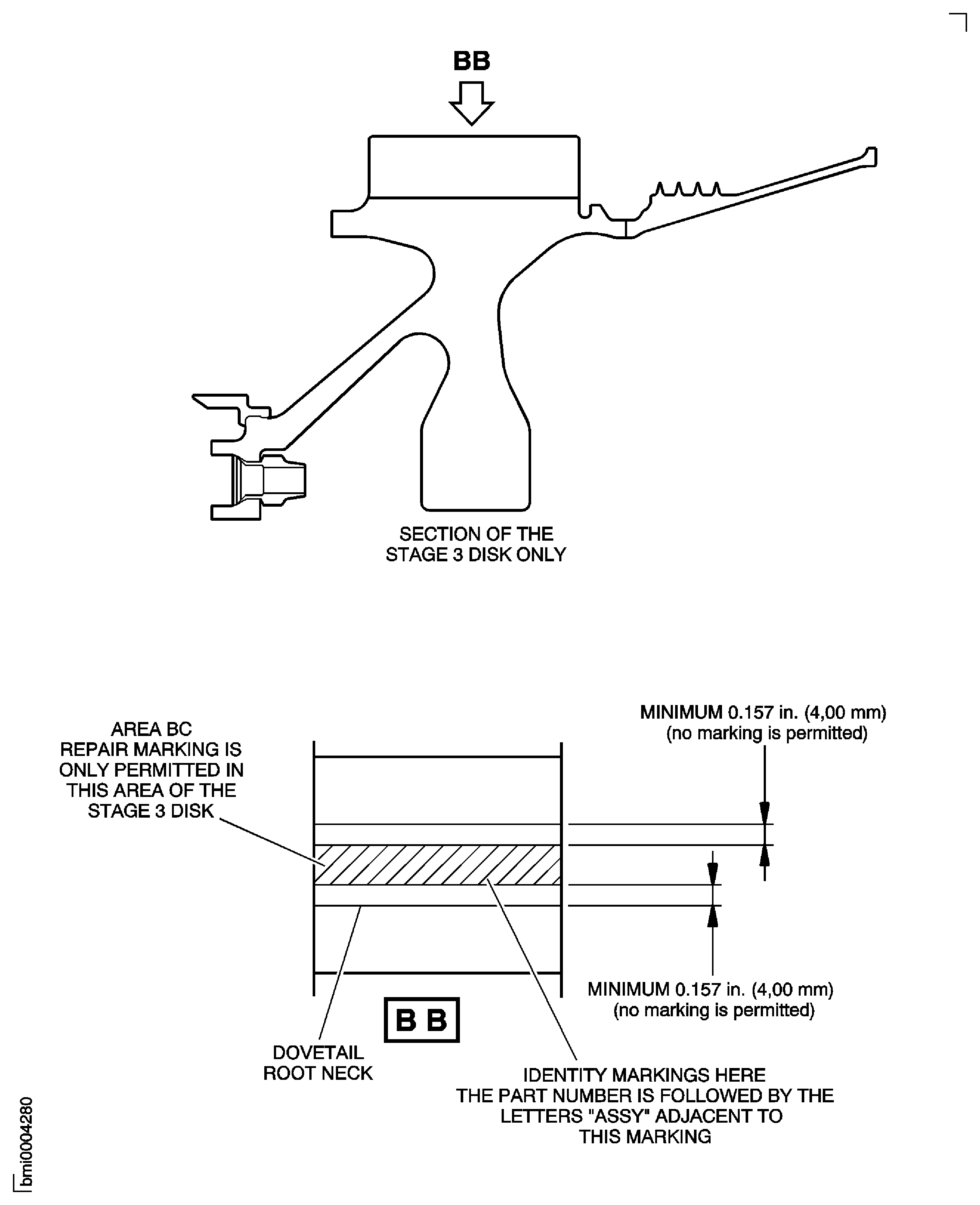
Make a mark VRS6527 adjacent to the part number to identify the repair.
SUBTASK 72-41-11-350-102 Identify the Repair
Figure: Repair Details and Dimensions
Sheet 1
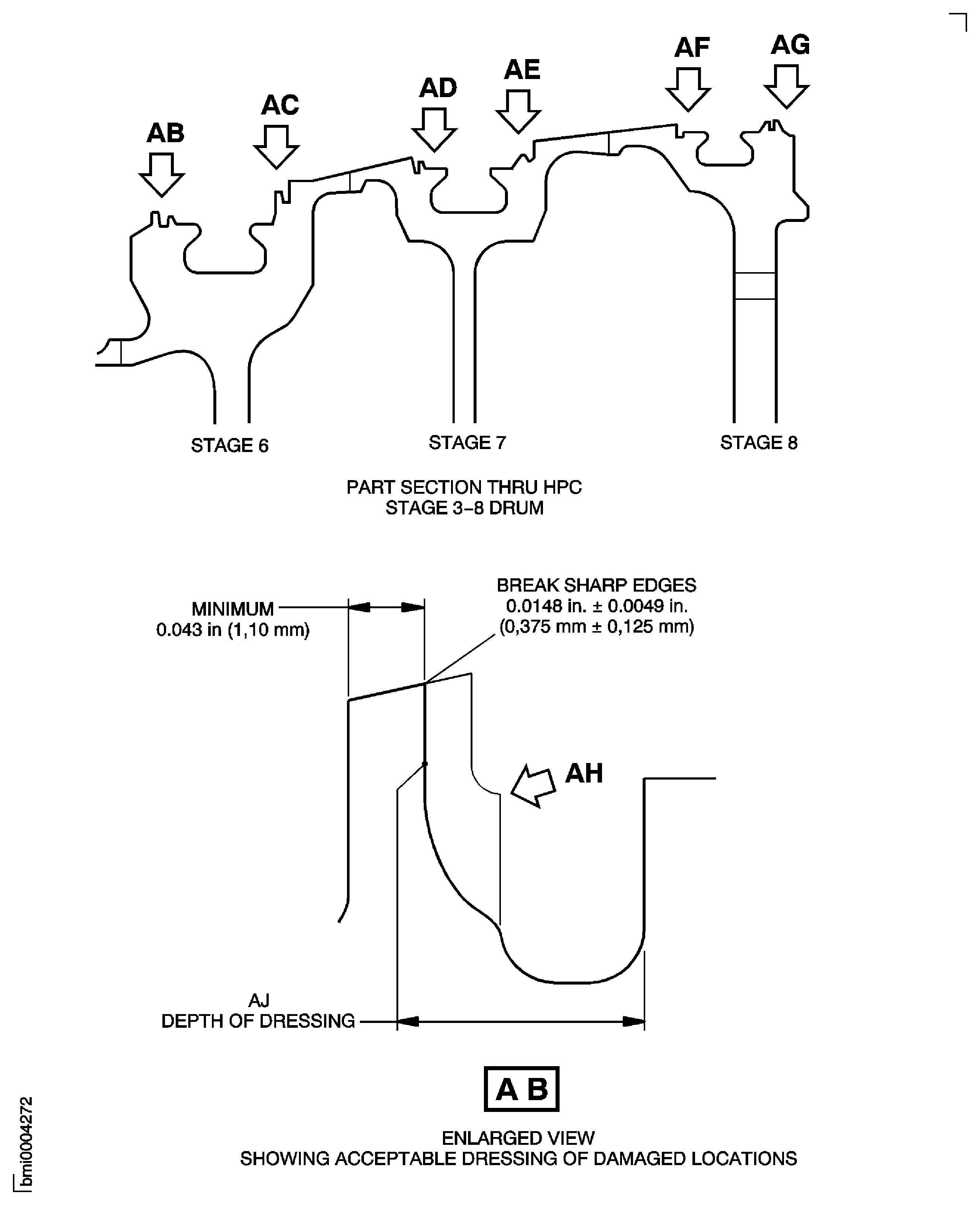
Figure: Repair Details and Dimensions
Sheet 2
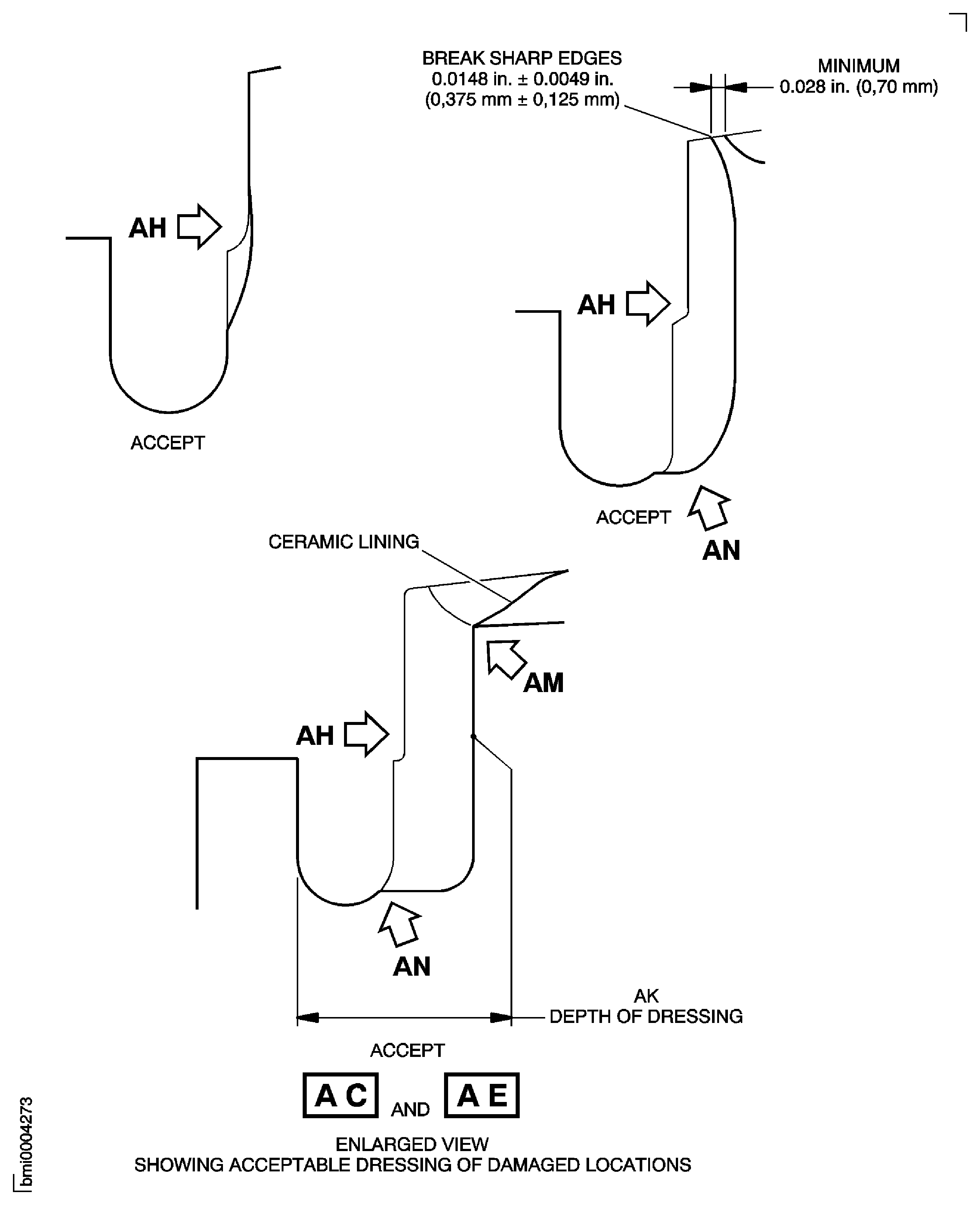
Figure: Repair Details and Dimensions
Sheet 3
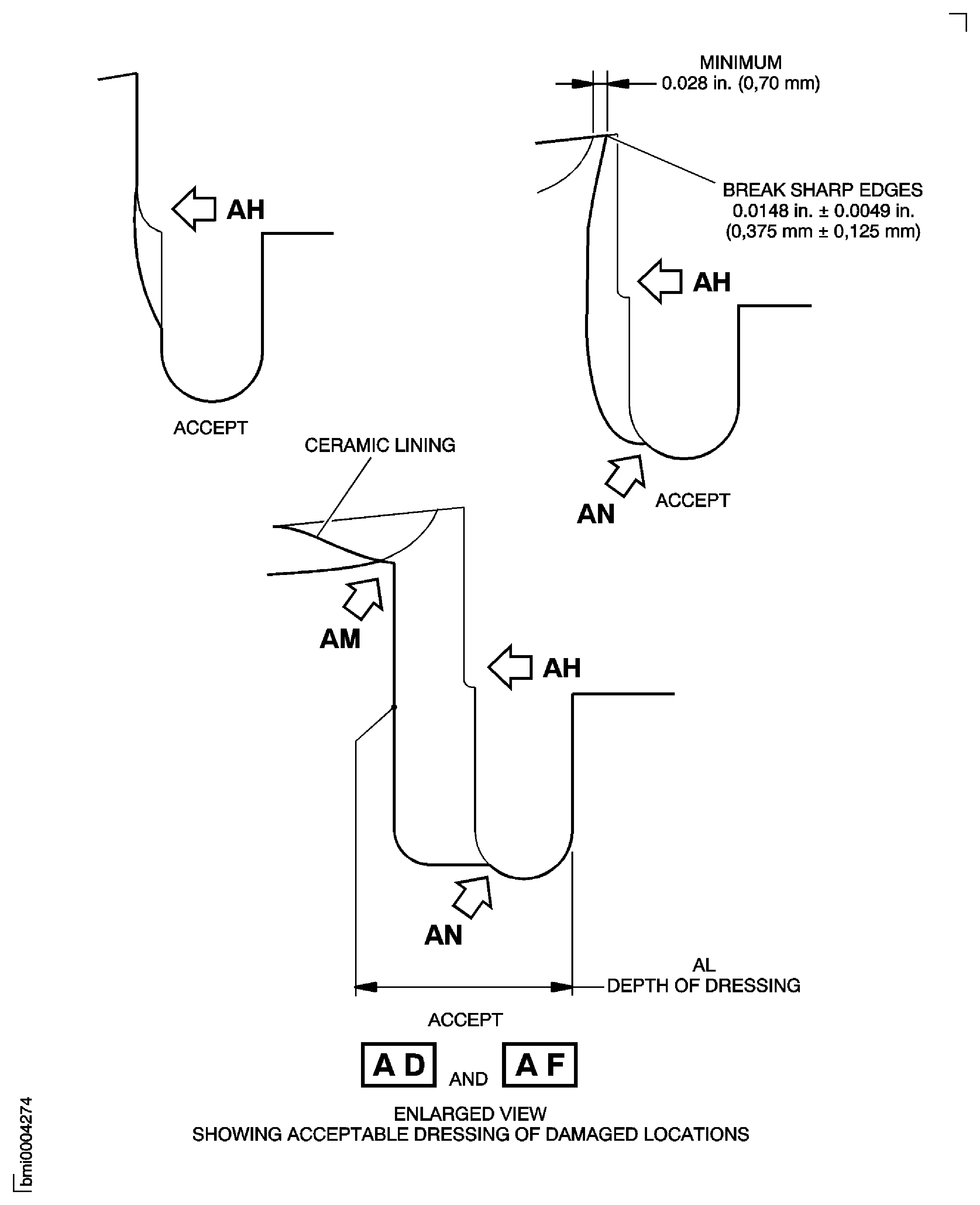
Figure: Repair Details and Dimensions
Sheet 4
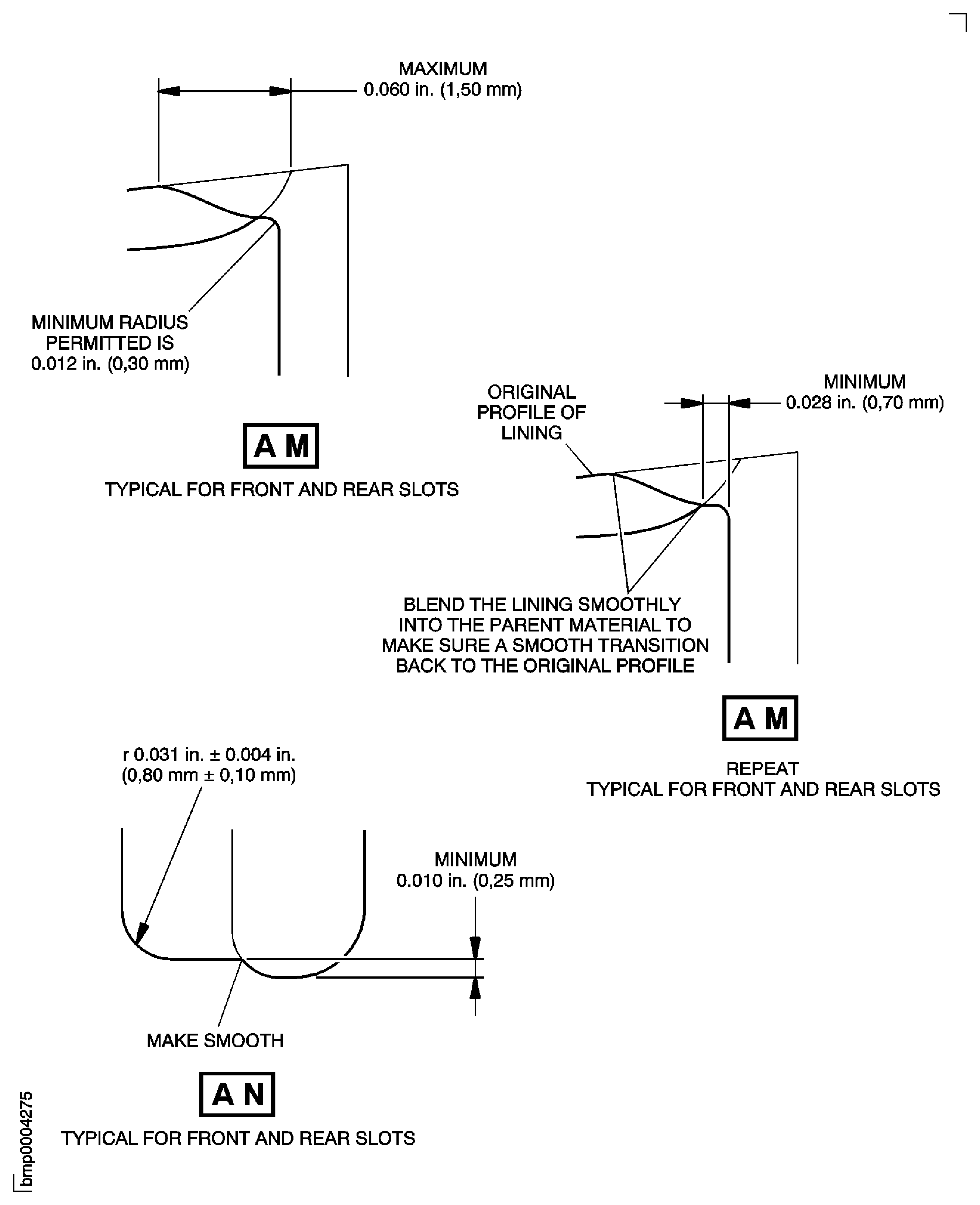
Figure: Repair Details and Dimensions
Sheet 5
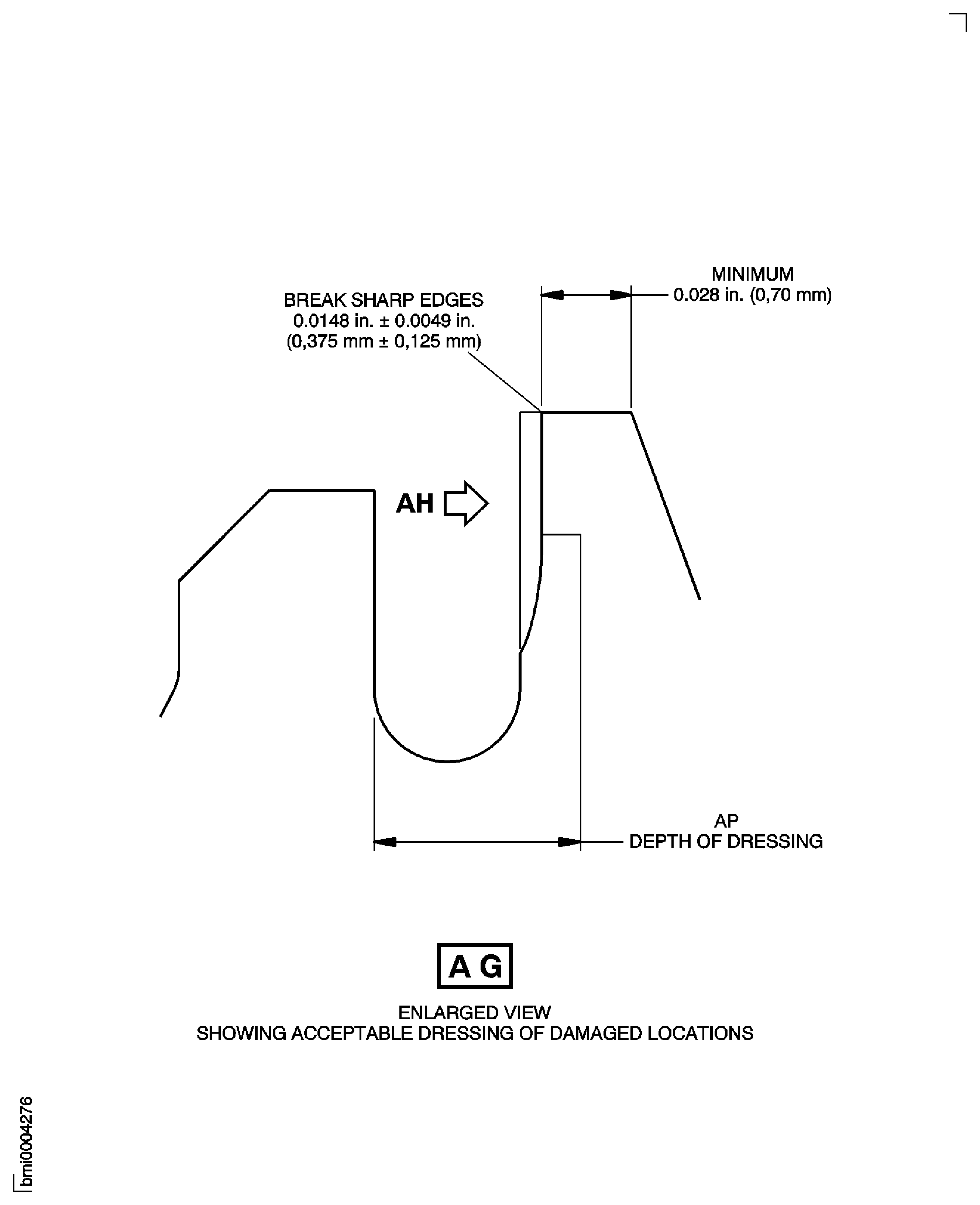
Figure: Repair Details and Dimensions
Sheet 6
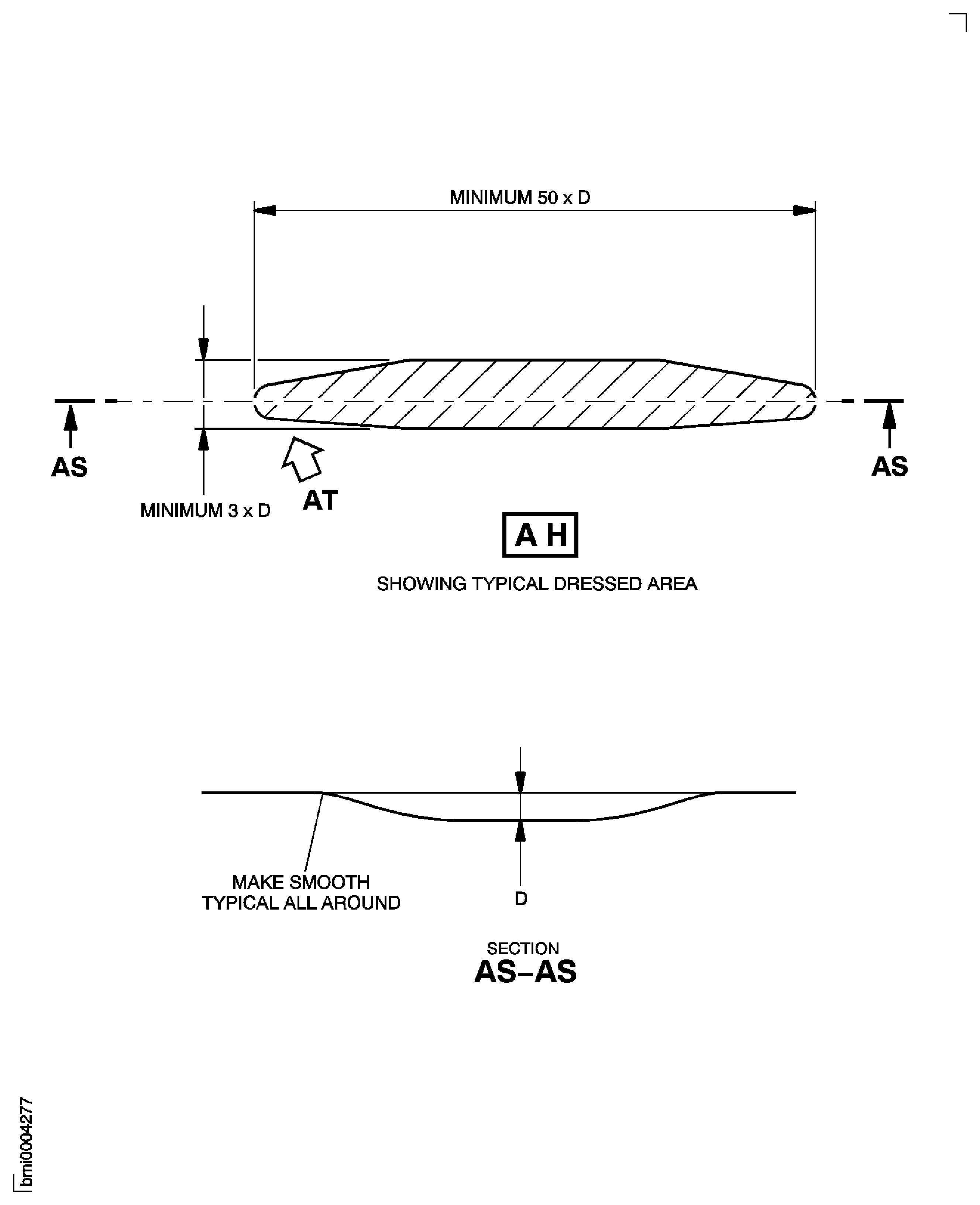
Figure: Repair Details and Dimensions
Sheet 7
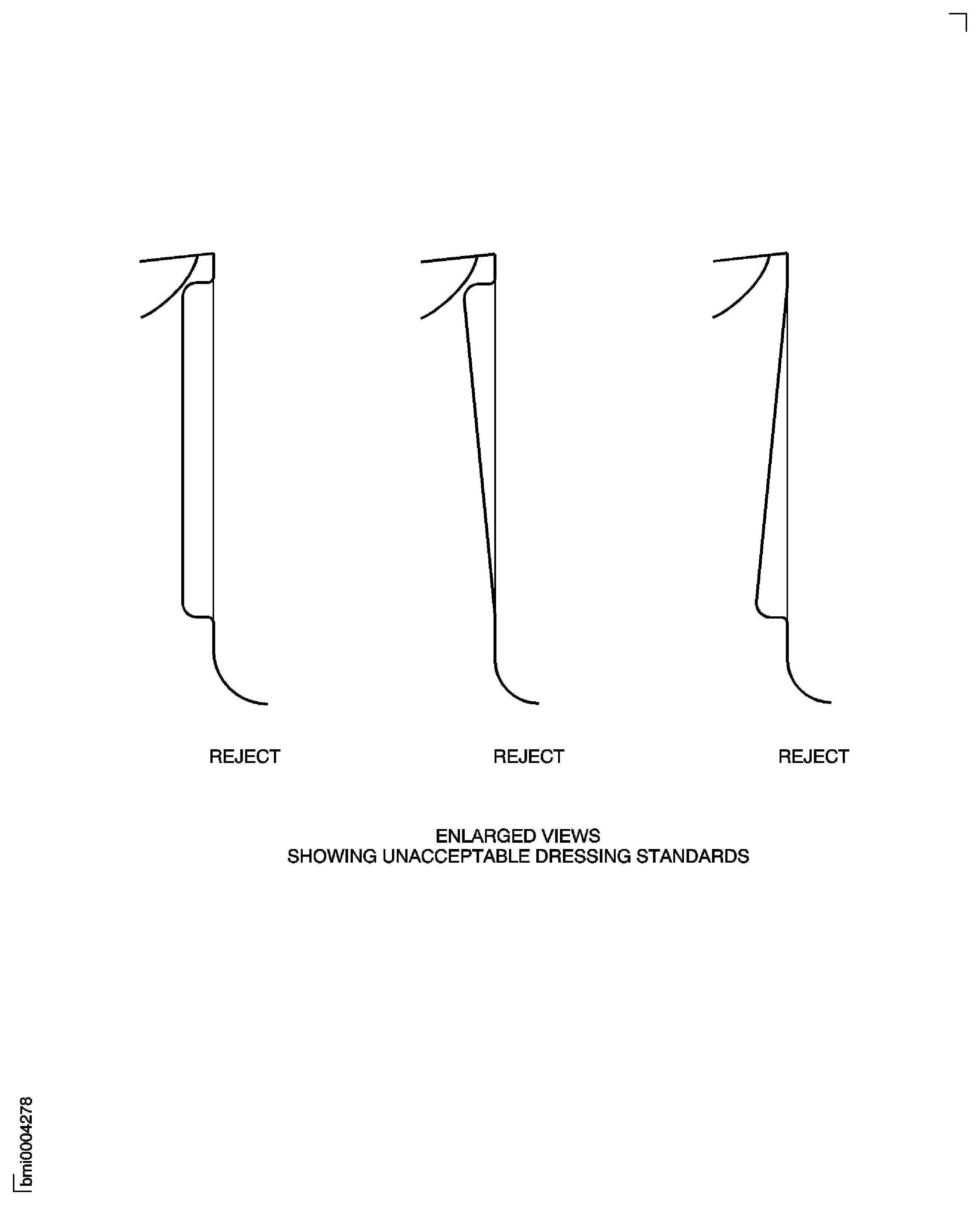
Figure: Repair Details and Dimensions
Sheet 8
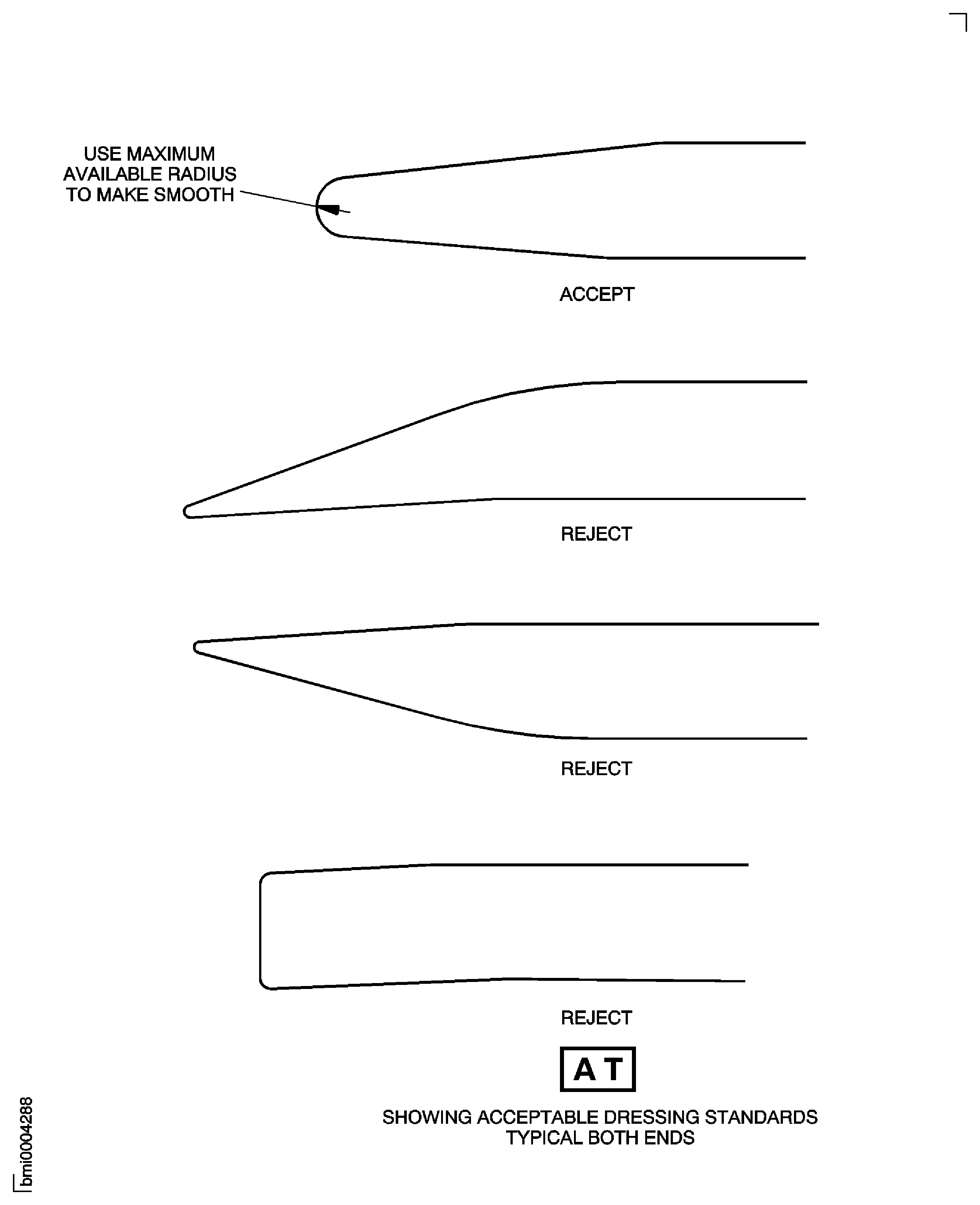
Figure: Repair Details and Dimensions
Sheet 9
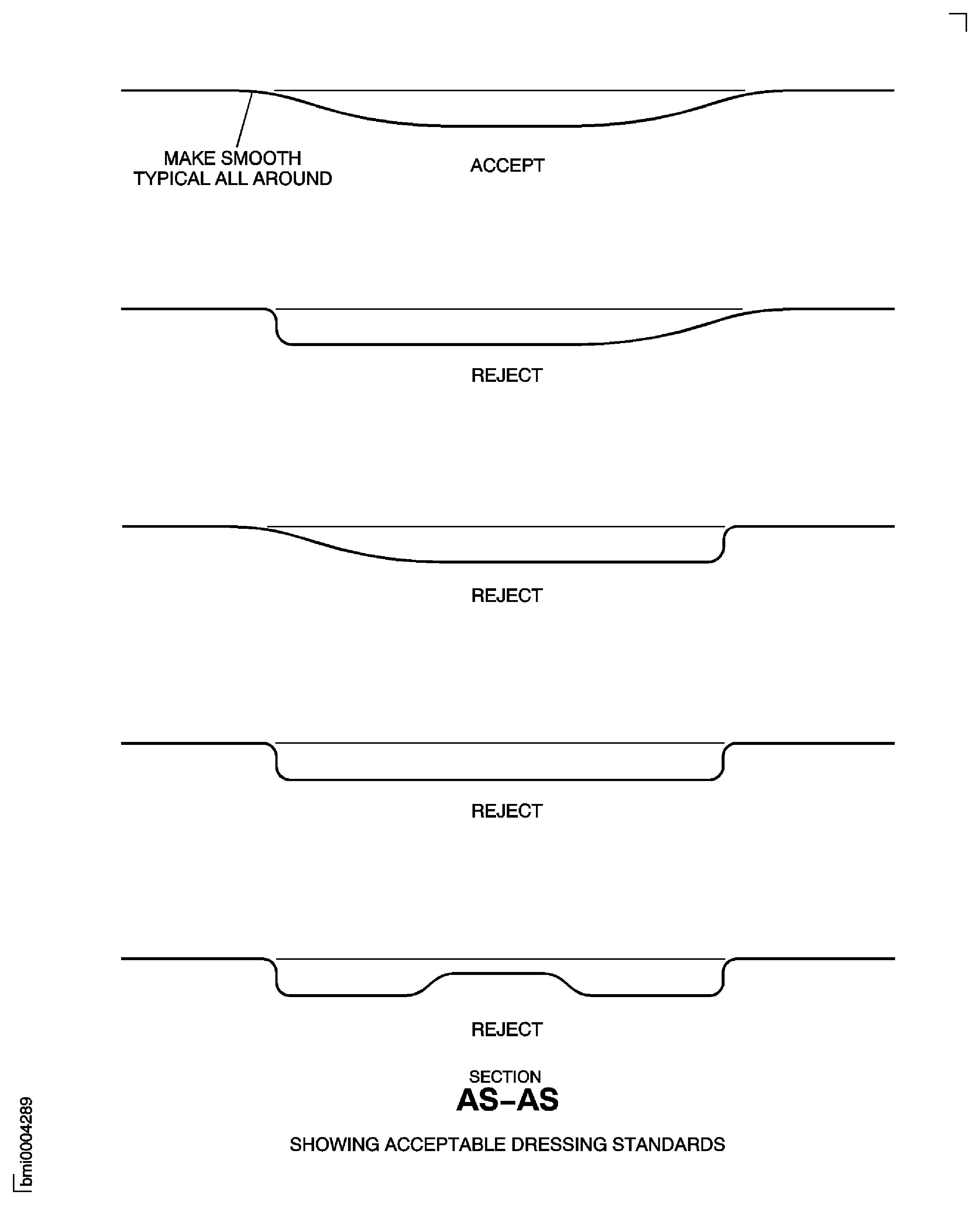
Figure: Repair Details and Dimensions
Sheet 10
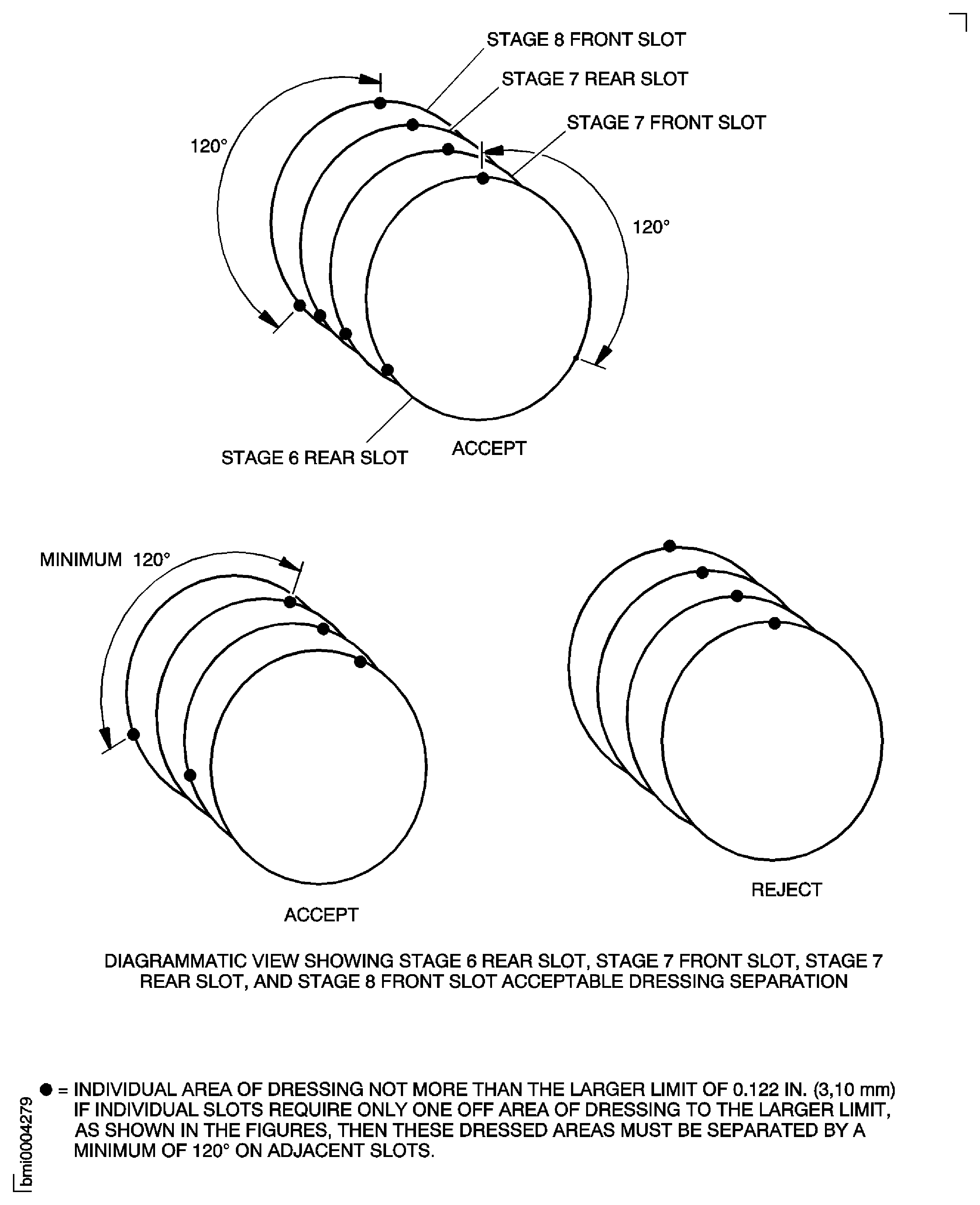
Figure: Repair Details and Dimensions
Sheet 11