
Export Control
EAR Export Classification: Not subject to the EAR per 15 C.F.R. Chapter 1, Part 734.3(b)(3), except for the following Service Bulletins which are currently published as EAR Export Classification 9E991: SBE70-0992, SBE72-0483, SBE72-0580, SBE72-0588, SBE72-0640, SBE73-0209, SBE80-0024 and SBE80-0025.Copyright
© IAE International Aero Engines AG (2001, 2014 - 2021) The information contained in this document is the property of © IAE International Aero Engines AG and may not be copied or used for any purpose other than that for which it is supplied without the express written authority of © IAE International Aero Engines AG. (This does not preclude use by engine and aircraft operators for normal instructional, maintenance or overhaul purposes.).Applicability
All
Common Information
TASK 72-32-85-300-041 Fan Case - Replace The Acoustic Linings, Repair-041 (VRS1842)
Effectivity
FIG/ITEM | PART NO. |
|---|---|
01-100 | 5W0144 |
01-100 | 5W0149 |
01-100 | 5W0154 |
01-100 | 5W0169 |
01-100 | 5W0172 |
01-100 | 5W0194 |
01-100 | 5W0195 |
01-100 | 5W0196 |
01-100 | 5W0197 |
01-100 | 5W0198 |
01-100 | 5W0217 |
01-100 | 5W0218 |
01-100 | 5W0219 |
01-100 | 5W0220 |
01-100 | 5W0221 |
01-100 | 5W0222 |
01-100 | 5W0223 |
01-100 | 5W0224 |
01-100 | 5W0225 |
01-100 | 5W0226 |
01-100 | 5W0307 |
01-100 | 5W0313 |
General
This TASK gives the procedure for repair by replacement of the acoustic linings. Acoustic lining panel sections can be replaced individually. Partial replacement of panel section by the cutting is not permitted. If an area of a panel section is damaged beyond limits then the whole section must be replaced.
Throughout this repair cleanliness must be maintained. Dirt or grease on bonding surfaces will result in poor adhesion and unsatisfactory bonds. Clean cotton or polythene gloves must be worn by all personnel handling parts to be handled on prepared surfaces.
Adhesive curing is accomplished at ambient temperature or above using mechanical clamping or a vacuum bag to secure the replacement linings.
To get good bonding, care must be taken on preparing properly abraded surfaces and proper use of adhesive.
Material of components
PART IDENT | SYMBOL | MATERIAL |
|---|---|---|
Casing | Titanium alloy | |
Acoustic lining | Titanium alloy | |
Acoustic lining | Aluminum alloy honeycomb |
Price and availability - refer to IAE
The practices and processes referred to in the procedure by the TASK number are in the SPM.
NOTE
NOTE
Preliminary Requirements
Pre-Conditions
NONESupport Equipment
| Name | Manufacturer | Part Number / Identification | Quantity | Remark |
|---|---|---|---|---|
| Air hammers | LOCAL | Air hammer | ||
| Air grinder | LOCAL | Air grinder | ||
| Flux chippers | LOCAL | Flux chippers | ||
| Hand tools | LOCAL | Tools, hand | ||
| Putty knife | LOCAL | Putty knife | ||
| Vacuum pump | LOCAL | Vacuum pump | ||
| Ultrasonic leak detector | LOCAL | Ultrasonic leak detector | ||
| Vacuum cleaner | LOCAL | Vacuum cleaner | ||
| Vacuum valve | LOCAL | Vacuum valve | ||
| Blasting equipment | LOCAL | Blasting equipment | ||
| IAE 3J13053 Fixture, bonding | 0AM53 | IAE 3J13053 | 1 | |
| IAE 3J13055 Fixture, bonding | 0AM53 | IAE 3J13055 | 1 |
Consumables, Materials and Expendables
| Name | Manufacturer | Part Number / Identification | Quantity | Remark |
|---|---|---|---|---|
| CoMat 02-097 LINT-FREE GLOVES | LOCAL | CoMat 02-097 | ||
| CoMat 02-099 LINT-FREE CLOTH | LOCAL | CoMat 02-099 | ||
| CoMat 02-100 GLOVES, LINT-FREE | LOCAL | CoMat 02-100 | ||
| CoMat 02-166 BREATHER CLOTH | LOCAL | CoMat 02-166 | ||
| CoMat 02-222 BAGGING FILM | LOCAL | CoMat 02-222 | ||
| CoMat 02-223 RELEASE FILM | LOCAL | CoMat 02-223 | ||
| CoMat 02-224 SILICONE ADHESIVE POLYESTERTAPE | LOCAL | CoMat 02-224 | ||
| CoMat 02-225A TAPE, VACUUM BAG SEALANT | 53309 | CoMat 02-225A | ||
| CoMat 02-334 POROUS RELEASE FILM | LOCAL | CoMat 02-334 | ||
| CoMat 05-003 ABRASIVE MEDIUM ALUMINUM OXIDE, 120/220 GRADE | LOCAL | CoMat 05-003 | ||
| CoMat 05-016 GARNET PAPER, 80-GRIT | LOCAL | CoMat 05-016 | ||
| CoMat 05-185 POLISHING DISCS | K0993 | CoMat 05-185 | ||
| CoMat 05-186 CONDITIONING DISCS | LOCAL | CoMat 05-186 | ||
| CoMat 08-006 FILLER, TWO PACK | LOCAL | CoMat 08-006 | ||
| CoMat 08-154A SEALANT, TWO PART, EPOXY-CURED POLYTHIOETHER | LOCAL | CoMat 08-154A | ||
| CoMat 08-155 ADHESION PROMOTER | LOCAL | CoMat 08-155 | ||
| CoMat 08-024 SEALANT | 23354 | CoMat 08-024 | ||
| CoMat 08-154 SEALANT, TWO PART, EPOXY-CURED POLYTHIOETHER | LOCAL | CoMat 08-154 | ||
| CoMat 02-225 TAPE, VACUUM BAG SEALANT | 85670 | CoMat 02-225 | ||
| CoMat 05-020 WATERPROOF SILICON CARBIDE | LOCAL | CoMat 05-020 |
Spares
| Name | Manufacturer | Part Number / Identification | Quantity | Remark |
|---|---|---|---|---|
| Lining, A/O acoustic | 5R0185 | AR | ||
| Lining, A/O acoustic | 5R0279 | AR | ||
| Lining, A/O acoustic | 5R0291 | AR | ||
| Lining, A/O acoustic | 5R0311 | AR | ||
| Lining, A/O acoustic | 5R0325 | AR | ||
| Lining, A/O acoustic | 5R0186 | 1 | ||
| Lining, A/O acoustic | 5R0280 | 1 | ||
| Lining, A/O acoustic | 5R0291 | AR | ||
| Lining, A/O acoustic | 5R0311 | AR | ||
| Lining, A/O acoustic | 5R0325 | AR | ||
| Lining, A/O acoustic | 5R0187 | 1 | ||
| Lining, A/O acoustic | 5R0281 | 1 | ||
| Lining, A/O acoustic | 5R0291 | AR | ||
| Lining, A/O acoustic | 5R0311 | AR | ||
| Lining, A/O acoustic | 5R0325 | AR |
Safety Requirements
NONEProcedure
Refer to Figure.

WARNING
DO NOT OPERATE WITHOUT SAFETY GOGGLES AND OTHER GUARDS EQUIPMENT. FLYING PARTICLES CAN CAUSE INJURY.
CAUTION
DO NOT USE POWERED TOOLS WITH STEEL CHISEL OR SIMILAR BITS.CAUTION
THE FAN CASE IS MADE FROM TITANIUM ALLOY AND IS THIN IN SOME AREAS. IF YOU HIT THE FAN CASE WITH A CHISEL OR SCRAPER YOU CAN MAKE IT UNSERVICEABLE.CAUTION
YOU MUST USE THE CHISEL, SHARP BLADE OR SCRAPER IN A CIRCUMFERENTIAL DIRECTION TO PREVENT THE EDGES OF THE BLADE SCORING THE FAN CASE.CAUTION
YOU MUST ALWAYS TRY TO POINT THE CHISEL OR SHARP BLADE PARALLEL WITH THE SURFACE OF THE FAN CASE.Remove most of the damaged linings.
Use CoMat 05-185 POLISHING DISCS or CoMat 05-186 CONDITIONING DISCS with air grinder to the case.
Make sure the new replacement linings can be placed in the position shown in Figure.
CAUTION
PREVENT TOO MUCH SURFACE ABRASION OF THE FAN CASE MATERIAL. SURFACE FINISH USING ABRASIVE BLASTING IS NECESSARY. THIS WILL GIVE THE BEST BONDING RESULTS.CAUTION
HAND DRESSING TOOLS ARE NOT TO BE USED AT THE SAME LOCATION. DO NOT DWELL IN ONE AREA OR ANY AREA.Remove the remaining unwanted material and adhesive on the case.
Refer to SPM TASK 70-11-26-300-503.
WARNING
ALWAYS MAKE SURE THAT THERE IS SUFFICIENT VENTILATION IN THE WORK AREA.WARNING
PROTECTIVE CLOTHING, FACE MASKS AND EYE PROTECTION MUST ALWAYS BE USED.WARNING
DO NOT LET SOLVENT CLEANER OR ITS VAPOURS TOUCH YOUR EYES OR SKIN.WARNING
ALWAYS KEEP OPEN FLAMES AWAY FROM THE WORK AREA.WARNING
IT IS THE RESPONSIBILITY OF THE OPERATOR TO OBTAIN AND OBSERVE THE MANUFACTURERS MATERIAL SAFETY DATA SHEETS FOR CONSUMABLE MATERIALS INFORMATION SUCH AS, HAZARDOUS INGREDIENTS, PHYSICAL/CHEMICAL CHARACTERISTICS, FIRE, EXPLOSION, REACTIVITY, HEALTH HAZARD DATA, PRECAUTIONS FOR SAFE HANDLING, USE AND CONTROL MEASURES AND ALSO TO TAKE LOCAL REGULATIONS INTO CONSIDERATION.Degrease the repair area.
Any nicks, dents, scratches and gouges, repair it.
If necessary, do repair, VRS1805 TASK 72-32-85-300-042 (REPAIR-042) and/or VRS1818 TASK 72-32-85-300-044 (REPAIR-044).
Inspect the repair area.
Mask-off all areas except the bonding area using CoMat 02-224 SILICONE ADHESIVE POLYESTERTAPE.
Mask the non-bonding area.
Use CoMat 05-003 ABRASIVE MEDIUM ALUMINUM OXIDE, 120/220 GRADE with the blasting equipment.
Remove the glossy surface from the repair area of the fan case.
Ensure that a constant matt surface is maintained.
Operate vacuum sand blaster at approximately 70 psi to 100 psi (480 Kpa to 690 Kpa).
If you use the pressure blaster to remove the glossy surface from the repair area, optimum distance between the nozzle and the repair surface is 5 in. to 15 in. (127 mm to 381 mm).
Do the procedure given in SPM TASK 70-36-02-360-501.
Do not use abrasive paper or equivalent.
WARNING
A PRESSURIZED AIR STREAM CAN CAUSE INJURY. WEAR SAFETY GOGGLES AND PROTECTIVE CLOTHING.Make the repair area rough.
CAUTION
DO NOT USE TAP WATER OR MINERAL WATER. YOU MUST USE DISTILLED OR DEIONIZED WATER DURING THE WATER-BREAK INSPECTION.Refer to SPM TASK 70-36-02-360-501.
SUBTASK 72-32-85-350-094 Prepare the Bonding Surfaces
WARNING
DO NOT GET CLEANING FLUID ON YOUR SKIN OR IN YOUR EYES. PUT ON PROTECTIVE CLOTHING, GOGGLES AND A FACE MASK. USE THE CLEANING FLUID IN A WELL VENTILATED AREA. DO NOT BREATHE THE VAPOR. IF YOU GET THE FLUID ON YOUR SKIN OR IN YOUR EYES, FLUSH IT AWAY WITH WATER. GET MEDICAL AID IF YOUR SKIN OR EYES BECOME IRRITATED.NOTE
Always pour cleaning fluid on the cloth to avoid contaminating the cleaning fluid supply. Wash one small area at a time.NOTE
It is important that the surface is dried with a second clean cloth prior to the cleaning fluid evaporating to prevent the redesposition of contaminants on the fan case surface.Remove all grease from the repair area.
Refer to SPM TASK 70-11-26-300-503.
WARNING
ALWAYS MAKE SURE THAT THERE IS SUFFICIENT VENTILATION IN THE WORK AREA.WARNING
PROTECTIVE CLOTHING, FACE MASKS AND EYE PROTECTION MUST ALWAYS BE USED.WARNING
DO NOT LET SOLVENT CLEANER OR ITS VAPOURS TOUCH YOUR EYES OR SKIN.WARNING
ALWAYS KEEP OPEN FLAMES AWAY FROM THE WORK AREA.WARNING
IT IS THE RESPONSIBILITY OF THE OPERATOR TO OBTAIN AND OBSERVE THE MANUFACTURERS MATERIAL SAFETY DATA SHEETS FOR CONSUMABLE MATERIALS INFORMATION SUCH AS, HAZARDOUS INGREDIENTS, PHYSICAL/CHEMICAL CHARACTERISTICS, FIRE, EXPLOSION, REACTIVITY, HEALTH HAZARD DATA, PRECAUTIONS FOR SAFE HANDLING, USE AND CONTROL MEASURES AND ALSO TO TAKE LOCAL REGULATIONS INTO CONSIDERATION.Apply a thin coat of CoMat 08-155 ADHESION PROMOTER to the cleaned surface by brush or clean gauze and allow to dry for approximately 30 minutes at room temperature.
WARNING
YOU MUST FIND AND OBEY THE MANUFACTURER'S HEALTH AND SAFETY DATA FOR THE MATERIAL (MSDS). YOU MUST ALSO REFER TO LOCAL REGULATIONS TO MAKE SURE THAT THE PROCEDURES ARE DONE SAFELY. IF YOU SO NOT DO THIS, AN INJURY OR ENVIRONMENTAL DAMAGE CAN OCCUR.Apply the primer.
Use CoMat 08-154 SEALANT, TWO PART, EPOXY-CURED POLYTHIOETHER. Weigh out 100 parts of base compound (white compound) and 18.5 parts of curing compound (black compound). When using SEMKIT form sealant, prepare either by hand, or using a mixing machine as described in the manufacturer's leaflet. Mix the two parts by kneading until the color of compound is constant quality. No streaks permitted.
WARNING
YOU MUST FIND AND OBEY THE MANUFACTURER'S HEALTH AND SAFETY DATA FOR THE MATERIAL (MSDS). YOU MUST ALSO REFER TO LOCAL REGULATIONS TO MAKE SURE THAT THE PROCEDURES ARE DONE SAFELY. IF YOU DO NOT DO THIS, AN INJURY OR ENVIRONMENTAL DAMAGE CAN OCCUR.CAUTION
DO NOT USE CoMat 08-154 SEALANT, TWO PART, EPOXY-CURED POLYTHIOETHER SEALANT (PR2001B-1/2). THIS MATERIAL IS 30 MINUTES APPLICATION LIFE TYPE SEALANT. THIS BONDING STEP IS ESTIMATED TO TAKE MORE THAN 1 HOUR WHEN DONE BY SKILLED MECHANICS FAMILIARIZED WITH THIS APPLICATION PROCEDURE.NOTE
You must use the plastic gloves, during preparation and use of the sealant, to prevent contamination of the skin.NOTE
Application life is dependent upon ambient environmental conditions. Increases in temperature and low humidity will shorten application time. Conversely, lower temperatures and high humidity will increase application life. For the examples, the life of the mixed sealant is approximately 2 hours, at 77 deg F (25 deg C) and 50 percent relative humidity.Prepare the sealant.
NOTE
In order to ensure that acoustic area of the panel honeycomb has contact with the surface of the sealant it is necessary to apply the sealant to the maximum specified thickness 0.118 in. (3.0 mm). The sealant layer thickness must not fall below the specified minimum 0.079 in. (2.0 mm).NOTE
Wear lint free gloves (CoMat 02-097 LINT-FREE GLOVES) or white nylon gloves (CoMat 02-100 GLOVES, LINT-FREE) when you touch the parts.Apply the sealant to the bonding surfaces.
NOTE
Wear CoMat 02-097 LINT-FREE GLOVES or CoMat 02-100 GLOVES, LINT-FREE when you touch the parts.Put the replacement linings in position and hold with the tape.
Cover the replacement linings with a sheet of CoMat 02-334 POROUS RELEASE FILM that is 3.00 in. (76.2 mm) longer than each end of the linings, 3 plies of CoMat 02-166 BREATHER CLOTH and one ply of CoMat 02-223 RELEASE FILM.
Over them spread a CoMat 02-222 BAGGING FILM between the area of the anti-ice impact panels and the metal surfaces of the fan case.
Seal the edges of the bagging film to the anti-ice impact panels and the metal surface of the fan case with CoMat 02-225 TAPE, VACUUM BAG SEALANT.
Make-up an annular vacuum bag.
Allow the CoMat 08-154 SEALANT, TWO PART, EPOXY-CURED POLYTHIOETHER to cure for 9 hours at ambient temperature 77 deg F to 95 deg F (25 deg C to 35 deg C).
Cure may be hastened by applying heat. CoMat 08-154 SEALANT, TWO PART, EPOXY-CURED POLYTHIOETHER can obtain a serviceable cure hardness after four hours at 113 deg F (45 deg C).
If the remaining sealant material after repair exceeds the limit, dress the sealant material with CoMat 05-020 WATERPROOF SILICON CARBIDE, if necessary.
CAUTION
THE MAXIMUM TEMPERATURE WHICH CAN BE USED TO CURE THE ADHESIVE IS 176 DEG F (80 DEG C).NOTE
Make sure that you monitor the ambient temperature of the sealant and work area with suitable instruments, across all of the lining.NOTE
Make sure the full cure time is used and correct temperature maintained.NOTE
If the curing process is applied for 48 hours at 50 deg F (10 deg C) or more the necessary strength has been secured, regardless of the level of humidity.Cure the sealant.
SUBTASK 72-32-85-360-095-001 Bond the Replacement Linings (Vacuum Bag Method)
WARNING
ALWAYS MAKE SURE THAT THERE IS SUFFICIENT VENTILATION IN THE WORK AREA.WARNING
PROTECTIVE CLOTHING, FACE MASKS AND EYE PROTECTION MUST ALWAYS BE USED.WARNING
DO NOT LET SOLVENT CLEANER OR ITS VAPOURS TOUCH YOUR EYES OR SKIN.WARNING
ALWAYS KEEP OPEN FLAMES AWAY FROM THE WORK AREA.WARNING
IT IS THE RESPONSIBILITY OF THE OPERATOR TO OBTAIN AND OBSERVE THE MANUFACTURERS MATERIAL SAFETY DATA SHEETS FOR CONSUMABLE MATERIALS INFORMATION SUCH AS, HAZARDOUS INGREDIENTS, PHYSICAL/CHEMICAL CHARACTERISTICS, FIRE, EXPLOSION, REACTIVITY, HEALTH HAZARD DATA, PRECAUTIONS FOR SAFE HANDLING, USE AND CONTROL MEASURES AND ALSO TO TAKE LOCAL REGULATIONS INTO CONSIDERATION.Refer to SPM TASK 70-11-26-300-503.
Remove all grease from the linings and casings.
Apply a thin coat of CoMat 08-155 ADHESION PROMOTER to the cleaned surface by brush or clean gauze and allow to dry for approximately 30 minutes at room temperature.
WARNING
YOU MUST FIND AND OBEY THE MANUFACTURER'S HEALTH AND SAFETY DATA FOR THE MATERIAL (MSDS). YOU MUST ALSO REFER TO LOCAL REGULATIONS TO MAKE SURE THAT THE PROCEDURES ARE DONE SAFELY. IF YOU DO NOT DO THIS, AN INJURY OR ENVIRONMENTAL DAMAGE CAN OCCUR.NOTE
If primed surface contaminated or bonding is not accomplished within 8 hours after application of the adhesion promoter, repeat priming procedure.Apply the primer.
WARNING
DO NOT GET CLEANING FLUID ON YOUR SKIN OR IN YOUR EYES. PUT ON PROTECTIVE CLOTHING, GOGGLES AND A FACE MASK. USE THE CLEANING FLUID IN A WELL VENTILATED AREA. DO NOT BREATHE THE VAPOR. IF YOU GET THE FLUID ON YOUR SKIN OR IN YOUR EYES, FLUSH IT AWAY WITH WATER. GET MEDICAL AID IF YOUR SKIN OR EYES BECOME IRRITATED.NOTE
Always pour cleaning fluid on the cloth to avoid contaminating the cleaning fluid supply. Wash one small area at a time.NOTE
It is important that the surface is dried with a second clean cloth prior to the cleaning fluid evaporating to prevent the redesposition of contaminants on the fan case surface.Use CoMat 08-154 SEALANT, TWO PART, EPOXY-CURED POLYTHIOETHER. Weigh out 100 parts of base compound (white compound) and 18.5 parts of curing compound (black compound). When using SEMKIT form sealant, prepare either by hand, or using a mixing machine as described in the manufacturer's leaflet. Mix the two parts by kneading until the color of compound is constant quality. No streaks permitted.
WARNING
YOU MUST FIND AND OBEY THE MANUFACTURER'S HEALTH AND SAFETY DATA FOR THE MATERIAL (MSDS). YOU MUST ALSO REFER TO LOCAL REGULATIONS TO MAKE SURE THAT THE PROCEDURES ARE DONE SAFELY. IF YOU DO NOT DO THIS, AN INJURY OR ENVIRONMENTAL DAMAGE CAN OCCUR.CAUTION
DO NOT USE CoMat 08-154 SEALANT, TWO PART, EPOXY-CURED POLYTHIOETHER SEALANT (PR2001B-1/2). THIS MATERIAL IS 30 MINUTES APPLICATION LIFE TYPE SEALANT. THIS BONDING STEP IS ESTIMATED TO TAKE MORE THAN 1 HOUR WHEN DONE BY SKILLED MECHANICS FAMILIARIZED WITH THIS APPLICATION PROCEDURE.NOTE
You must use the plastic gloves, during preparation and use of the sealant, to prevent contamination of the skin.NOTE
Application life is dependent upon ambient environmental conditions. Increases in temperature and low humidity will shorten application time. Conversely, lower temperatures and high humidity will increase application life. For the examples, the life of the mixed sealant is approximately 2 hours, at 77 deg F (25 deg C) and 50 percent relative humidity.Prepare the sealant.
NOTE
In order to ensure that acoustic area of the panel honeycomb has contact with the surface of the sealant it is necessary to apply the sealant to the maximum specified thickness 0.118 in. (3.0 mm). The sealant layer thickness must not fall below the specified minimum 0.079 in. (2.0 mm).NOTE
Wear lint free gloves (CoMat 02-097 LINT-FREE GLOVES) or white nylon gloves (CoMat 02-100 GLOVES, LINT-FREE) when you touch the parts.Apply the sealant to the bonding surfaces.
NOTE
Wear CoMat 02-097 LINT-FREE GLOVES or CoMat 02-100 GLOVES, LINT-FREE when you touch the parts.Put the replacement linings in position and hold with the tape.
Use IAE 3J13053 Fixture, bonding 1 off and IAE 3J13055 Fixture, bonding.
Secure the replacement linings.
Allow the CoMat 08-154 SEALANT, TWO PART, EPOXY-CURED POLYTHIOETHER to cure for 9 hours at ambient temperature 77 deg F to 95 deg F (25 deg C to 35 deg C).
Cure may be hastened by applying heat. CoMat 08-154 SEALANT, TWO PART, EPOXY-CURED POLYTHIOETHER can obtain a serviceable cure hardness after four hours at 113 deg F (45 deg C).
If the remainig sealant material around the repair area exceeds the dimensional limits, dress the sealant material with CoMat 05-020 WATERPROOF SILICON CARBIDE, if necessary.
CAUTION
THE MAXIMUM TEMPERATURE WHICH CAN BE USED TO CURE THE ADHESIVE IS 176 DEG F (80 DEG C).NOTE
Make sure that you monitor the ambient temperature of the sealant and work area with suitable instruments, across all of the lining.NOTE
Make sure the full cure time is used and correct temperature maintained.NOTE
If the curing process is applied for 48 hours at 50 deg F (10 deg C) or more the necessary strength has been secured, regardless of the level of humidity.Cure the sealant.
SUBTASK 72-32-85-360-095-002 Bond the Replacement Linings (Fixture Retaining Method)
Refer to SPM TASK 70-36-02-360-501.
Prepare the filler.
CAUTION
THE MINIMUM CURE TIME IS ONE HOUR. DO NOT CURE AT A TEMPERATURE LESS THAN 54 DEG F (12 DEG C).NOTE
Make sure the full cure time is used, and correct temperature maintained.The cure times and temperatures given in Figure.
CAUTION
THE MAXIMUM TEMPERATURE WHICH CAN BE USED TO CURE THE FILLER IS 140 DEG F (60 DEG C).Cure the filler.
SUBTASK 72-32-85-360-096 Fill the Gap Around the Replacement Linings
Use CoMat 08-024 SEALANT 75 parts of base compound and 10 parts of curing compound (accelerator) by weight.
Mix the two parts by kneading until the color of compound is constant quality.
No streaks permitted.
Prepare the sealant material.
SUBTASK 72-32-85-360-097 Seal the Gap of the Replacement Linings
Make a permanent mark by the procedures in SPM TASK 70-09-00-400-501.
Mark VRS1842 adjacent to the part number.
SUBTASK 72-32-85-350-149 Identify the Repair
Figure: Repair Details and Dimensions
Repair Details and Dimensions
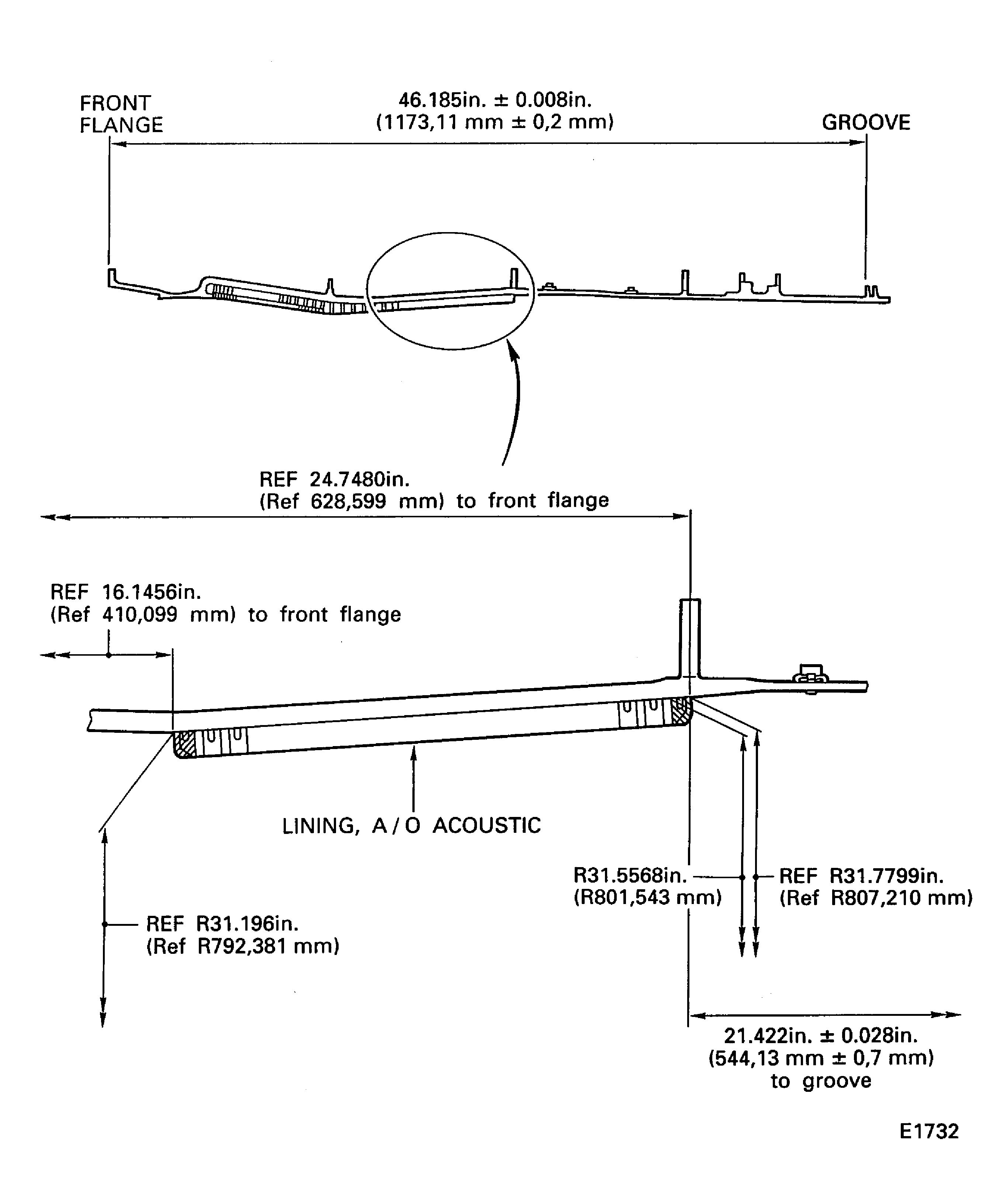
Figure: Repair Details and Dimensions
Repair Details and Dimensions
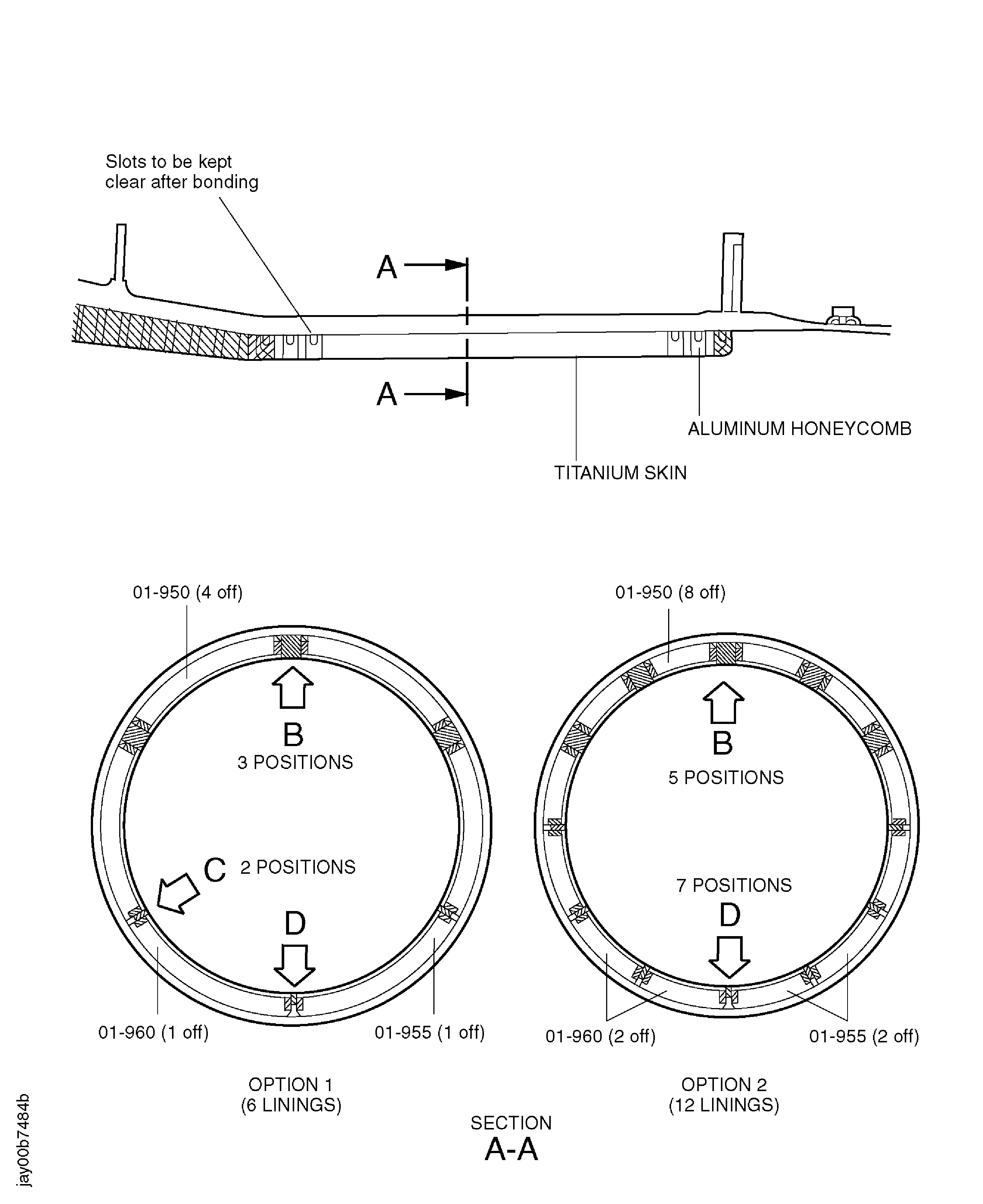
Figure: Repair Details and Dimensions
Repair Details and Dimensions

Figure: Repair Details and Dimensions
Repair Details and Dimensions
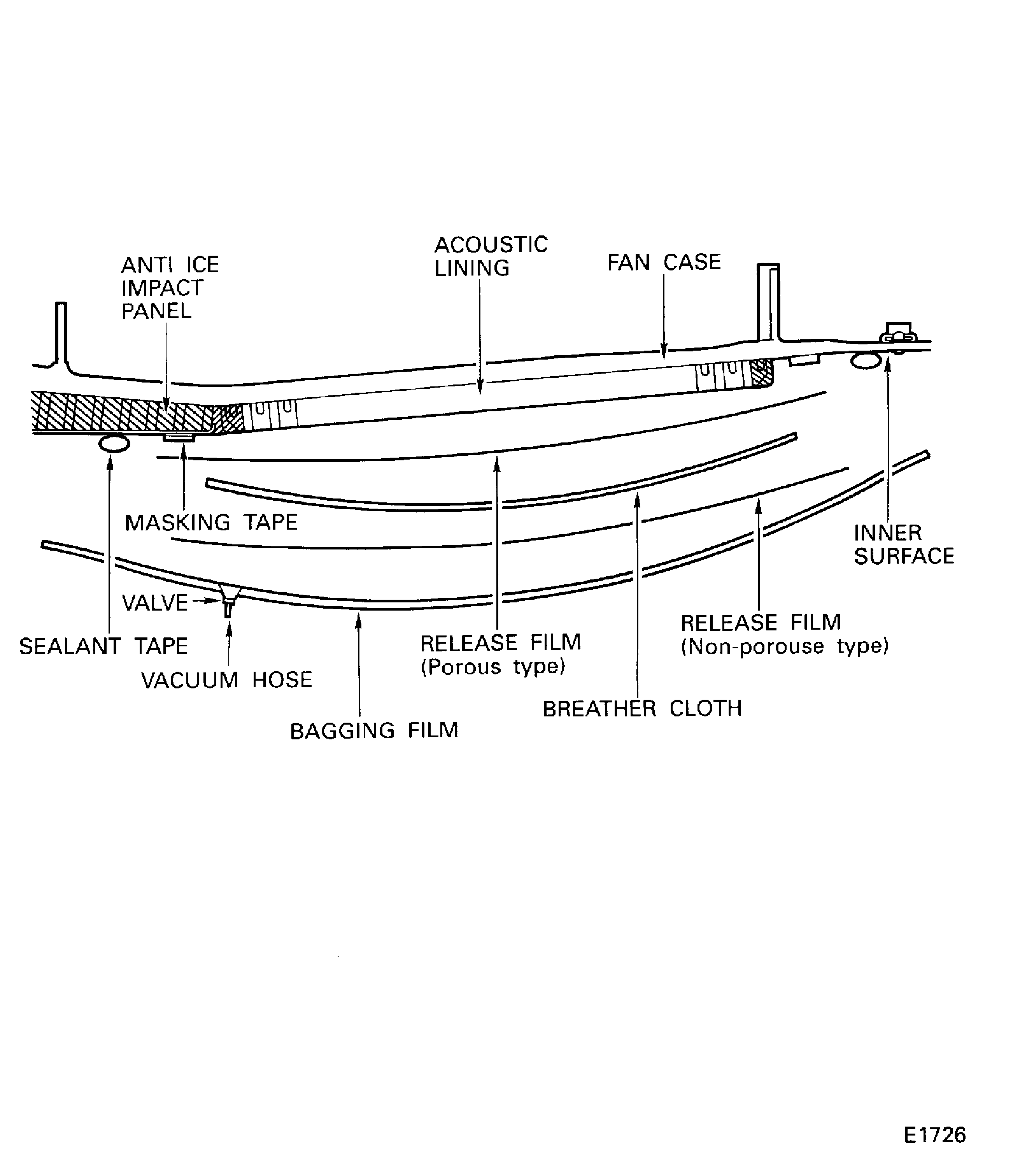
Figure: Repair Details and Dimensions
Repair Details and Dimensions
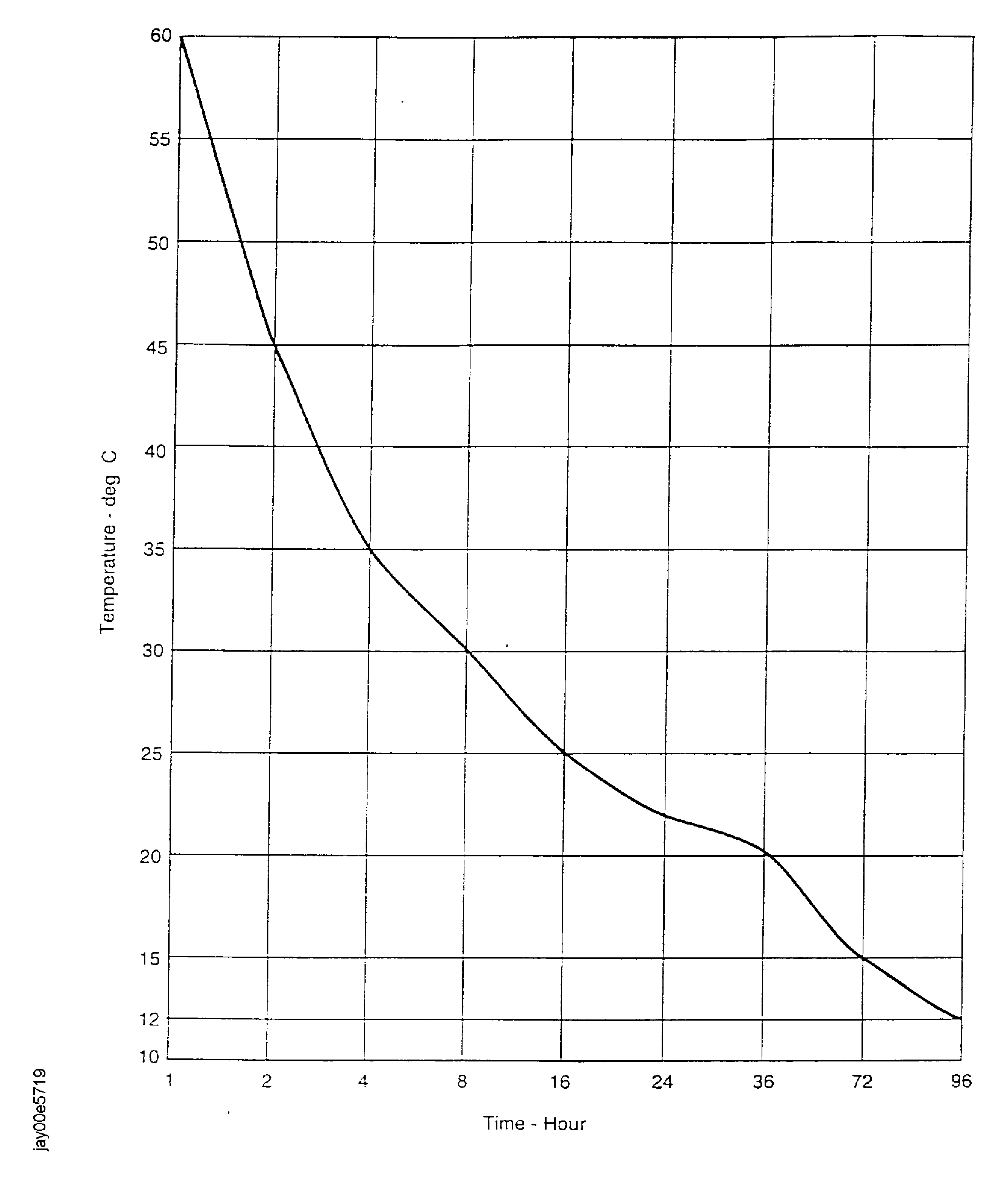
Figure: Repair Details and Dimensions
Repair Details and Dimensions

Figure: Repair Details and Dimensions
Repair Details and Dimensions
