Export Control
EAR Export Classification: Not subject to the EAR per 15 C.F.R. Chapter 1, Part 734.3(b)(3), except for the following Service Bulletins which are currently published as EAR Export Classification 9E991: SBE70-0992, SBE72-0483, SBE72-0580, SBE72-0588, SBE72-0640, SBE73-0209, SBE80-0024 and SBE80-0025.Copyright
© IAE International Aero Engines AG (2001, 2014 - 2021) The information contained in this document is the property of © IAE International Aero Engines AG and may not be copied or used for any purpose other than that for which it is supplied without the express written authority of © IAE International Aero Engines AG. (This does not preclude use by engine and aircraft operators for normal instructional, maintenance or overhaul purposes.).Applicability
Post 79-0070
Common Information
TASK 71-00-00-700-010-A01 Test No. 10 - Performance Test, Testing-010 - SBE 79-0070
General

CAUTION
For general information refer to Engine Safety Precautions and Engine Operation Limits, Guidelines, and Special Procedures. Refer to TASK 71-00-00-700-050-A00 (TESTING-000, CONFIG-001) and TASK 71-00-00-700-051-A00 (TESTING-000, CONFIG-001).
Use this test to make a performance analysis of an engine that has had a complete overhaul or a module/section that is part of the high pressure rotor system replaced or repaired.
If you did not operate the engine before, do Test No. 3, the Idle Leak Check before you do this test. Refer to TASK 71-00-00-700-003 (TESTING-003).
You can do other tests which are not done in the performance test, during engine operation before this test.
The applicable test data must be corrected by the specified test cell correction (before you use the curves and/or limits given in the test procedure).
Refer to TEST No. 20 for the installation of the seal drain bottles needed for this test.
Refer to TEST No. 22 if the plugs on the ACC valve are not correct.
Necessary Information
The engine must have instrumentation at the locations which follow:
T2
Probes (P2)
N1
N2
P2.5 (P25)
PB or PS3
P4.9 (P49)
Delta Manifold Oil Pressure (MOP)
Main Oil Temperature
Oil Filter Differential Pressure
Fuel Pump Inlet Pressure
PAMB
T2.5
T3
Vibration: Fan Case
T4.9 Harness Average (EEC output)
Thrust
Fuel Flow
P12.5
T Fuel
No.4 Bearing Compartment Scavenge Pressure (P4SCAV)
Oil Tank Temperature
Specific Ratings
The thrust and the thrust specific fuel consumption (TSFC) ratings at sea level standard conditions are:
NOTE
Take-off
Corrected Jet thrust (lbs) - 24,290 lbs (108,047 N)
TSFC (pounds per hour for each pound of thrust) - 0.3525
Maximum continuous
Corrected Jet thrust lbs - 21,840 lbs (97,149 N)
TSFC (pounds per hour for each pound of thrust) - 0.3462
40 percent take-off
Corrected Jet thrust lbs - 9,716 lbs (43,219 N)
Definitions
The definitions given below will be used in this procedure
EPR-O | - | The engine pressure ratio from the Electronic Engine Control instrumentation system (with a null EPR modifier number data entry plug installed in the Electronic Engine Control). |
EPR | - | The engine pressure ratio from the Electronic Engine Control instrumentation system (with the data entry plug of a EPR modifier to be found by this test). |
Operation Procedures - General
Do all the tests on the engine with a null (EPR modifier number 08) data entry plug in the Electronic Engine Control (EEC).
NOTE
There is logic in the EEC for operation of the engine in one of two modes:
EPR - The primary control mode.
N1 - An alternative mode which lets you have faults in the EPR mode.
NOTE
Do all intentional channel failures/resets at idle power.
Make sure that all instrumentation was calibrated by the necessary procedures given in Electronic Engine Control (EEC) and Test Cell Interface Requirements. Refer to TASK 71-00-00-700-063-A00 (TESTING-000, CONFIG-001).
Do a comparison of the engine flowmeter to the test facility flowmeters. The engine mass fuel flowmeter must be compared to the test facility flowmeters for all steady-state points of three minute stabilization or more, above APPROACH IDLE. The engine flowmeter must agree with the facility flowmeters within plus or minus 150 pph. The engine flowmeter must be repaired it it is not within these limits.
Preliminary Requirements
Pre-Conditions
NONESupport Equipment
NONEConsumables, Materials and Expendables
NONESpares
NONESafety Requirements
CAUTION
CAUTION
Procedure
If the plugs on the ACC valve are not correct, do the procedure given in TASK 71-00-00-700-022 (TESTING-022).
NOTE
Do all the thrust lever movements by the instructions given in the Engine Safety Precautions unless specified differently. Refer to TASK 71-00-00-700-050-A00 (TESTING-000, CONFIG-001).
Make sure the part number of the ACC valve and the location of the vane plugs are the same as given in SBE 75-0021.
NOTE
The plugs should only be in the plug storage and not in the vanes if action was taken to restore the in-service EGT margin.If the engine is new or the HP turbine module is rework, make sure the vane plugs of the ACC valve are installed in the vane and the ACC valve part number is the same as given in SBE 75-0021, parts one and three.
If the plugs on the ACC valve are not correct, do the procedure given in TASK 71-00-00-700-022 (TESTING-022).
Examine the engine records and see if the engine is new or the HP turbine module is reworked.
Examine the removable plugs on the vane of the active clearance control (ACC) valve for the correct configuration as given in SBE 75-0021.
Do the necessary steps by the instructions in Pre-Rig the Engine for Testing. Refer to TASK 71-00-00-700-020 (TESTING-020).
Prepare and start the engine by the Normal Engine Automatic Start Procedure or the Normal Engine Manual Start Procedure. Refer to TASK 71-00-00-700-053-A01 (TESTING-000, CONFIG-001) or TASK 71-00-00-700-053-A02 (TESTING-000, CONFIG-001).
Let the engine become stable at MIN IDLE for three minutes.
Do not continue to operate the engine if any indications are unusual.
Make a record of the EEC status. Refer to the Fault Isolation V2500-A0-71-00-0000-01A-009A-B (FAULT ISOLATION-000) for more information on faults.
Do a shutdown of the engine by the Discontinued Start and Shutdown Procedure. Refer to TASK 71-00-00-700-054-A00 (TESTING-000, CONFIG-001).
Do not add oil during the performance test.
Fill the oil tank to the top of the overflow (5-25 minutes after shutdown) to find the engine oil consumption after the test. Record the oil tank temperature. Refer to TASK 71-00-00-700-064-A00 (TESTING-000, CONFIG-001).
If necessary, make sure all the seal drain bottles are empty for the performance test.
Operation of the Engine Before the Performance Test
CAUTION
HEAVY HIGH PRESSURE TURBINE (HPT) BLADE TIP RUB CAN OCCUR WHEN YOU OPERATE AN ENGINE WITH A CONFIGURATION THAT IS NOT CORRECT FOR THE REMOVABLE VANE PLUGS ON THE APPLICABLE ACTIVE CLEARANCE CONTROL (ACC) VALVE THAT IS GIVEN IN SBE 75-0021.The date of the engine performance test.
The engine serial number.
The serial number of the modules (to use for module history analysis).
The fuel specific gravity.
The fuel lower heat value (you can do this after the test).
The ambient atmospheric conditions (the true barometer wet and dry bulb temperature).
Make a record of the information which follows before you do the performance test.
Time
* Observed and corrected N1 and N2 speeds
Observed and corrected thrust (FN)
Observed and corrected fuel flow (WF)
*Engine inlet total temperature (T2)
*Fan inlet total pressure (P2)
** Turbine discharge total temperature (T4.9 harness average) Channels A and B
* Turbine discharge total pressure (P4.9)
* Calculated engine pressure ratio (P4.9/P2)
* Engine pressure ratio from EEC (EPR-O)
Fuel inlet pressure
Delta main oil pressure
Oil temperature
Vibration amplitude
* Burner pressure (PB or PS3) (Optional)
* HPC inlet pressure (P2.5) (Optional)
Ambient temperature (TAMB)
Ambient pressure (PAMB)
* HPC inlet temperature (T2.5) (Optional)
* HPC exit temperature T3
* Fan exit pressure (P12.5) (Optional)
* 2.5 bleed valve position indicator
No.4 bearing Compartment Scavenge Pressure (P4SCAV)
* ARINC data
Fuel temperature (T fuel)
* EEC outputs
** As a guideline, it is recommended that the EGT level between channels A and B be within 10 deg F (5.6 deg C) of each other. Differences that are greater than this level should be investigated to ensure that no indication problems exist. If, after replacing the individual EGT probes and wiring harness to the probes, the EGT level is still greater than 10 deg F (5.6 deg C) between channel A and B, as determined by engine test, then you may accept the engine data.
Make a record of and/or calculate all of the indications that follow, but the EEC outputs.
Be prepared to make a record of the data at all the test points when the engine is stable (before you move the thrust lever to the subsequent point).
If the scavenge pressure limit is exceeded at any time, you must shut down the engine as given in TASK 71-00-00-700-054-A00 (TESTING-000, CONFIG-001)
Disconnect the No. 4 bearing compartment external scavenge elbow
Check and record signs of leaks from the gasket
Replace the gasket. Refer to TASK 72-42-00-430-001 (ASSEMBLY)
Do the Performance Test again to check for correct No. 4 bearing compartment scavenge pressure. Refer to TASK 71-00-00-700-010-A00 (TESTING-010, CONFIG-001) or TASK 71-00-00-700-010-A01 (TESTING-010, CONFIG-002).
Inspect the gasket for leaks at the interface between the No. 4 bearing compartment external scavenge elbow and internal scavenge line. (A leak gasket usually increases P4 scavenge pressure in the 130 to 160 psig (896.3 to 1103.2 kPa) band).
If the P4SCAV limit is more than the maximum permitted limits, do the check that follows. If the Band A pressure limit is below 55 psig (379.2 kPa), then you continue to step 8. D. (3). (d).
If the vacuum check is more than 17 pph, disassemble, inspect and reassemble the No. 4 bearing compartment.
If the vacuum check is less than 17 pph, contact IAE Technical Services for instructions.
If the scavenge pressure is still not normal, do a No. 4 Bearing Compartment Vacuum Check. Refer to TASK 72-00-43-420-001 (INSTALLATION), SUBTASK 72-00-43-720-051.
If you find signs of oil or wetness from weep hole, examine the Turbine Exhaust Case and reject the engine.
If you find the quantity of oil consumed during the test run is in operational limits. Refer to Engine Manual, TASK 71-00-00-700-051.
Do a check on the Test Cell Transducer to make sure that for correct functionality.
Check the scavenge line from the compartments to the scavenge valve. Make sure that all connections, fittings and fasteners are attached and installed correctly, and make sure that no leakage is permitted.
Do a borescope examination of the No.4 Scavenge Tube inside the diffuser case for all blockages due to oil coking, debris etc.
Do a vacuum check for No.4 bearing compartment. Refer to TASK 72-00-43-420-001 (INSTALLATION-001) SUBTASK 72-00-43-720-051.
1
If the vacuum check is not more than 17 pph
Accept. Continue for step 8. D. (3). (d). (vii).
2
If the vacuum check is more than 17 pph but not more than 21 pph
Accept, if the engine has no leaks out of the No. 4 oil weep during pass-off testing, the engine has no abnormal oil system indications (MOP, Oil consumption, external oil leaks) since the last shop visit. Continue to step 8. D. (3). (d). (vii).
3
If the vacuum check is more than 21 pph
Reject the engine and contact IAE Tech Services for instructions
Examine the scavenge valve. Replace if necessary. Refer to Engine Manual, TASK 72-00-60-050-004 (REMOVAL-008) and TASK 72-00-60-450-004 (INSTALLATION-008).
Check the No.4 compartment cooling air system. Refer to Engine Manual TASK 72-00-44-420-001-002 (INSTALLATION-002), SUBTASK 72-00-44-720-052.
Do a visual inspection of the HPC stage 10 air supply line to the scavenge valve.
Remove the Air Cooled Air Cooler (ACAC). Refer to Engine Manual TASK 72-00-50-050-003 (REMOVAL-012). Visually examine the ACAC and the ACAC outlet duct for any obstructions or blockages which can restrict airflow. Re-install the ACAC. Refer to Engine Manual TASK 72-00-50-450-003 (INSTALLATION-012).
Examine the scavenge pump for jammed gears. Replace if necessary. Refer to Engine Manual TASK 72-00-60-050-007 (REMOVAL-011) and TASK 72-00-60-450-007 (INSTALLATION-011).
If the P4SCAV Band A pressure limit is below 55 psig (379.2 kPa), do an inspection by the procedure that follows:
Make sure at all power conditions that the No. 4 bearing compartment scavenge pressure is not more than the limits that follow:
Maximum Allowable Transient Limit:
All testing conditions: 205 psig (1413.4 kPa)
Maximum Allowable Steady-State Limit (3 Minutes Stabilization Or More):
Idle and Approach Idle : 9 psig (62.1 kPa)
Band D:
Band B and C:
Band A:
17 psig (117.2 kPa)
145 psig (999.7 kPa)
Minimum: 55 psig (379.2 kPa)
Maximum: 145 psig (999.7 kPa)
Do the Normal Engine Automatic Start Procedure or the Normal Engine Manual Start Procedure. Refer to TASK 71-00-00-700-053-A01 (TESTING-000, CONFIG-001) and TASK 71-00-00-700-053-A02 (TESTING-000, CONFIG-001).
Make a record of the data after five minutes at MIN IDLE. Refer to Figure.
Make sure that there are no faults in the EEC in Channel A and Channel B.
Do the break-in of a newly overhauled engine/module, Test No. 7. Refer to TASK 71-00-00-700-007-A00 (TESTING-007, CONFIG-001).
NOTE
Test No.7 must be completed for a newly overhauled engine before you continue.Refer to Test No. 8 (Vibration Survey) or Testing-00 (Engine operating limits)
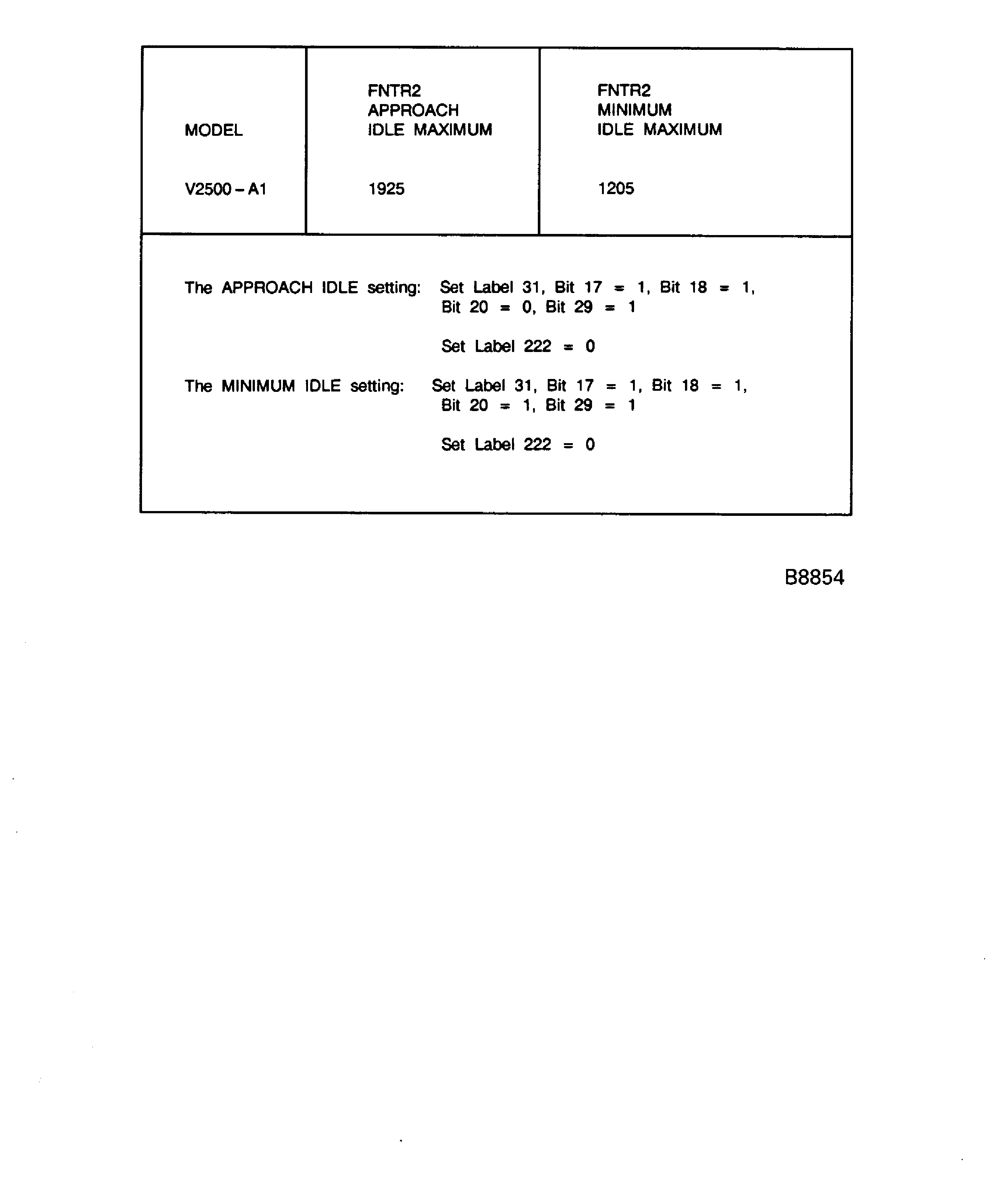
Make a selection of APPROACH IDLE and operate at APPROACH IDLE for 3 minutes. Refer to Figure to set APPROACH IDLE.
Make sure that the EEC operates in the EPR mode.
Make a record of the time to go from the start of the thrust lever movement to 90 percent of the lower line of Band A thrust. Refer to Figure.
The acceleration time cannot be more than 6.2 seconds or less than 4.9 seconds.
Let the engine become stable for one minute before you continue.
Do a snap acceleration (as quickly as the thrust lever will move) from APPROACH IDLE to Band A. Refer to Figure.
Make a record of the time from the start of the thrust lever movement to a corrected thrust of 6976 plus or minus 30 lbs.
The deceleration time cannot be more than seven seconds.
NOTE
During subsequent acceleration and deceleration (steps (13) thru (17)), check and record the position of the No. 4 bearing scavenge valve for correct operation. Refer to Figure.
Do a snap deceleration (as quickly as the thrust lever will move) from Band A to MIN IDLE. Refer to Figure.
Operate the engine for five minutes with the thrust lever set in one position. Make a record of the data.
If the minimum required corrected take-off thrust or EPR for Band A is not shown at full TLA and PAMB is more than 14.696 PSIA, the correction method that follows must be used:
FNTR2 (Modified Band A) = (FNTR2 Band A)/(PAMB/14.696), where FNTR2 is obtained from Figure.
If you do not get the minimum required take-off thrust (after you apply the correction if necessary), stop the test and tell the test engineer.
Slowly increase the engine speed and set the thrust of Band A. Refer to Figure.
Operate the engine for three minutes with the thrust lever set in one position.
Make a record of the data.
Set the thrust of Band B. Refer to Figure.
Operate the engine for three minutes with the thrust lever in one position.
Make a record of the data.
Set the thrust lever of Band C. Refer to Figure.
Operate the engine for three minutes with the thrust lever set in one position.
Make a record of the data.
Set the thrust of Band D. Refer to Figure.
Let the engine become stable for five minutes.
Make a record of the data.
During the five minutes, do a check of the EEC fault messages.
Decrease the engine speed to MIN IDLE.
Do a shutdown by the Discontinued Start and Shutdown Procedure. Refer to TASK 71-00-00-700-054-A00 (TESTING-000, CONFIG-001).
The information which follows gives the instructions for operation of the engine during the performance test.
Performance Test
Fill the oil tank to the top of the overflow. Refer to TASK 71-00-00-700-064-A00 (TESTING-000, CONFIG-001).
Use a device with graduations to measure the quantity of oil added.
Make a record of the quantity of oil added.
Find the oil consumption in gal/hr (1 hr) and make a record of the quantity used during the performance test.
After shutdown, look at the oil tank temperature until it is within 15 deg F of the temperature recorded in step 7.H.
Fuel Units:
LOCATION: Fuel Pump Seal Drain, LIMIT 30 cc/hr of fuel only or 10 cc/hr of fuel/oil mixture or 10 cc/hr of oil only
LOCATION: Common Core Seal Drain, LIMIT 10 cc/hr of fuel
LOCATION: All Others, Limit 0 cc/hr of fuel
Hydraulic Unit:
LOCATION: Hydraulic Pump Seal Drain, LIMIT 10 cc/hr of oil
Oil Units:
LOCATION: Starter Seal Drain, LIMIT 10 cc/hr of oil
LOCATION: IDG Seal Drain, LIMIT 10 cc/hr of oil
Compare the quantity of fluid to the following limits:
Check the seal drain hole on the fuel-cooled oil cooler (FCOC). Leaks of fuel or oil are not allowed.
Examine all the seal drain bottles and make a record of the quantity and type of fluid collected.
Do a borescope inspection. Refer to TASK 72-00-00-200-000 (INSPECTION/CHECK-000).
Remove all of the chip detectors, do an inspection of them and install them. Refer to TASK 72-00-00-200-008 (INSPECTION/CHECK-008).
Remove the scavenge oil filter, inspect it, and install it.
Remove the pressure oil filter, inspect it, and install it.
Remove the fuel filter, inspect it and install it.
After you complete the engine operation do the Engine Preservation and Inhibiting Procedure. Refer to TASK 72-00-00-550-001 (STORAGE-001).
Do the necessary steps by the instructions in De-Rig the Engine after Testing. Refer to TASK 71-00-00-700-021 (TESTING-021).
Procedure to be Done After Completion of the Performance Test
The limits are when EPR-O is the EEC EPR indication with a null EPR modifier data entry plug installed.
The lines on this figure are only to be used as guidelines and are not limits.
If possible the values of FN/ST2 versus corrected EPR-O, will be in the limits of the figure. Refer to Figure.
Do a check of corrected thrust specific fuel consumption (TSFC) by the specific rates given.
Check the vibration for the correct operating limits.
Do a Check of the Corrected Data
The EPR modifier selection will provide the correct relation between the EPR and the thrust.
Data Entry Plug EPR Modifiers are as follows:
EPR modifier 04 (Delta EPR) = +0.012
EPR modifier 05 (Delta EPR) = +0.009
EPR modifier 06 (Delta EPR) = +0.006
EPR modifier 07 (Delta EPR) = +0.003
EPR modifier 08 (Delta EPR) = 0.000 (Null)
EPR modifier 09 (Delta EPR) = -0.003
EPR modifier 10 (Delta EPR) = -0.006
EPR modifier 11 (Delta EPR) = -0.009
Identify the highest EPR modifier number (which will give the highest thrust) with a delta EPR which will give an EPR of +0.000/-0.002 of the baseline EPR. This is based on EPR-0 rounded to the third decimal place versus the corrected net thrust and the use of a second degree curve fit.
Corrected Net Thrust
Baseline EPR
24,290
1.388
21,840
1.334
The selection of the EPR modifier number is found when you:
Corrected Net Thrust: 24,290 lbs, EPR-0 (from engine test): 1.381.
Delta EPR to achieve the baseline EPR is +0.007.
Use the EPR modifier number 06 from the table with a delta EPR of +0.006 to achieve the baseline EPR with in +0.000/-0.002.
EPR-0 (1.381) plus EPR modifier 06(+0.006 delta EPR) = 1.387.
Corrected Net Thrust: 21,840 lbs, EPR-0 (from engine test): 1.330.
Delta EPR to achieve the baseline EPR is +0.004.
Use the EPR modifier number 07 from the table with a delta EPR of +0.003 to achieve the baseline EPR with in +0.000/-0.002.
EPR-0 (1.330) plus EPR modifier 07 (+0.003 delta EPR) = 1.333.
The correct data entry plug EPR modifier number for this example would be 07 since it is the highest modifier number which gives the highest thrust.
An example calculation follows:
Make a selection of the data entry plug.
You must change the Data Entry Plug EPR Modifier number on the engine identification plate and the data entry plug backshell (if it is different from the current modifier number).
NOTE
The engine data plate location is labelled EEC Prog Plug or DEP Part Number.If necessary, set the Data Entry Plug pins to the necessary EPR modifier number by Test No. 11.
Engine Pressure Ratio Classification
EPR versus corrected N2
EPR versus corrected N1
EPR versus corrected EGT
NOTE
EPR = EPR - 0 + Delta EPR modifier
Make a graph of the steady-state values of the modified engine pressure ratio and corrected parameters which are:
Always use the higher EGT Limit Curve (unless you do the performance test after you do a complete overhaul of the hot section).
Only use the lower EGT limit curve after you complete a hot section overhaul and the turbine clearances are put back to initial condition or the engine has not flown with the active clearance control (ACC) system on.
The EGT level can be compared to Figure in place of Figure to take advantage of the 15 deg C shunt associated with SCN12C or greater configurations. You must also use the delta EGT margin curve, Figure with Figure if the maximum observed EGT is more than 580 deg C and adjust the EGT margin downward for a shunted EGT margin that has been used before. If it is necessary to determine the EGT margin at conditions other than 5000 feet/45 degrees C which are contained in Figure, then refer to SIL-057.
The graph you make must be lower than the applicable limits given in Figure.
The EGT Limit Curve, Figure gives two maximum EGT limit curves.
When you make a graph of the information which follows, the performance calibration data must not be more than the limits given. Refer to Figure, Figure and Figure.
Do a Corrected Data Limits Check
Figure: Data Calculation and Correction
Sheet 1

Figure: Data Calculation and Correction
Sheet 2
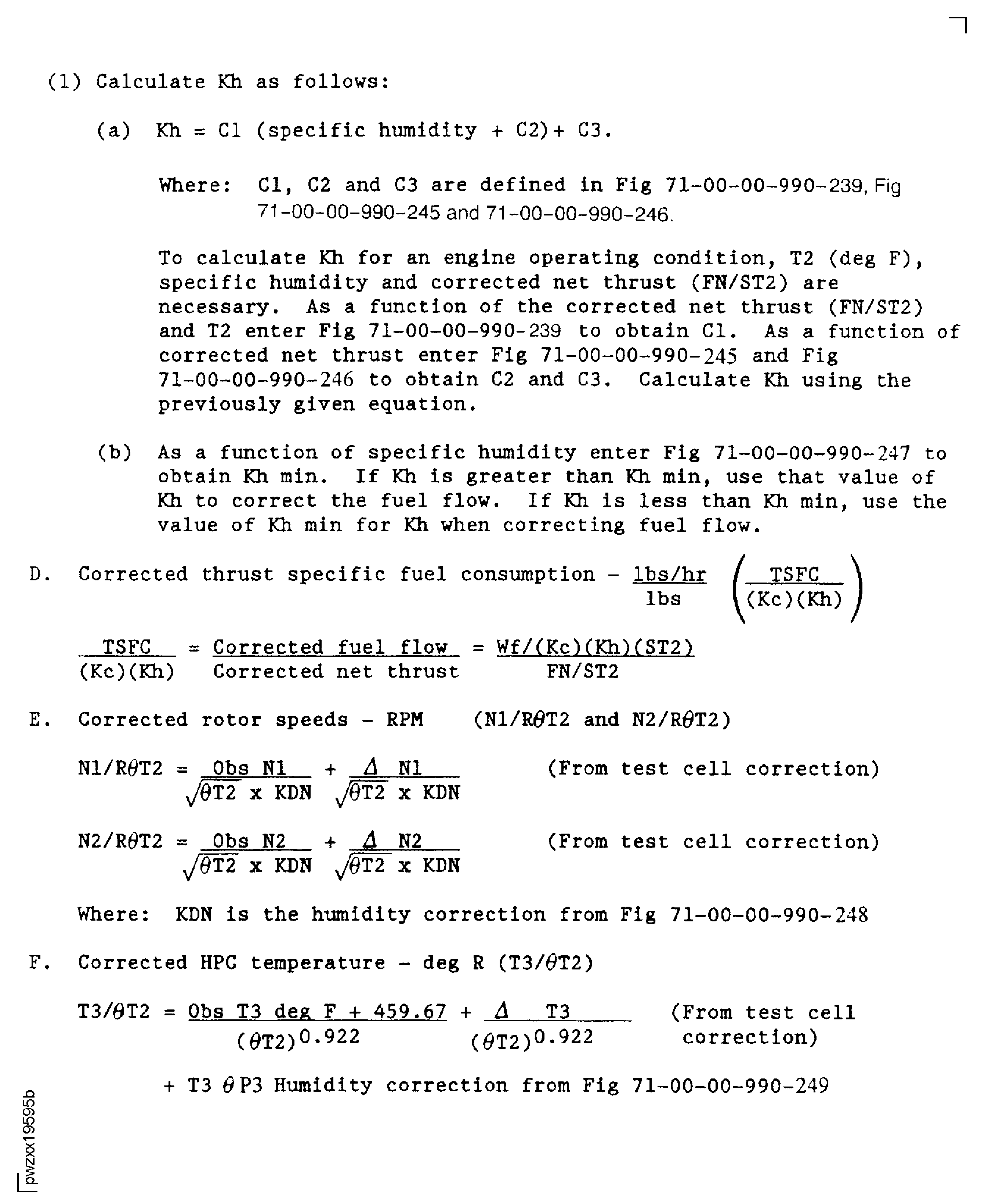
Figure: Data Calculation and Correction
Sheet 3
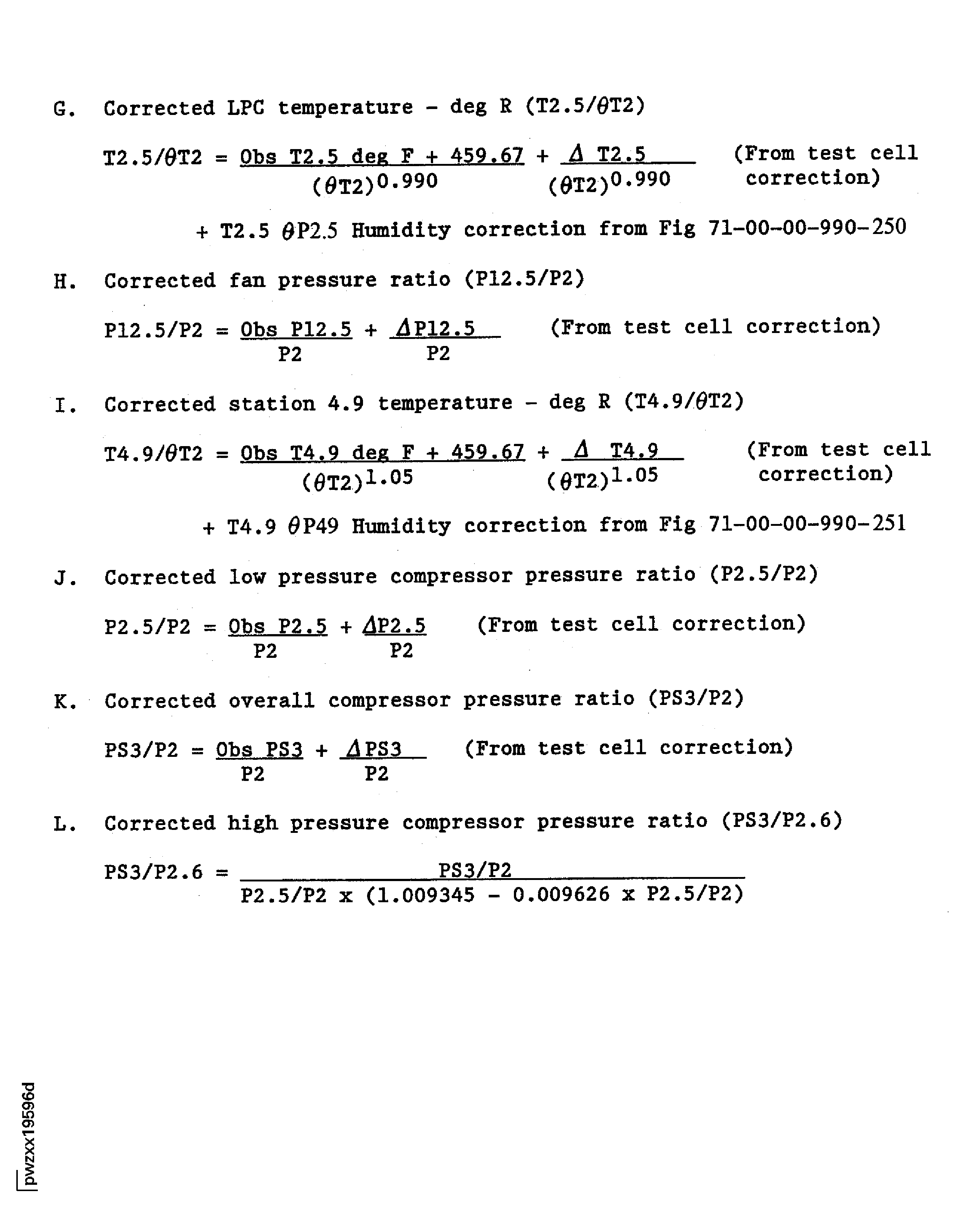
Figure: Main Oil Pressure (MOP) Limits During Operation Above Idle (Pre SBE 79-0070)
Sheet 1
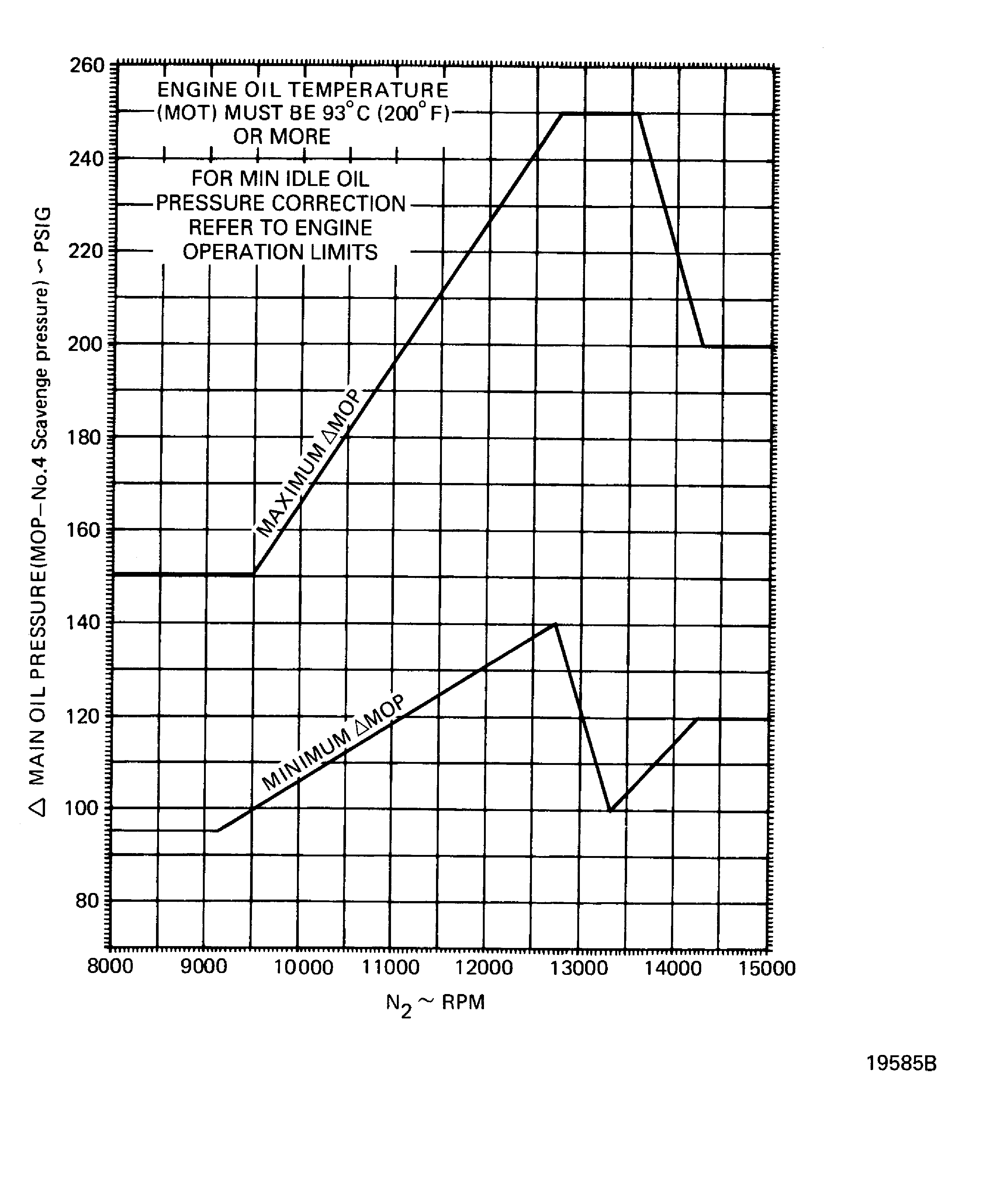
Figure: Main Oil Pressure (MOP) Limits During Operation Above Idle (SBE 79-0070)
Sheet 2

Figure: Thrust Setting Curve
Thrust Setting Curve
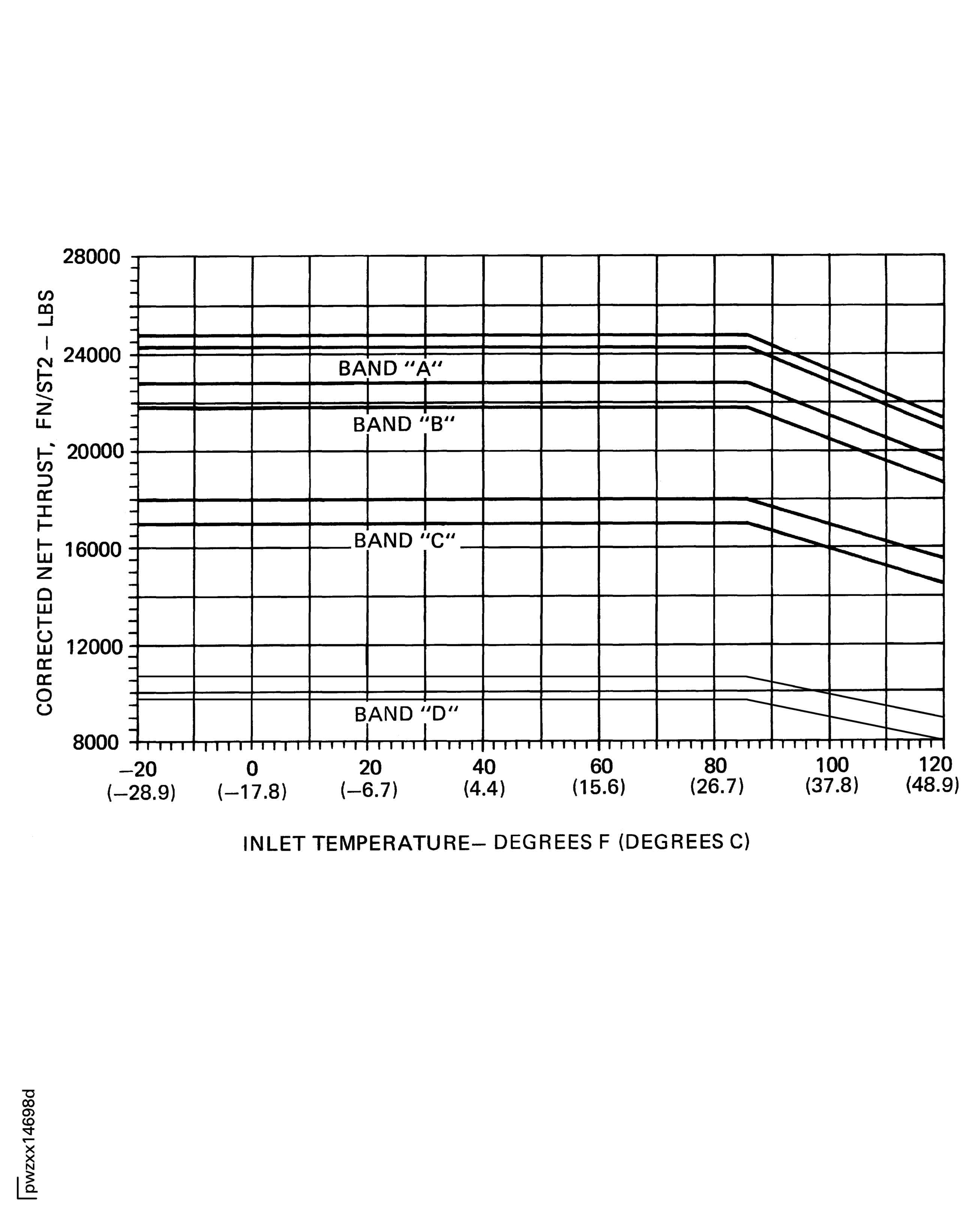
Figure: Gas Generator Check Curve
Gas Generator Check Curve
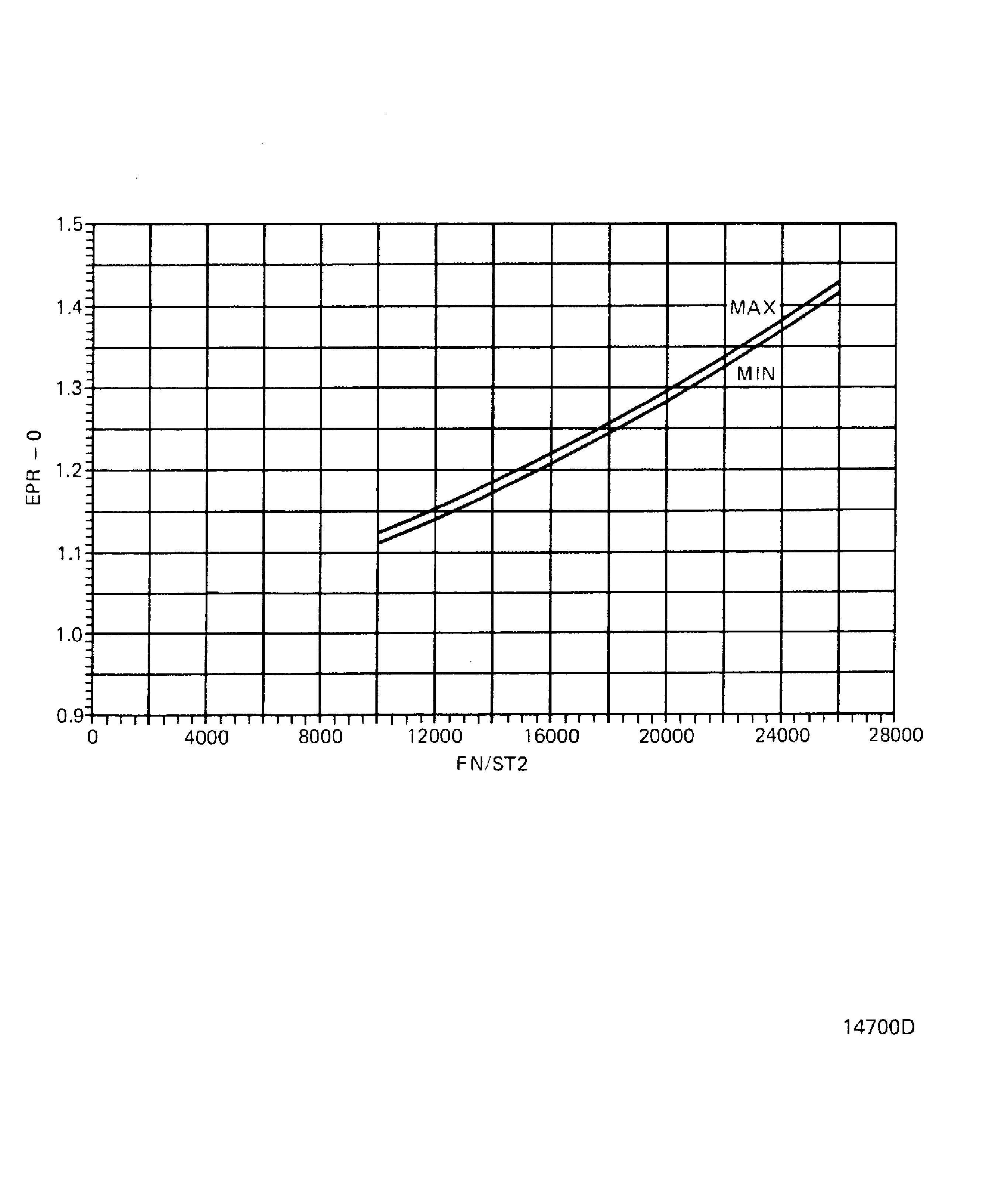
Figure: C1 Humidity/Condensation Correction Factor for Wf
C1 Humidity/Condensation Correction Factor for Wf
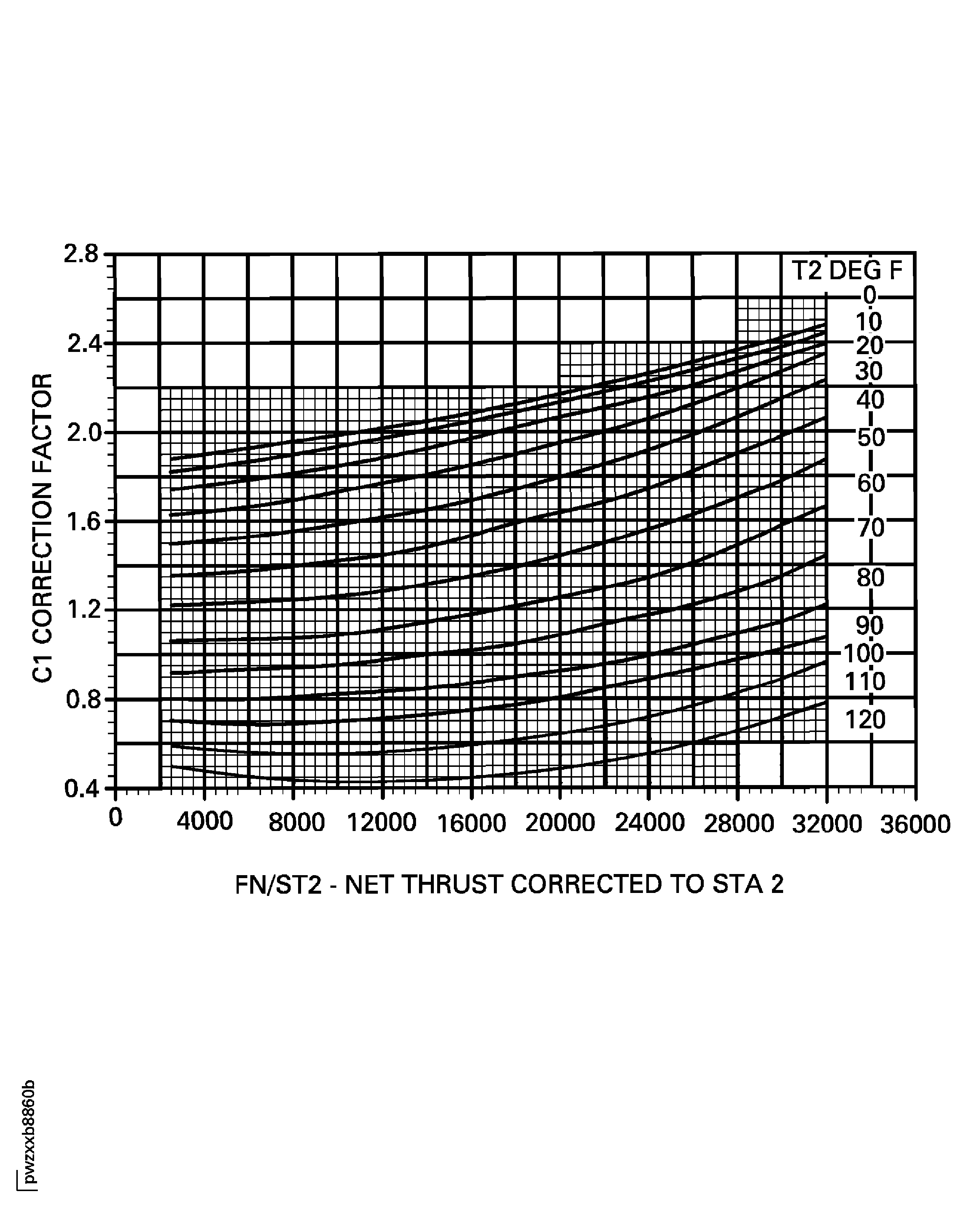
Figure: N2 Rotor Speed Limit Curve
N2 Rotor Speed Limit Curve
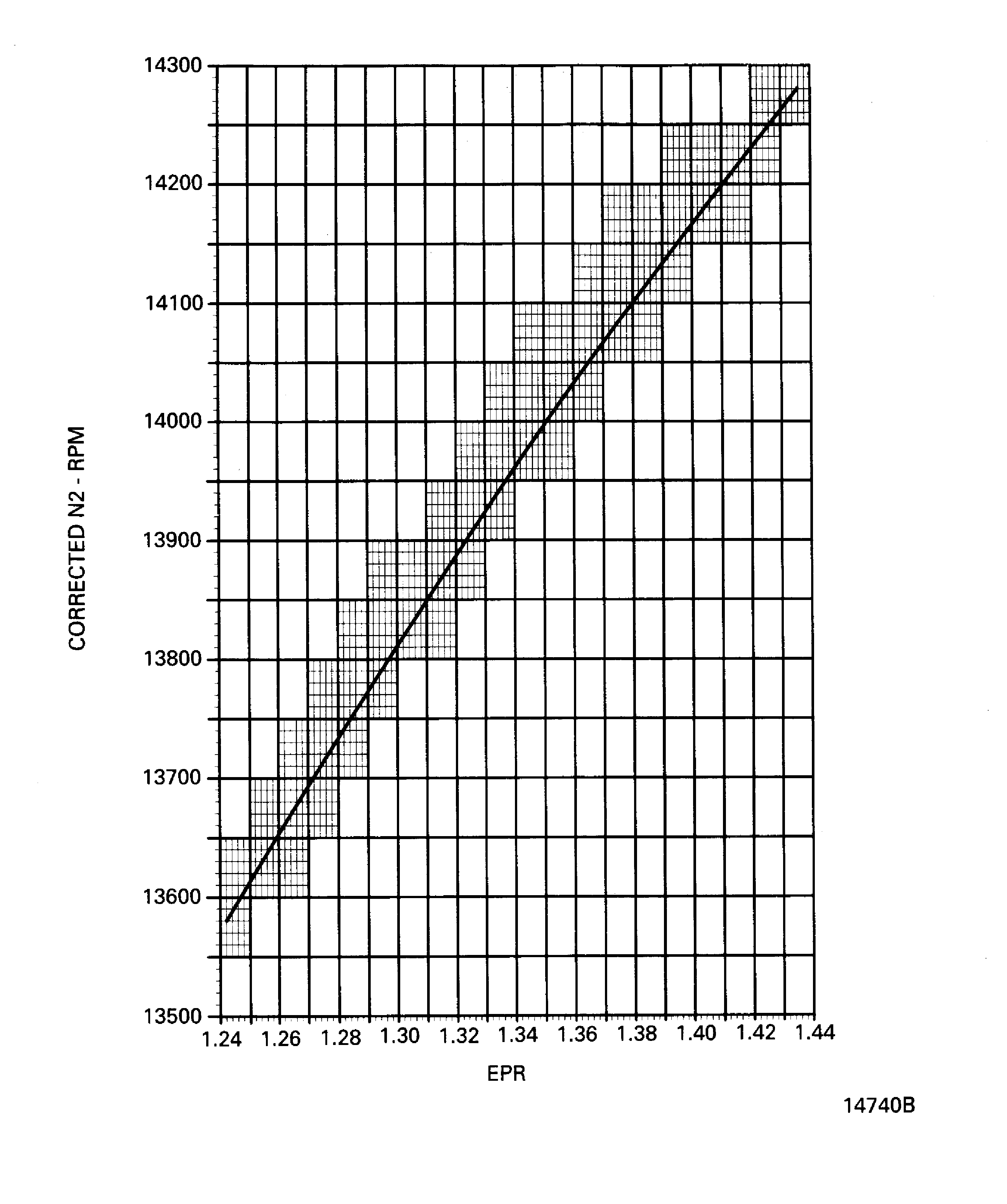
Figure: Corrected N1 Rrotor Speed Limit Curve
Corrected N1 Rrotor Speed Limit Curve
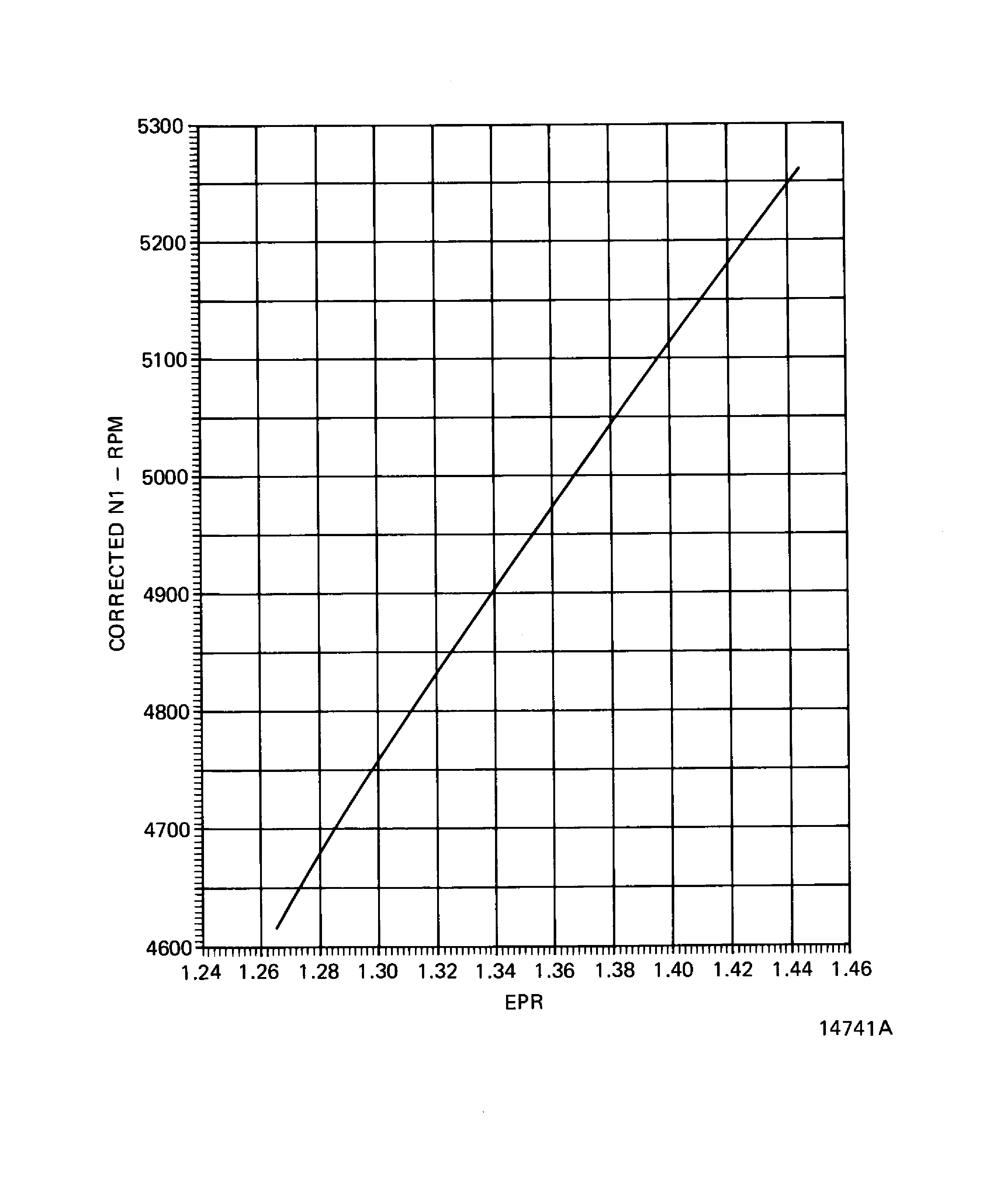
Figure: EGT Limit Curve
EGT Limit Curve

Figure: EGT Limit Curve (for Engines to be installed on Wing with an EEC which has SCN12C or higher Software)
EGT Limit Curve (for Engines to be installed on Wing with an EEC which has SCN12C or higher Software)
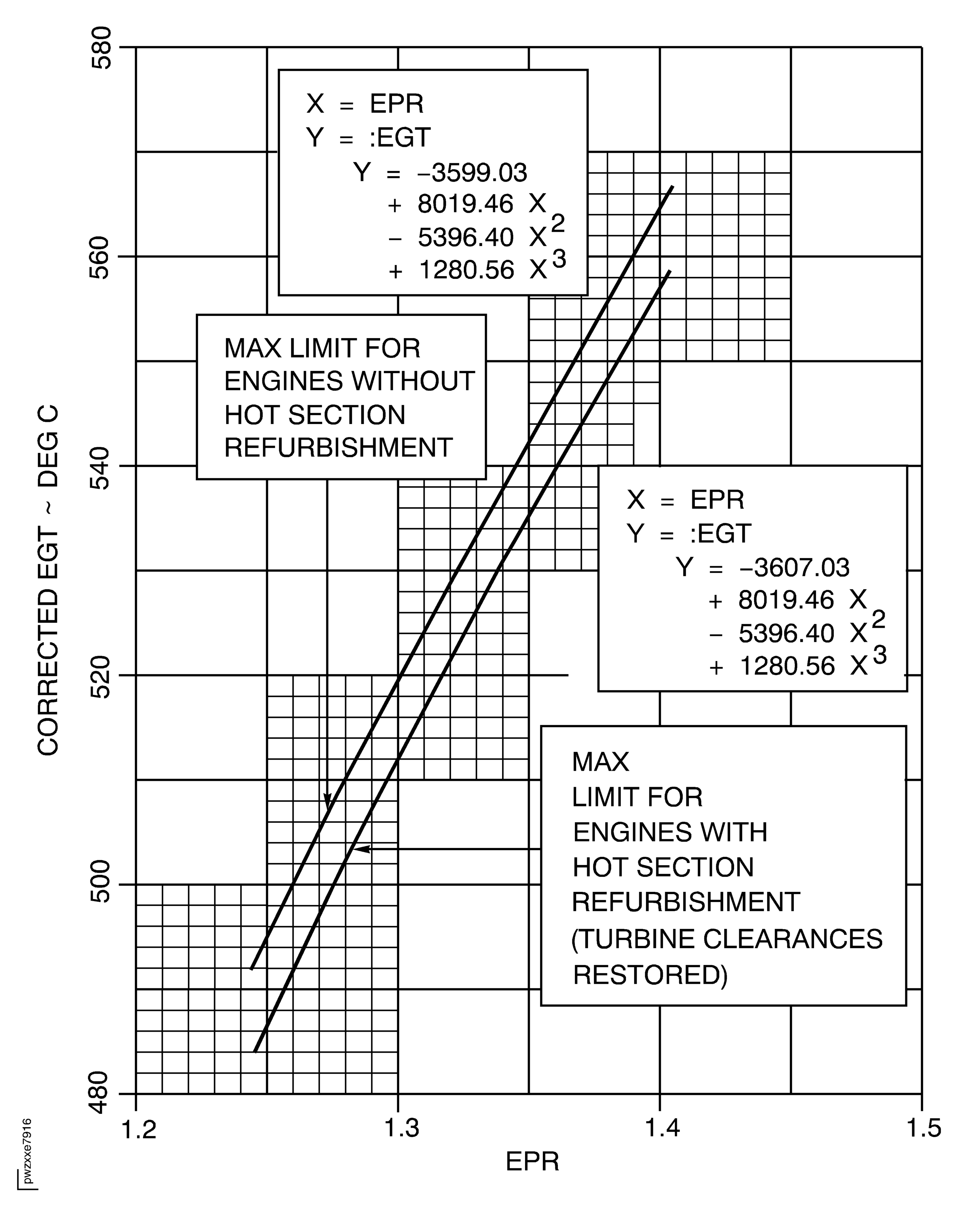
Figure: Delta EGT Margin Curve (for Engines to be installed on Wing with an EEC which has SCN12C or higher Software)
Delta EGT Margin Curve (for Engines to be installed on Wing with an EEC which has SCN12C or higher Software)
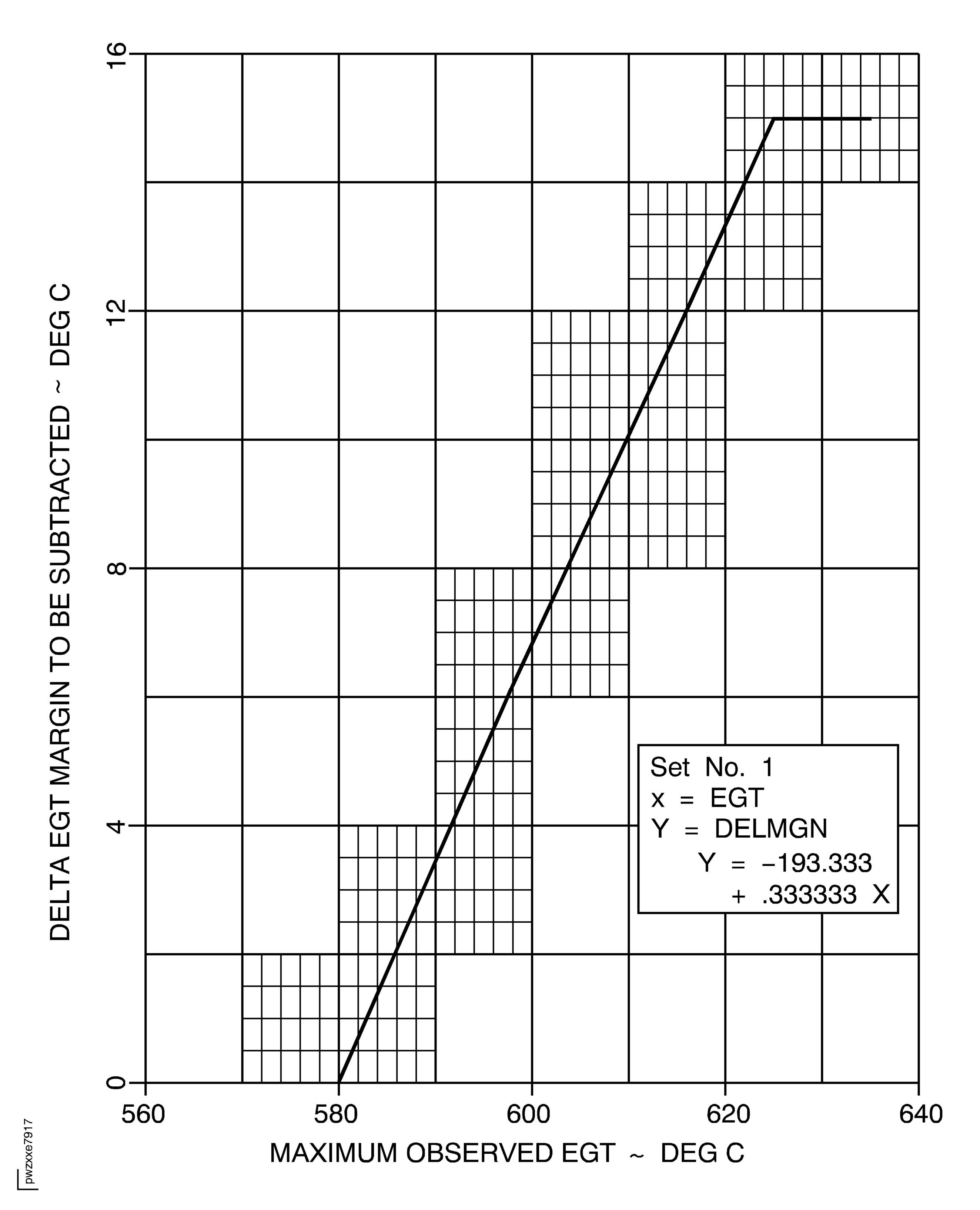
Figure: C1 Humidity/Condensation Correction Factor for WF
C1 Humidity/Condensation Correction Factor for WF
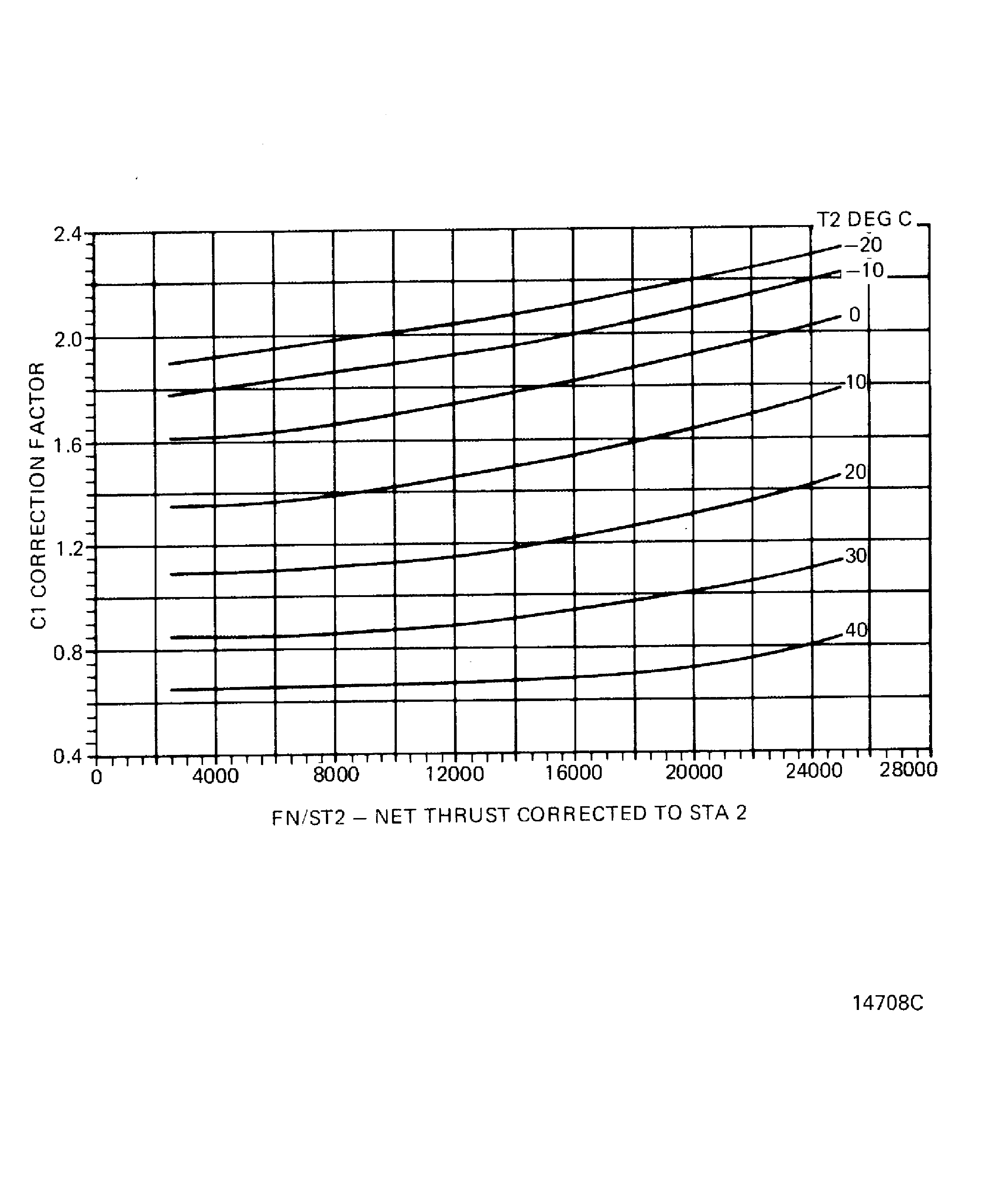
Figure: C2 Hhumidity/Condensation Correction Factor for WF
C2 Hhumidity/Condensation Correction Factor for WF
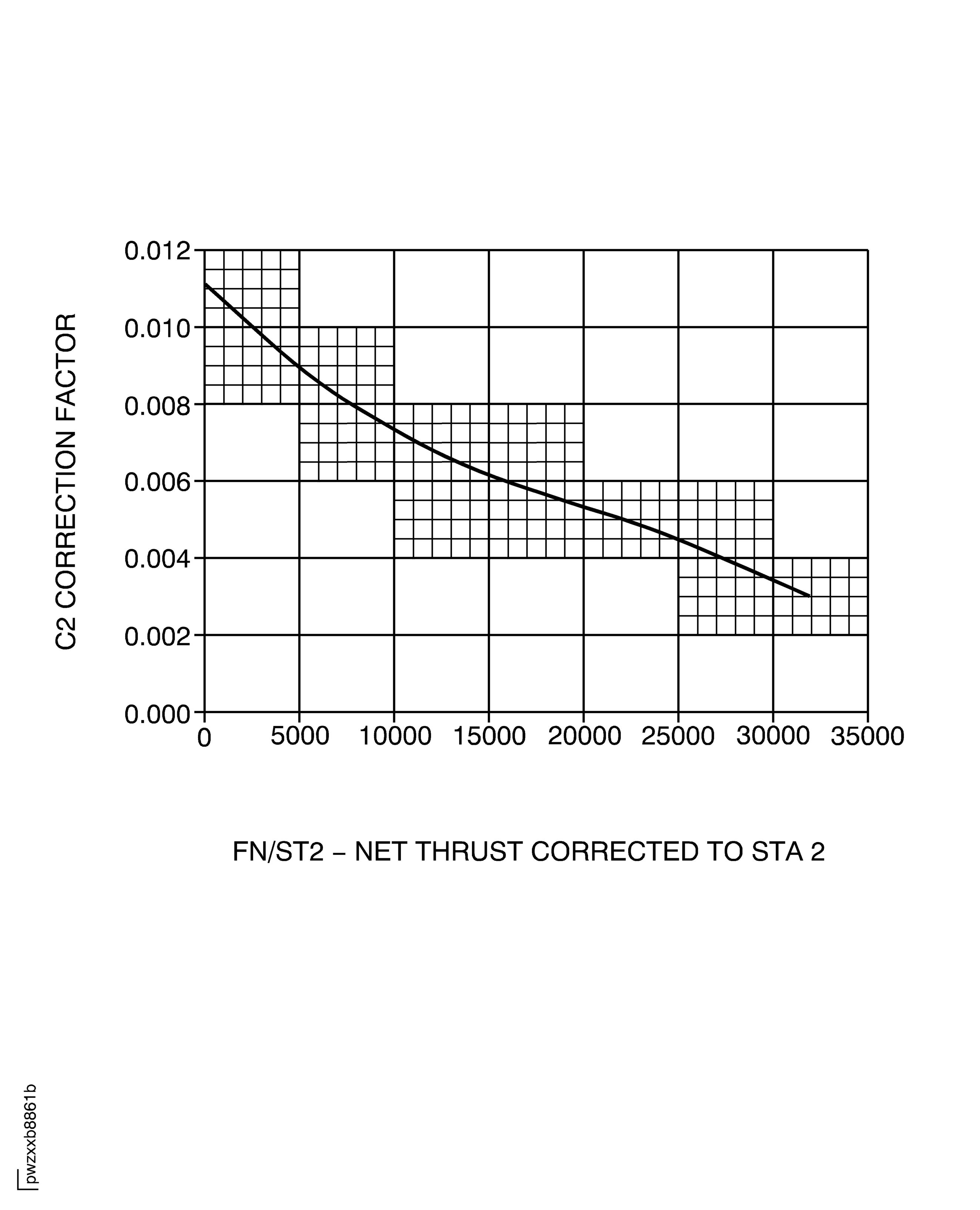
Figure: C3 Humidity/Condensation Correction Factor for WF
C3 Humidity/Condensation Correction Factor for WF
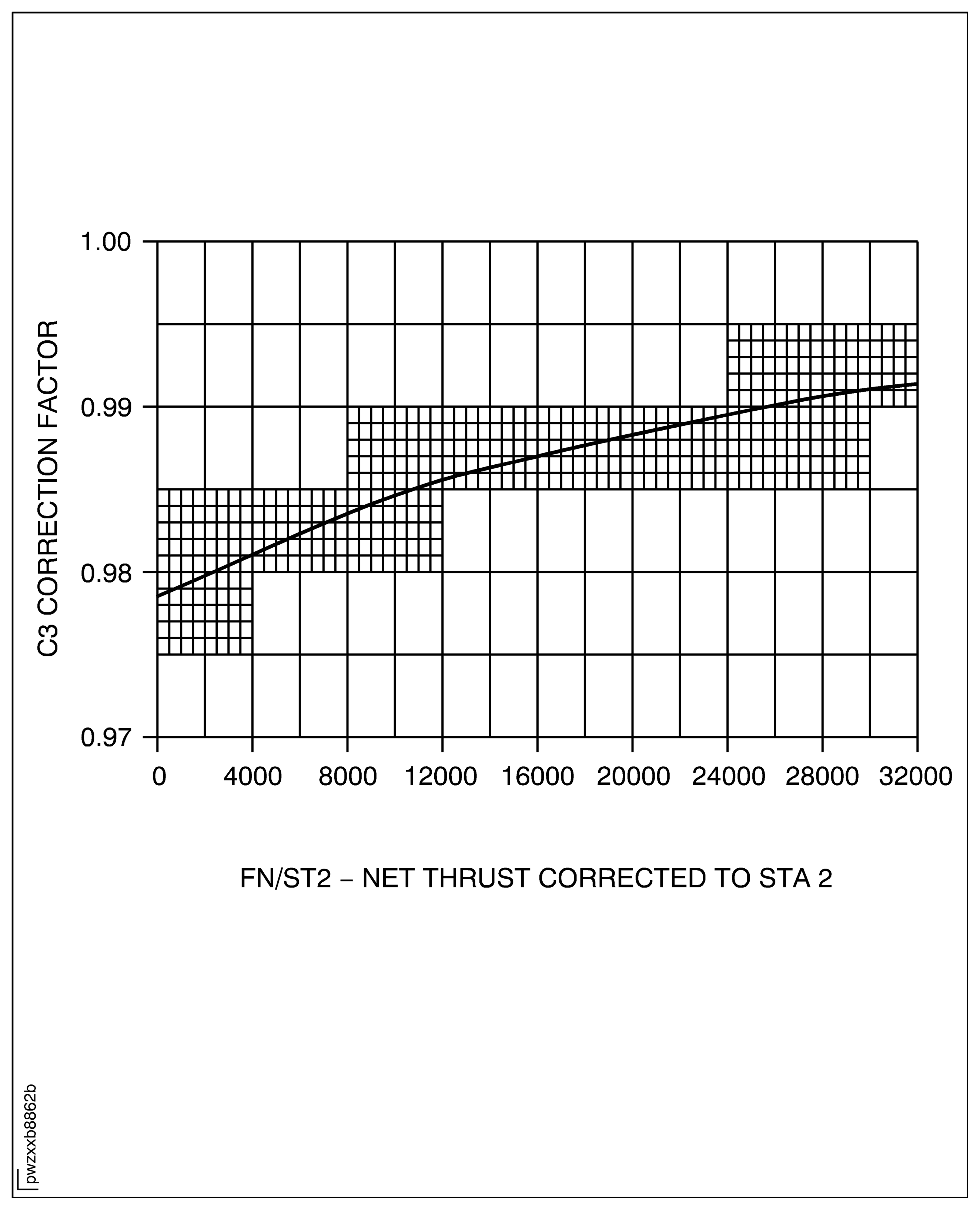
Figure: Kh MIN - Humidity/Condensation Correction Factor for WF
Kh MIN - Humidity/Condensation Correction Factor for WF
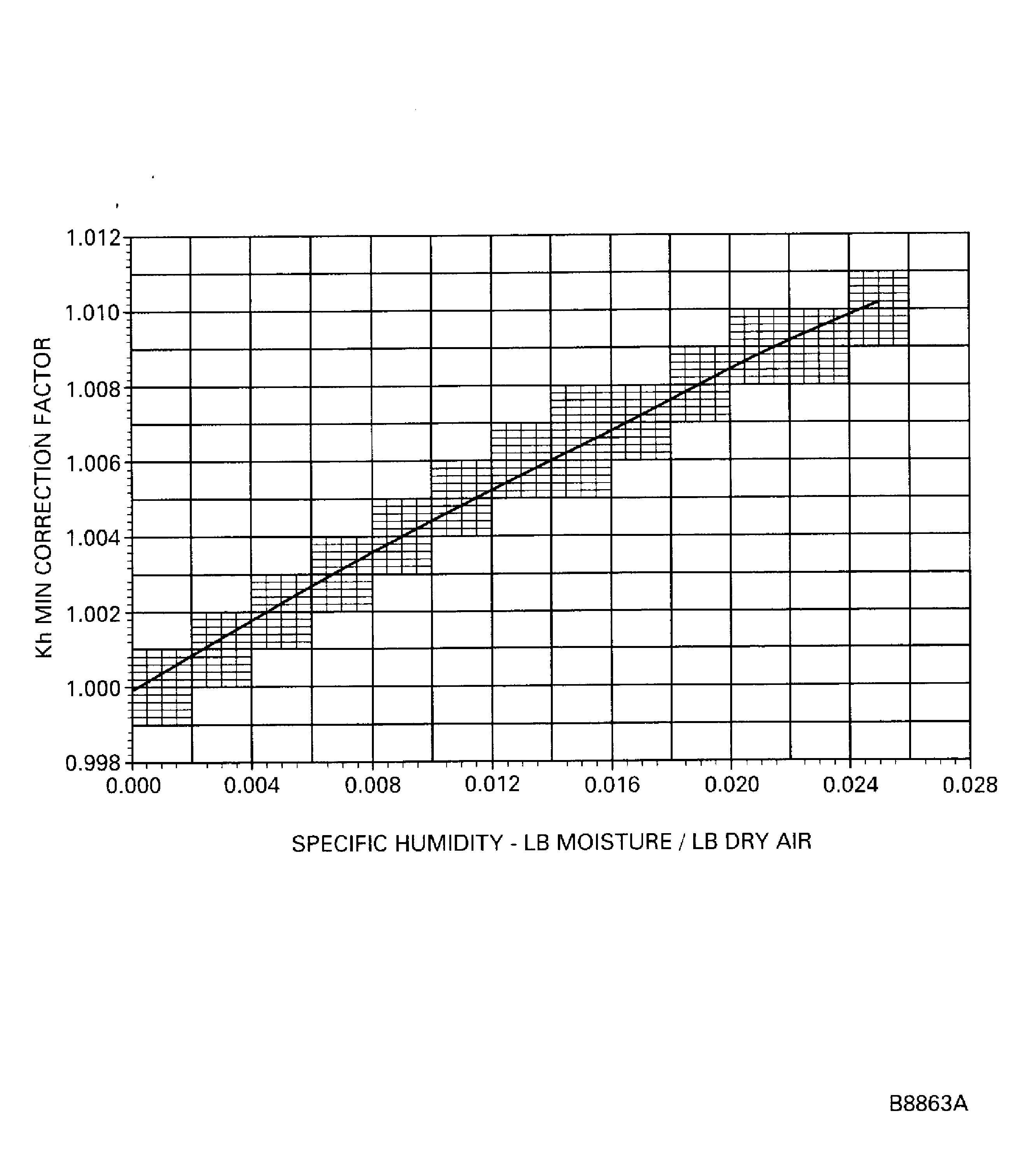
Figure: Humidity Correction Factor for N1 and N2 Rotor Speeds
Humidity Correction Factor for N1 and N2 Rotor Speeds
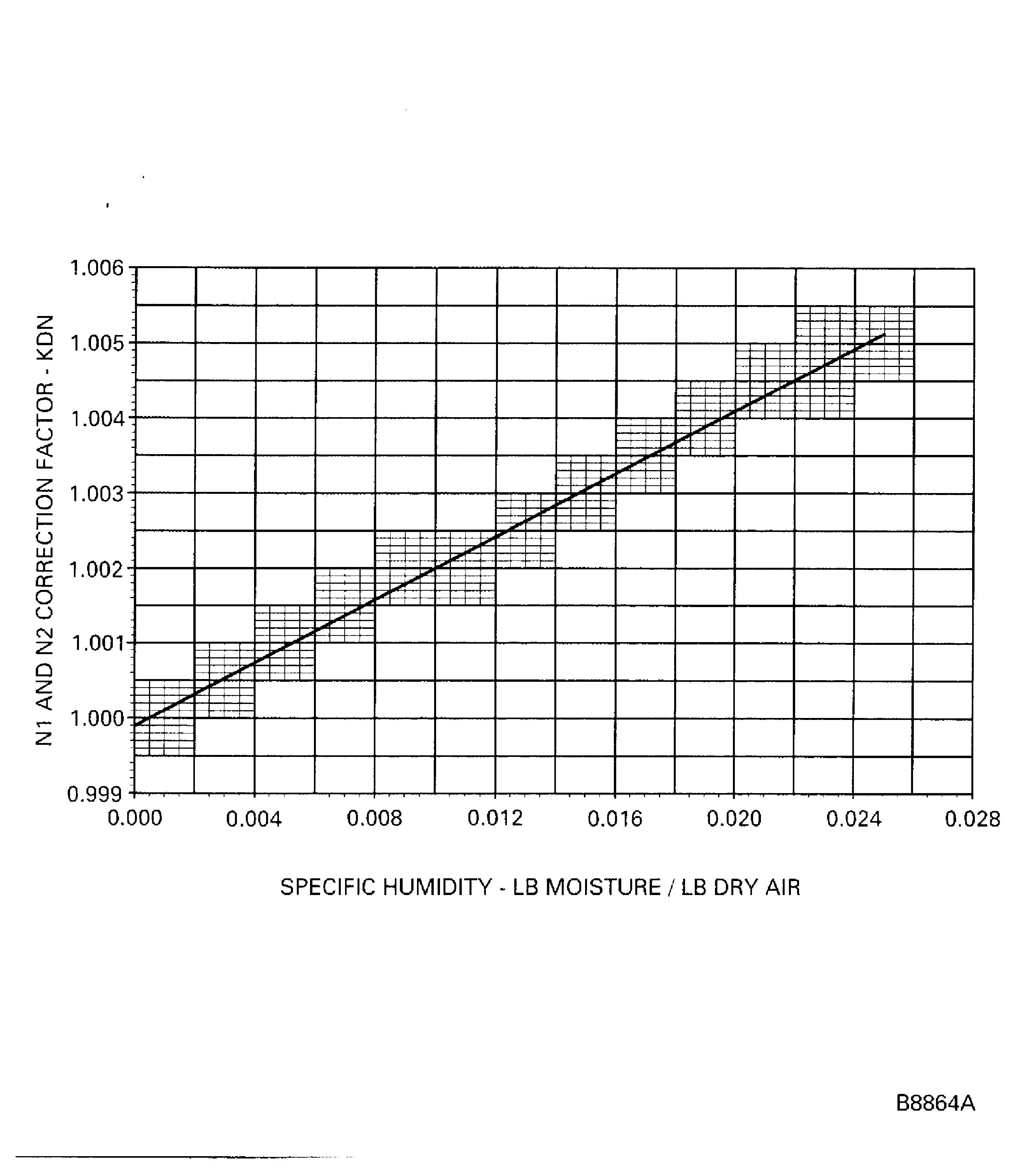
Figure: Humidity Correction Factor for T3
Humidity Correction Factor for T3
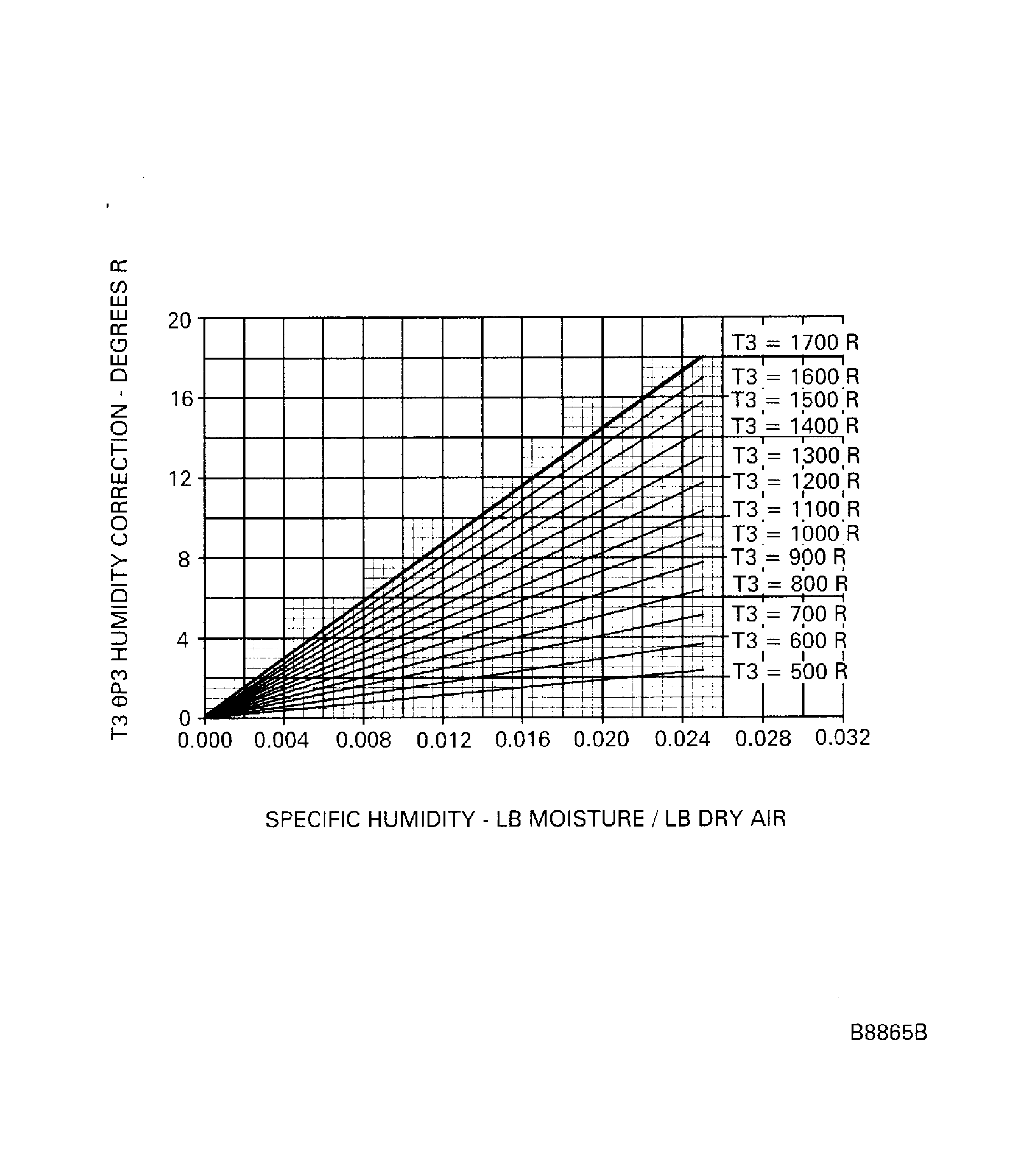
Figure: Humidity Correction Factor for T2.5
Humidity Correction Factor for T2.5

Figure: Humidity Correction Factor for T4.9
Humidity Correction Factor for T4.9

Figure: EEC Output Status Messages
Sheet 1
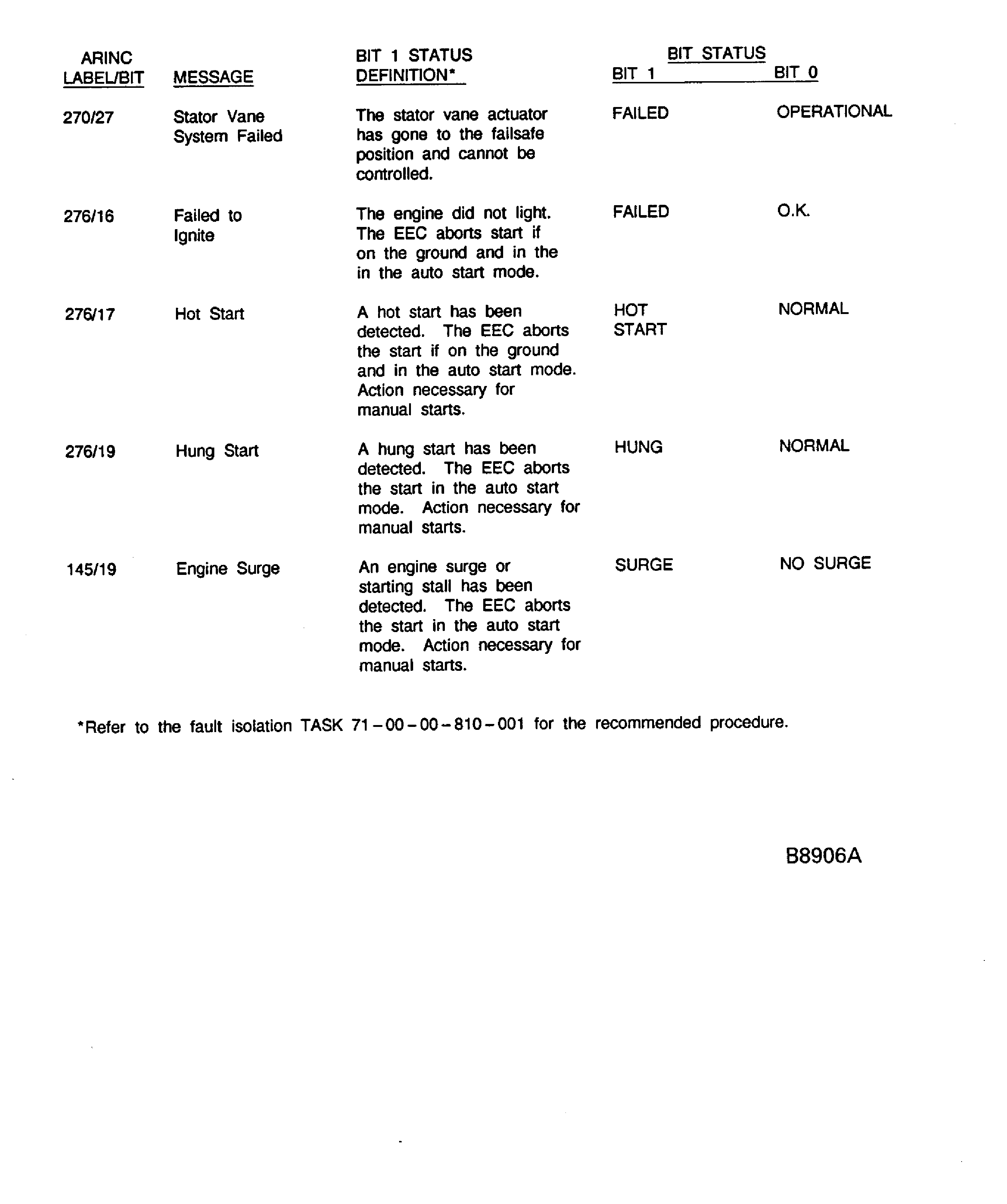
Figure: EEC Output Status Messages
Sheet 2
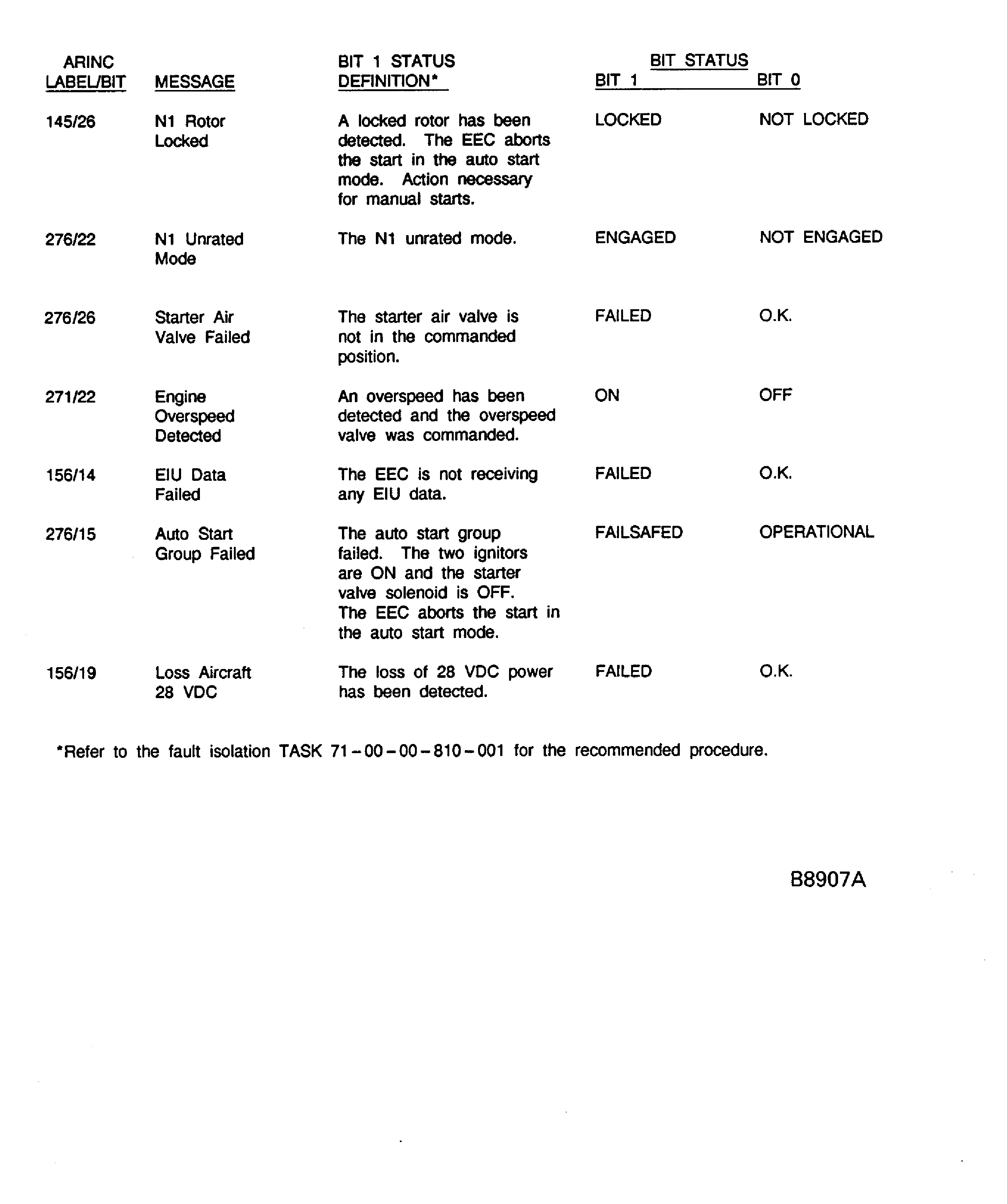
Figure: EEC Output Status Messages
Sheet 3

Figure: EEC Output Status Messages
Sheet 4

Figure: EIU Inputs
EIU Inputs
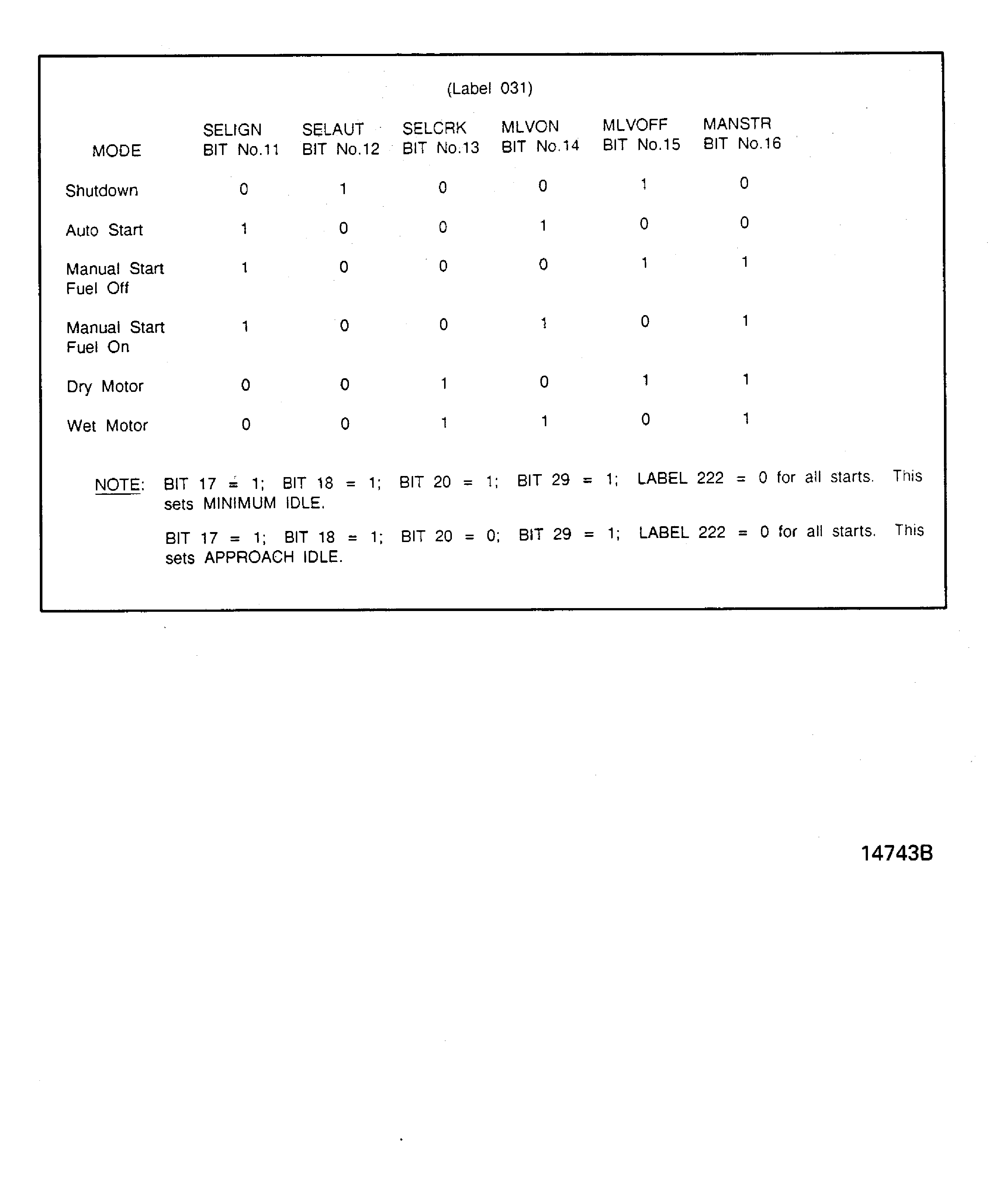
Figure: No.4 Bearing Scavenge Valve Position
No.4 Bearing Scavenge Valve Position

Figure: Main Oil Pressure (MOP) Limits During Operation at Idle (Pre SBE 79-0070)
Sheet 1
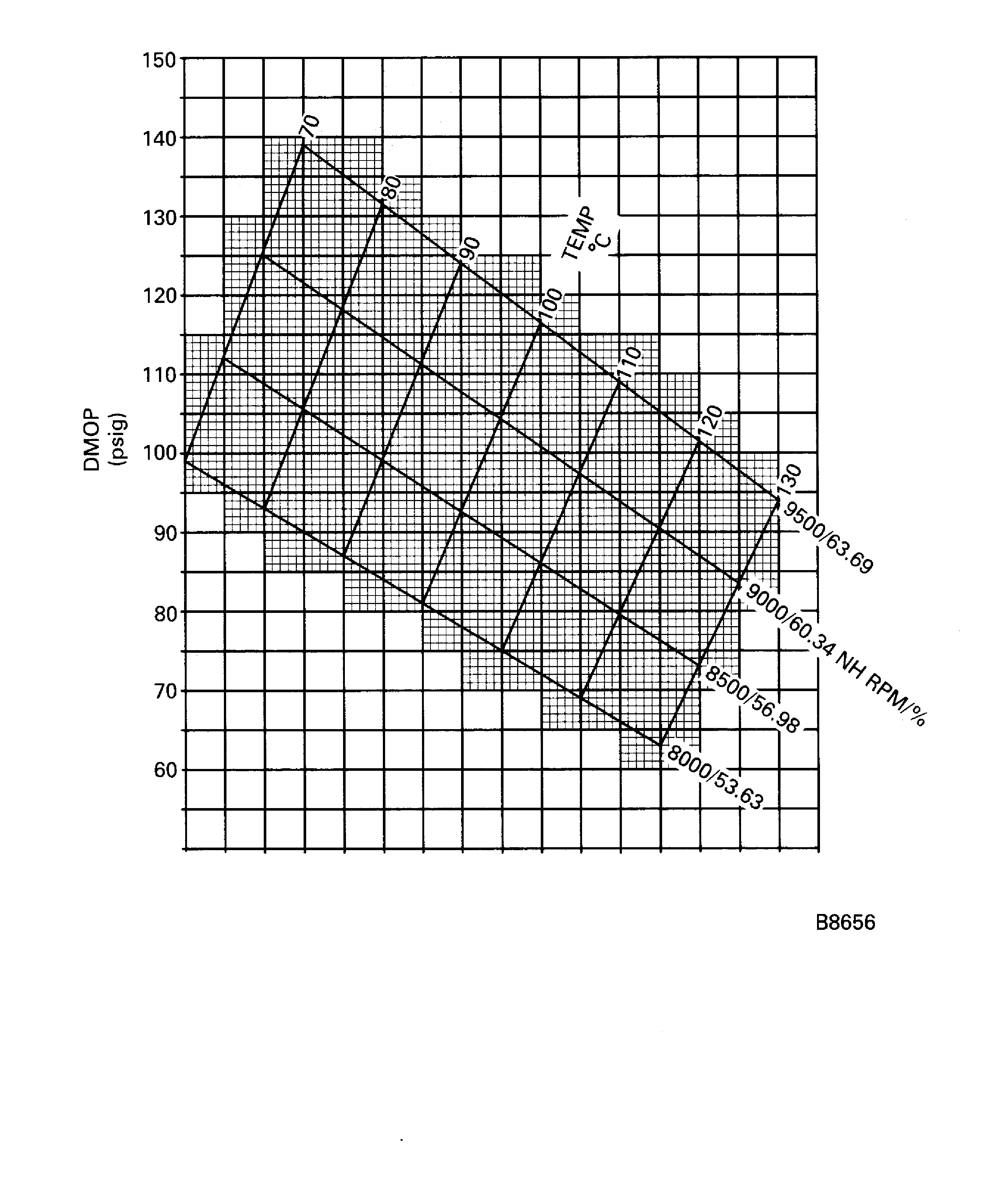
Figure: Main Oil Pressure (MOP) Limits During Operation at Idle (Pre SBE 79-0070)
Sheet 2
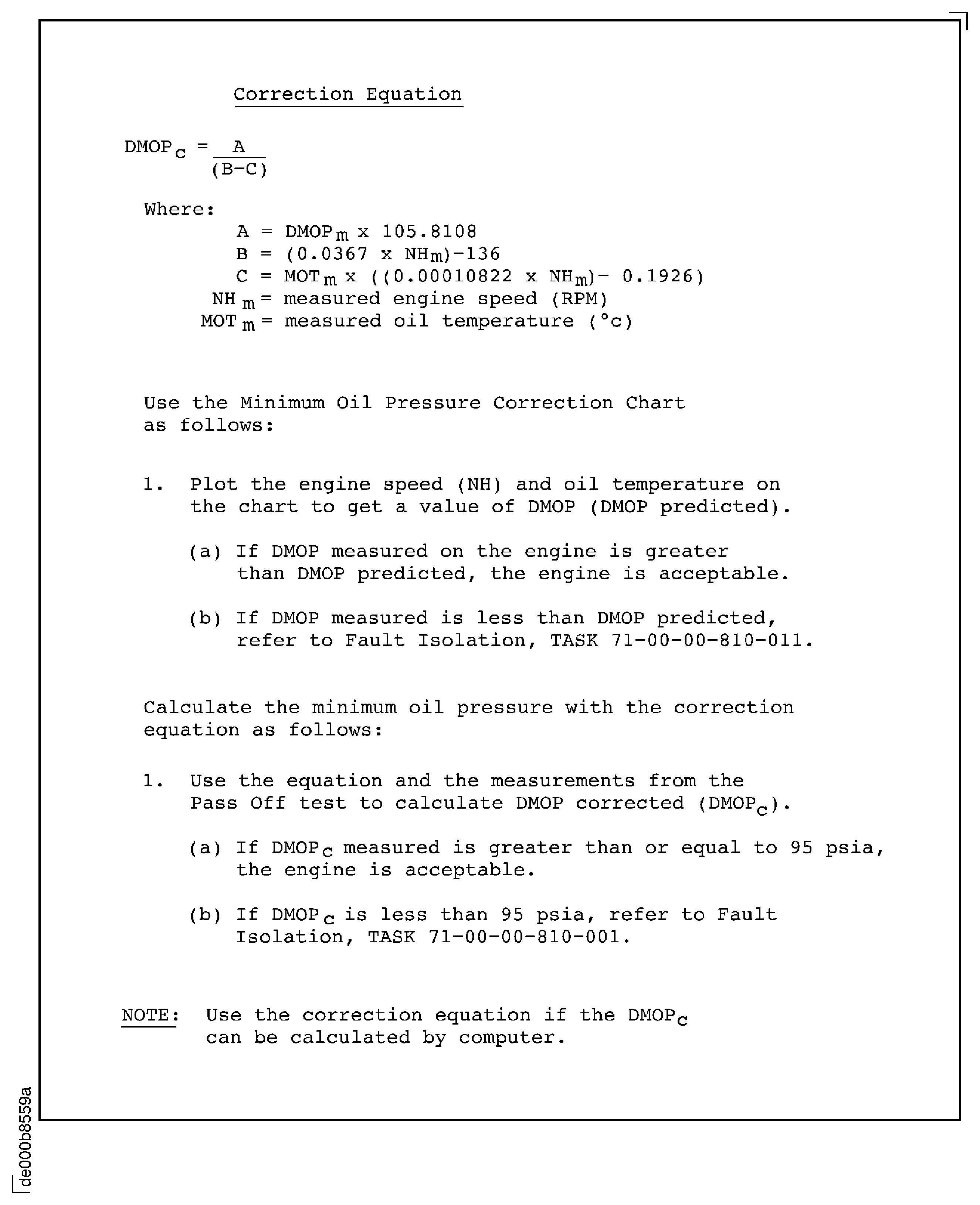
Figure: Main Oil Pressure (MOP) Limits During Operation at Idle (SBE 79-0070)
Sheet 3
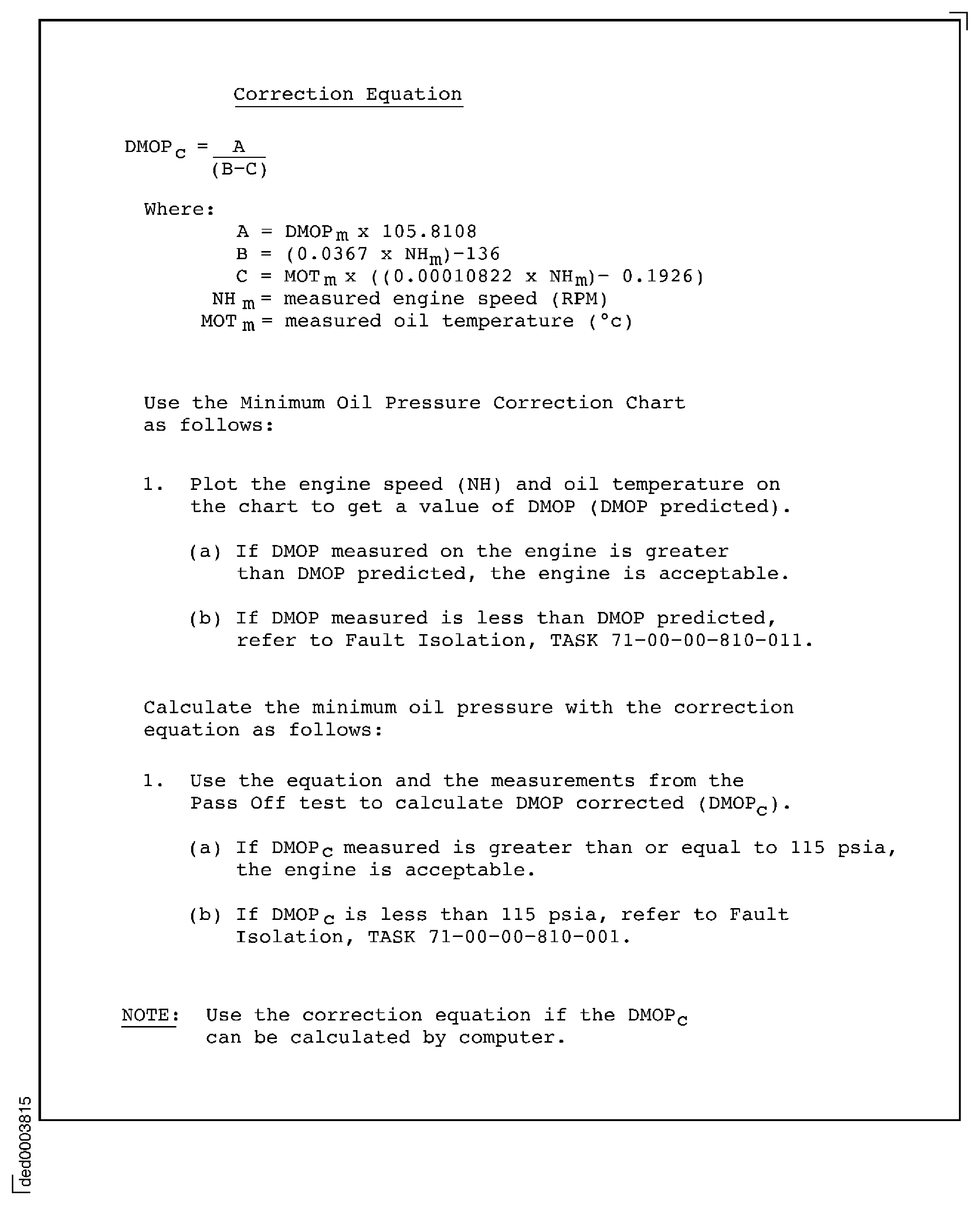
Figure: Approach and Minimum Idle Setting
Approach and Minimum Idle Setting